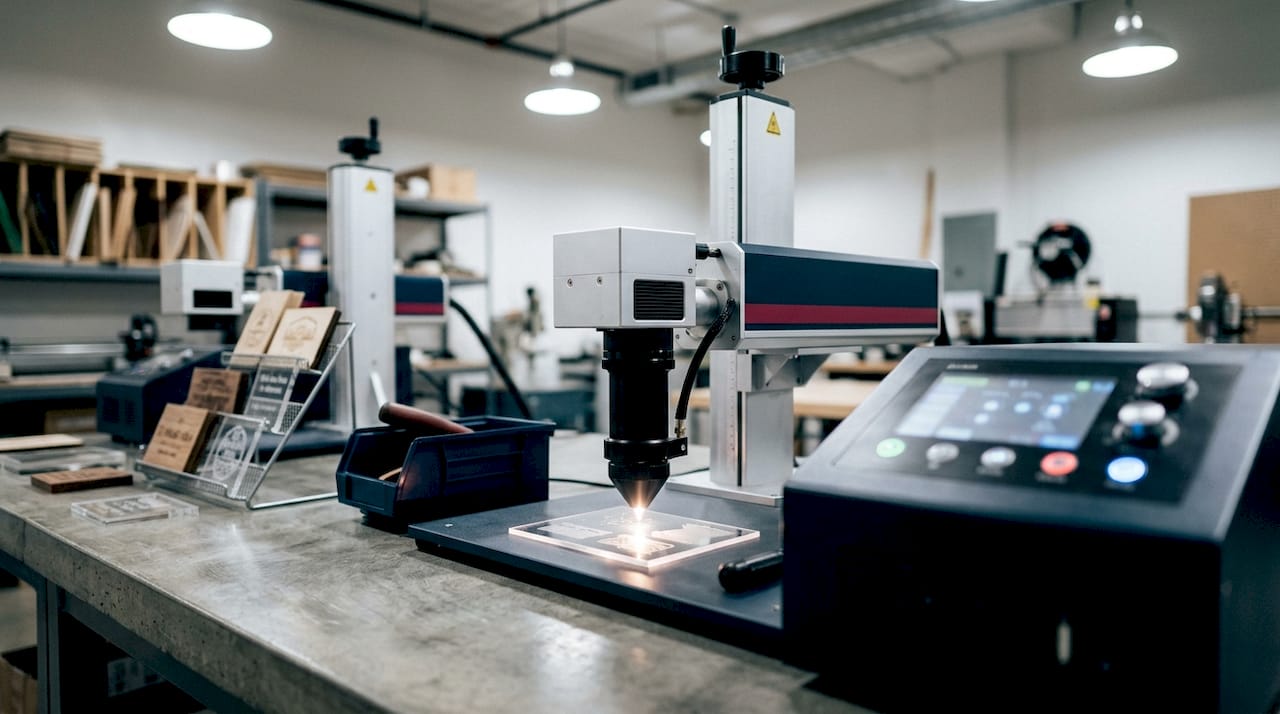
What Is Precision Laser Engraving? A Clear Guide
Precision laser engraving is defined as the process of using a tightly focused laser beam to vaporize material and create permanent, highly detailed marks with accuracy down to 0.01 mm. The industry term for this process is laser ablation engraving, and it covers everything from microtext on medical devices to custom names on wooden gifts. Professional equipment achieves spot sizes between 0.01 mm and 0.1 mm, with resolutions reaching up to 1,000 ppi. That level of detail makes it the go-to method for both personalized gifts and industrial part marking. Whether you are a small business owner, a crafter, or someone shopping for a one-of-a-kind gift, understanding how this technology works helps you make smarter decisions about your projects.
✦ Featured From Our Shop ✦
Handcrafted & laser engraved in Georgia, just for you
What is precision laser engraving and how does it work?
Precision laser engraving is a subtractive manufacturing method where a focused beam vaporizes material layer by layer to create a permanent groove or mark. The laser does not cut through the entire piece. It removes only the surface material needed to form the design, leaving everything else intact.
Three main laser types power this process. CO2 lasers work best on wood, acrylic, glass, and leather. Fiber lasers excel on metals like stainless steel, aluminum, and brass. UV lasers handle delicate materials such as plastics and electronics components without generating excessive heat.
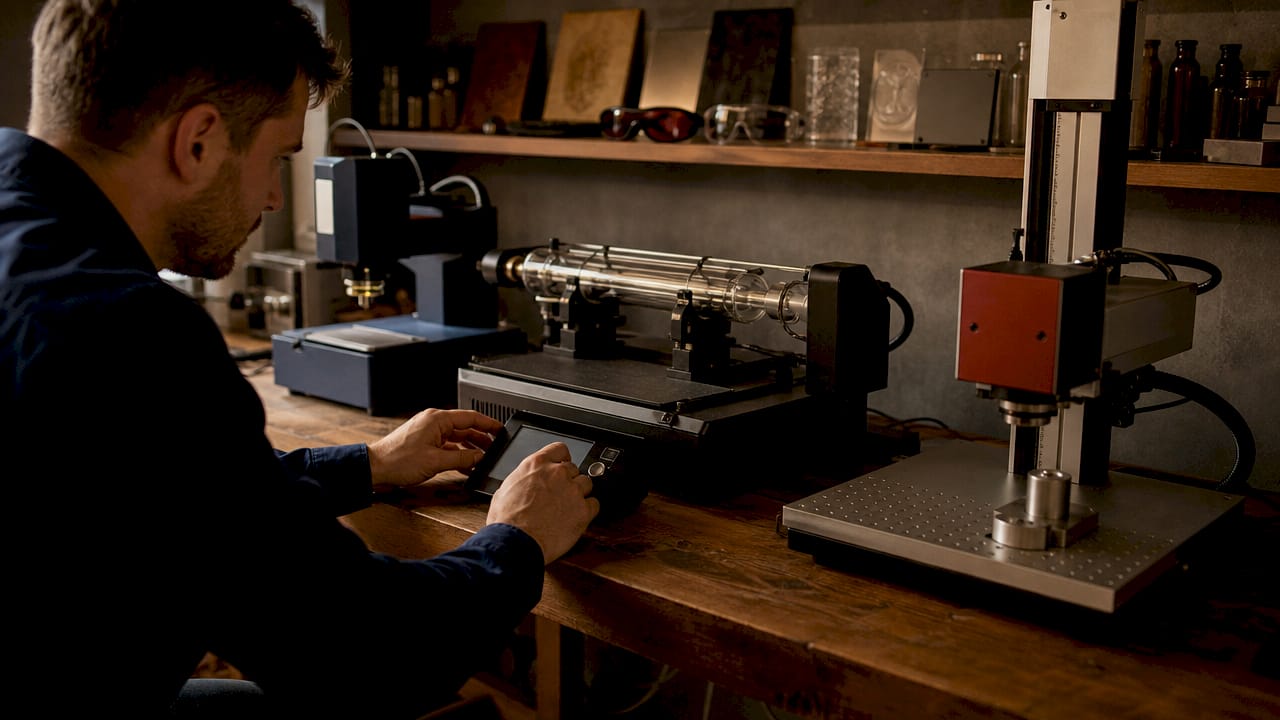
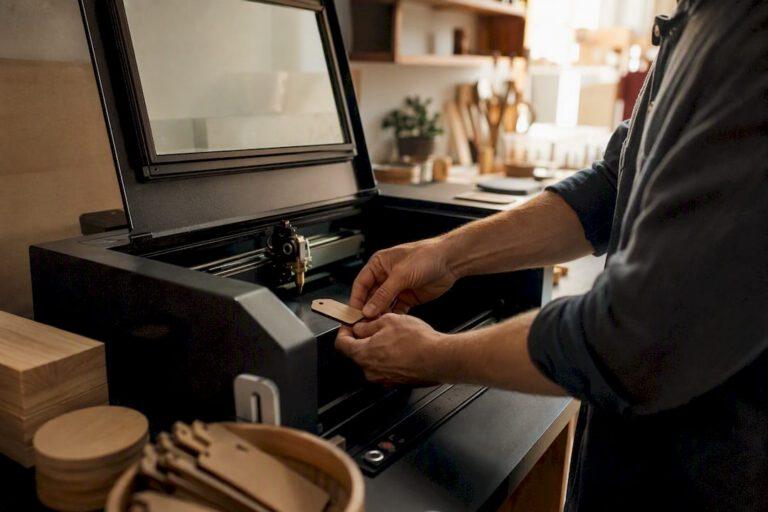
The beam travels from the laser source through a focusing lens and onto the material surface. Galvanometer scanning systems steer the beam using high-speed mirror motors, tracing the design in fractions of a second. This galvo system is what separates modern laser engravers from older plotters. It enables rapid, repeatable production of logos, barcodes, and fine text at speeds no hand tool can match.
Four parameters control the final result: laser power, scanning speed, frequency, and focal distance. Changing any one of them shifts the depth, contrast, and edge sharpness of the mark. A deviation of just 0.3 mm from the correct focal distance spreads the beam and softens the engraving edges noticeably. That is why measuring material thickness before every job is not optional. It is the single most important setup step.
Pro Tip: Always use a digital caliper to measure material thickness before starting a job. Even a small variation in thickness can shift the focal point enough to blur fine details.
Precision laser engraving techniques for achieving high detail
The detail you get from a laser engraver depends heavily on the technique and settings you choose. Spot size, DPI, and laser pulse type all interact to determine how fine your final marks will be.
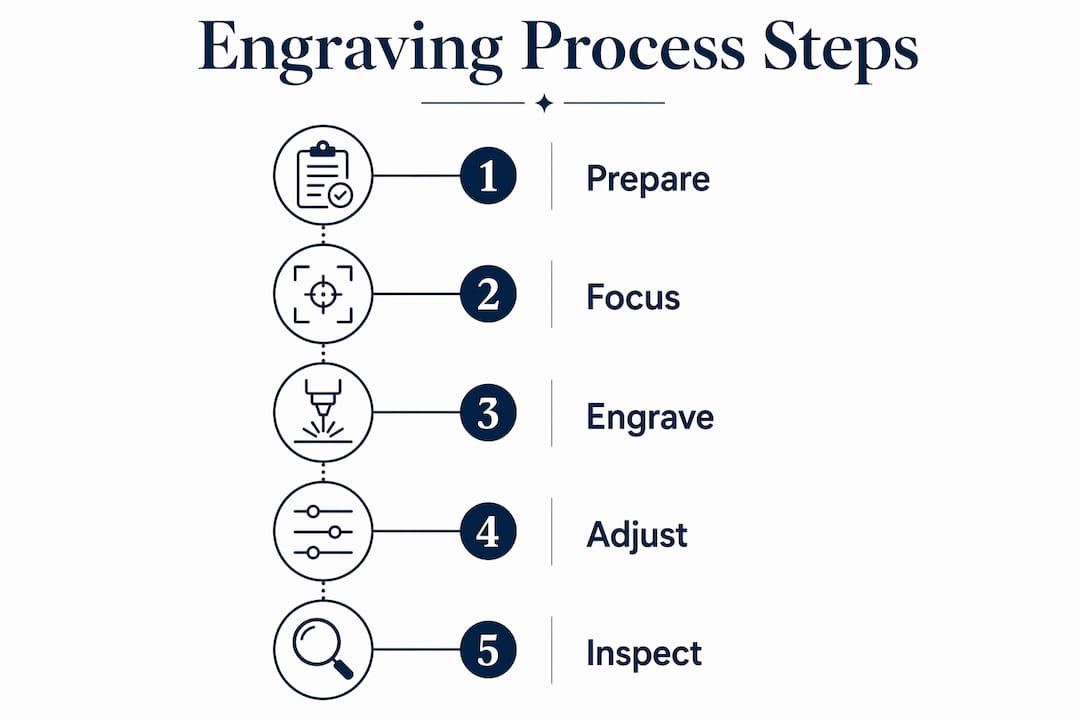
DPI (dots per inch) controls how densely the laser traces across the material. Higher DPI sounds better, but it is not always the right choice. Dot bleed occurs when DPI is set too high for the material, causing overlapping marks that blur the design. Matching DPI to the specific material prevents this and produces cleaner results.
The table below shows recommended starting settings for common materials:
| Material | Laser Type | Power Range | Speed Range | DPI Range |
|---|---|---|---|---|
| Wood (Kapur) | CO2 | 30–50 W | 120–200 mm/s | 300–500 |
| Stainless steel | Fiber | 20–30 W | 500–1,000 mm/s | 500–1,000 |
| Acrylic | CO2 | 10–20 W | 200–400 mm/s | 300–600 |
| Anodized aluminum | Fiber | 15–25 W | 600–1,200 mm/s | 500–1,000 |
For the finest detail work, femtosecond and picosecond lasers are the gold standard. Cold ablation via ultrafast laser pulses vaporizes material before heat can transfer to surrounding areas, enabling sub-micron feature sizes without micro-cracking or structural damage. This matters enormously for jewelry, medical implants, and semiconductor components where heat distortion is unacceptable.
Air assist is another technique that separates good results from great ones. Consistent air assist during engraving removes debris, prevents flare-ups, and keeps the lens clean. Without it, charred residue builds up on the lens and degrades mark quality over time.
Pro Tip: Run a test grid on scrap material before every new job. Vary power and speed in small increments across the grid to find the exact sweet spot for that specific material batch.
The four most common technique mistakes to avoid are:
- Setting DPI too high for porous materials like raw wood, which causes dot bleed and muddy text.
- Skipping focal distance calibration, which softens edges and reduces contrast.
- Running without air assist, which leads to lens contamination and inconsistent marks.
- Using a CO2 laser on bare metal without a marking compound, which produces no visible mark at all.
Laser engraving vs. traditional engraving: how do they compare?
Traditional mechanical engraving uses a rotating cutter or diamond-tipped stylus to physically scratch material. Chemical engraving uses acid to etch designs into metal surfaces. Both methods have served industries for centuries, but laser engraving outperforms them in nearly every measurable category for modern customization work.
The core difference is contact versus non-contact processing. Mechanical engraving applies physical pressure, which limits the materials it can handle and wears down the cutting tool over time. Laser engraving touches nothing. The beam does all the work, so there is zero tool wear and no risk of slipping or scratching adjacent areas.
| Feature | Precision laser engraving | Traditional mechanical engraving |
|---|---|---|
| Contact with material | None | Direct physical contact |
| Detail capability | Sub-millimeter, microtext | Limited by cutter tip size |
| Tool wear | None | Frequent replacement needed |
| Repeatability | Exact digital reproduction | Varies with operator skill |
| Material range | Wood, metal, glass, plastic, leather | Primarily hard metals and plastics |
| Setup time | Minutes (digital file) | Hours (template or jig setup) |
| Environmental impact | Minimal waste, no chemicals | Chemical disposal required |
Laser engraving creates a permanent groove that resists wear and environmental conditions far better than surface-level marks. Mark depths reach 0.5 mm in metals and up to 3.2 mm in softer materials. That durability makes laser-engraved marks the preferred choice for industrial serial numbers, medical device tracking, and luxury product branding.
Digital control and non-contact processing also reduce equipment wear, increase repeatability, and allow fine detail on complex geometries that mechanical tools simply cannot reach. A curved ring surface, a tapered pen barrel, or a textured metal plate all present no obstacle to a properly configured laser system.
Applications and benefits of precision laser engraving for gifts and businesses
Precision engraving technology serves an enormous range of applications, from one-off personalized gifts to high-volume industrial production runs. The same core process that marks a serial number on an aerospace component also engraves a name on a wedding gift.
Common applications include:
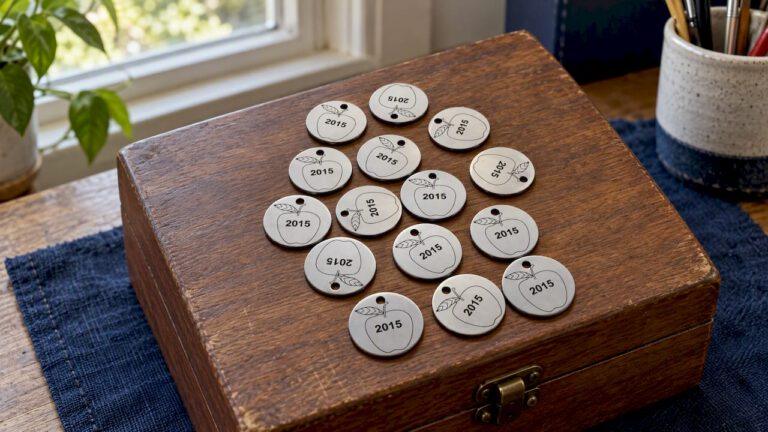
- Personalized gifts: Names, dates, and custom messages on wood cutting boards, glassware, jewelry, and leather goods.
- Industrial part marking: Serial numbers, barcodes, QR codes, and compliance marks on metal components.
- Signage and awards: Plaques, trophies, and directional signs in wood, acrylic, and metal.
- Electronics: Circuit board identification, component labeling, and branding on device housings.
- Jewelry and luxury goods: Intricate patterns, hallmarks, and personalization on rings, watches, and pendants.
The benefits of laser engraving for both individuals and businesses are concrete and measurable. Marks are permanent and do not fade, peel, or scratch off the way printed labels do. The process handles one-off custom orders and batch production with equal accuracy, since every piece is reproduced from the same digital file. Material waste is minimal because the laser removes only what the design requires. You can explore engraved keepsakes as gifts to see how durable and meaningful these items become over time.
Wood, metal, glass, plastic, leather, and stone all accept laser engraving with the right laser type and settings. That versatility means a single service provider can handle a corporate award, a personalized baby gift, and an industrial nameplate in the same production run. For businesses, that flexibility translates directly into fewer vendors and simpler project management.
How to select the right precision laser engraving solution for your needs
Choosing between buying equipment and using a professional service is the first decision most customers face. For individuals and small businesses with occasional projects, a professional service delivers better results at lower total cost than owning and maintaining a machine. For high-volume production, in-house equipment makes financial sense.
When evaluating a laser engraving service or piece of equipment, focus on these factors:
- Material compatibility: Confirm the provider or machine handles your specific material. Not all lasers work on all surfaces.
- Resolution capability: Ask for sample engravings at the detail level your project requires. A provider who cannot show you microtext samples may not have the right equipment.
- Turnaround time: Custom orders typically ship within 3–7 business days from reputable providers. Rush options vary.
- Post-processing support: Some materials need cleaning, coating, or finishing after engraving. A full-service provider handles this for you.
- Pricing transparency: Custom laser engraving cost depends on material type, design complexity, and quantity. Get an itemized quote before committing.
Understanding laser engraving charges upfront prevents surprises and helps you budget accurately for both personal and business projects. Signaturelaserdesigns provides clear pricing breakdowns based on material, design intricacy, and order size, so you always know what you are paying for before the job starts.
Pro Tip: Send a vector file (SVG or AI format) rather than a raster image when ordering custom engraving. Vector files scale without quality loss and give the engraver precise control over line weights and detail.
Key Takeaways
Precision laser engraving delivers permanent, highly detailed marks through controlled beam ablation, making it the most accurate and versatile engraving method available for both personal and industrial applications.
| Point | Details |
|---|---|
| Accuracy starts at 0.01 mm | Professional laser systems achieve spot sizes as small as 0.01 mm, enabling microtext and barcode engraving. |
| Focal distance is critical | A 0.3 mm deviation from the correct focal distance visibly softens engraving edges and reduces mark quality. |
| Laser type must match material | CO2 lasers suit wood and acrylic; fiber lasers handle metals; UV lasers work on delicate plastics. |
| Laser outperforms traditional methods | Non-contact processing, zero tool wear, and digital repeatability give laser engraving a clear advantage over mechanical methods. |
| Service vs. ownership | For occasional projects, professional engraving services deliver better value than purchasing and maintaining equipment. |
Why I think most people underestimate what laser engraving can actually do
Working closely with laser engraving projects across industries, I have noticed one pattern that surprises me every time. Most customers come in thinking laser engraving is just for putting names on things. They leave realizing it is a manufacturing process that rivals machining for accuracy on certain applications.
The shift toward femtosecond and picosecond laser systems is the most significant development I have seen in recent years. These ultrafast systems make it possible to engrave on materials that would have been destroyed by heat just a decade ago. Thin glass, flexible polymers, and even human-implantable devices are now fair game. That is not a niche development. It will reshape what small businesses and individual crafters can offer their customers within the next few years.
My honest advice for anyone entering this space: do not buy equipment before you understand your material range. The biggest mistake I see is someone purchasing a CO2 machine and then discovering their core product is metal. Match the laser type to your primary material first, and everything else follows naturally. For businesses exploring industrial laser engraving services, starting with a service provider while you learn the technology is almost always the smarter path.
— Gary
Signaturelaserdesigns: custom precision engraving for every project
Whether you need a single personalized gift or a batch of marked industrial components, working with an experienced engraving team makes a real difference in the final result.
Signaturelaserdesigns offers custom laser engraving across a wide range of materials, from wood and glass to metal and acrylic. Our team handles everything from one-off keepsakes to production-scale part marking, with clear pricing and fast turnaround. You can browse our industrial engraving services (on Etsy) or explore our full range of personalized gift options to find the right fit for your project. Reach out for a quote and let our team help you get exactly what you need.
FAQ
What does laser engraving mean?
Laser engraving means using a focused laser beam to vaporize material and create a permanent, recessed mark or design. The process physically removes material, unlike laser marking, which only discolors the surface.
Is laser engraving precise enough for microtext and barcodes?
Yes. Professional laser systems achieve resolutions up to 1,000 ppi with spot sizes as small as 0.01 mm, making them fully capable of engraving readable microtext, barcodes, and QR codes.
What materials can precision laser engraving work on?
Laser engraving works on wood, metal, glass, acrylic, leather, plastic, and stone. The correct laser type must match the material: CO2 for organics, fiber for metals, and UV for delicate plastics.
How does laser engraving compare to traditional engraving for gifts?
Laser engraving produces sharper detail, requires no physical contact with the material, and reproduces the same design identically across multiple pieces. Traditional mechanical engraving cannot match that level of consistency for personalized gift production.
What affects the cost of a custom laser engraving order?
Cost depends on material type, design complexity, engraving area size, and order quantity. Providing a vector file and ordering in batches are the two most reliable ways to reduce per-unit cost.
Recommended