
Engraving is defined as a process that physically cuts or vaporizes material to create deep, permanent marks, while etching alters only the surface layer through chemical or laser methods to produce shallow, decorative finishes. Understanding the difference between engraving etching gifts is the first step to choosing a personalization technique that matches your material, budget, and how long you want the mark to last. Both methods create permanent results on metal, glass, wood, and acrylic. The right choice depends on the gift’s purpose, the material’s fragility, and how much wear it will face over time.
How do engraving and etching actually work?
Engraving removes material by cutting or vaporizing it layer by layer. A laser or mechanical tool carves directly into the surface, creating grooves you can feel with your fingernail. Engraving depths range from 0.003 to 0.015 inches, with depths beyond 0.020 inches becoming impractical for fiber lasers due to vapor escape and focus limitations. That physical depth is what makes engraved marks so durable on metal trophies, hardwood cutting boards, and stainless steel flasks.
Etching works differently. Instead of cutting deep grooves, it melts or chemically alters a very thin top layer of the material. Etching depths typically fall between 0.05 and 0.5 mm, which is far shallower than engraving. Laser etching creates a raised, frosted matte finish by melting the surface without removing significant material. Chemical etching uses acid to dissolve a controlled area, producing similar soft, decorative results on metal or glass.
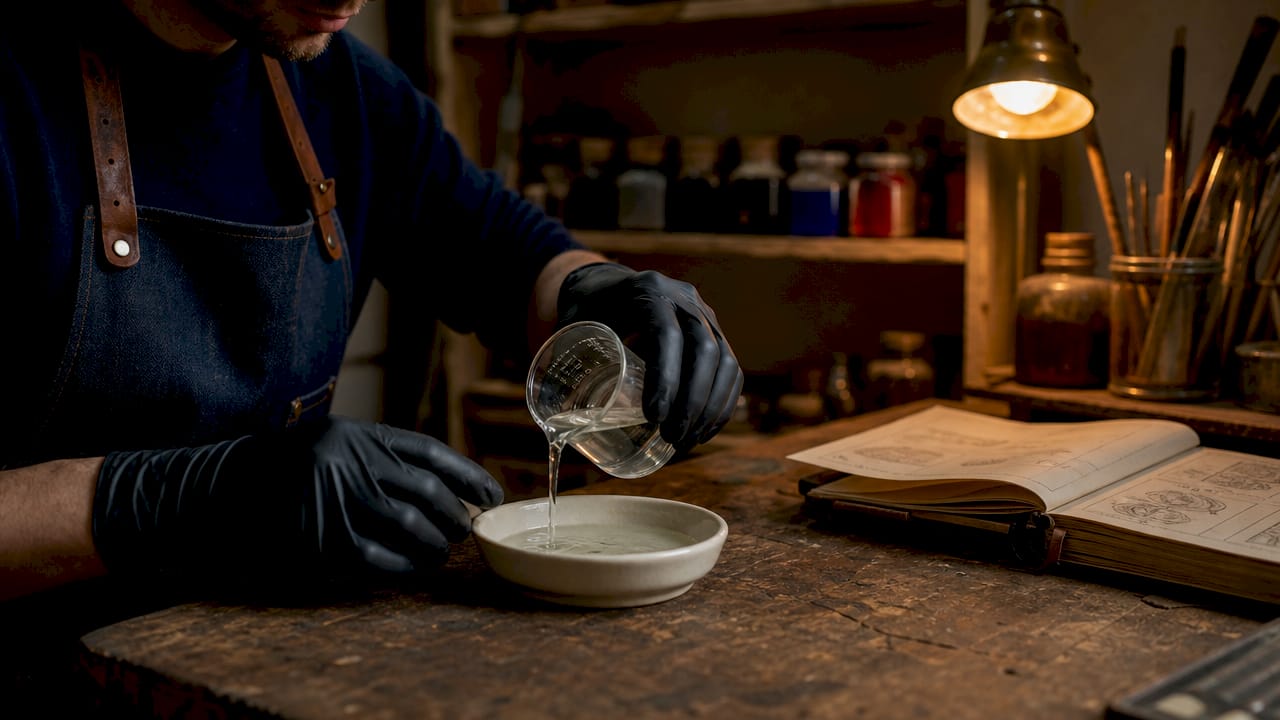
The equipment requirements also differ. Laser engraving demands higher power settings and multiple passes, making it slower and more equipment intensive. Laser etching runs at lower power with a single pass, which speeds up production considerably.
Pro Tip: Run your fingernail across the mark. If you feel a clear groove, it is engraved. If the surface feels slightly raised or textured but mostly flat, it is etched.
The third method worth knowing is laser annealing. Annealing heats metal below the surface to create an oxidized color change without removing any material at all. It preserves corrosion resistance and is distinct from both engraving and etching. For most gift applications, annealing is less common, but it is the preferred choice for medical-grade stainless steel items where surface integrity matters.
Durability and appearance: engraved vs etched gifts compared
Engraved marks survive decades of heavy use. Engraving withstands abrasion, painting, and refinishing because the mark lives inside the material, not on top of it. A personalized wedding flask engraved in 2026 will still show the same crisp text after years of daily handling. That durability makes engraving the standard choice for heirlooms, awards, and any gift that will be touched, washed, or carried regularly.
Etching produces a softer visual result. Etching creates surface texture that diffuses light, making the mark look frosted or cloudy rather than sharp and defined. This effect is beautiful on wine glasses, ceramic tiles, and acrylic photo frames. The trade-off is longevity. Etched marks on heavily handled items can fade faster than engraved ones because the altered layer sits so close to the surface.
| Feature | Engraving | Etching |
|---|---|---|
| Depth | 0.003–0.015 inches | 0.05–0.5 mm |
| Tactile feel | Deep groove, felt clearly | Slight raise or texture |
| Visual effect | Sharp, high-contrast lines | Frosted, matte, soft edges |
| Durability | Survives heavy wear and abrasion | Moderate, fades with heavy use |
| Best materials | Metal, hardwood, stone | Glass, acrylic, ceramic |
| Risk on fragile items | Can crack glass or ceramic | Safe, low mechanical stress |
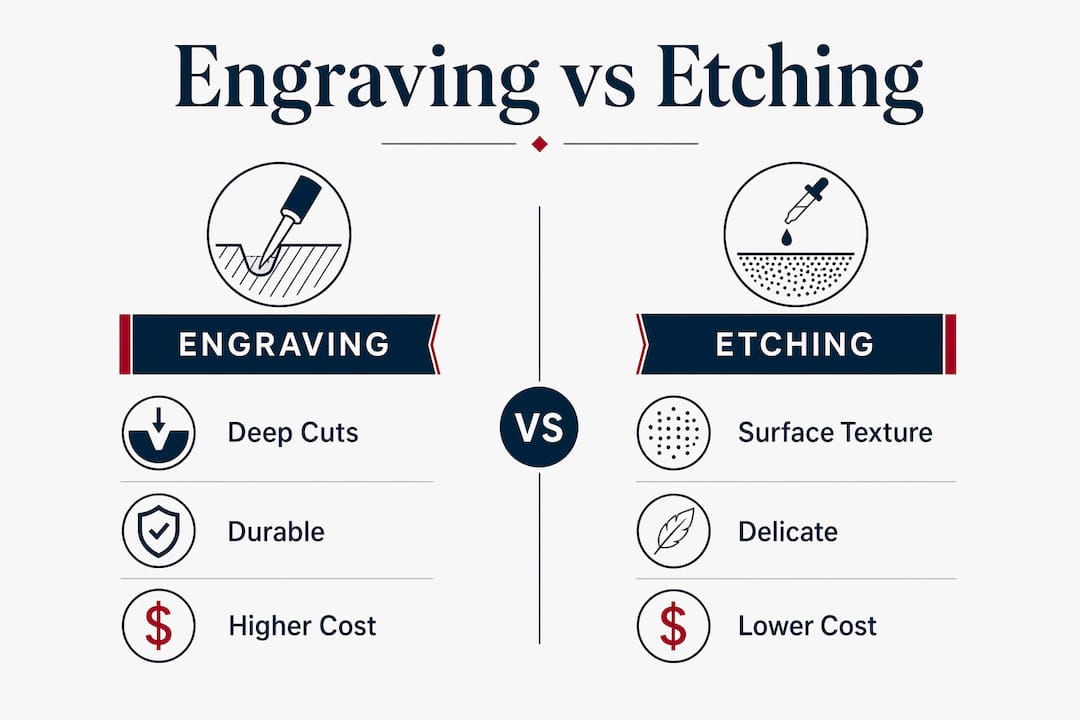
Pro Tip: For glass gifts like wine glasses or picture frames, always choose etching. Engraving can crack fragile materials due to the mechanical stress of deep cuts, while etching delivers a polished finish safely.
One detail most buyers miss: etching can weaken a metal surface if the acid or laser exposure is excessive. For purely decorative gifts that will not face structural stress, this is not a concern. For jewelry or tools that will be used hard, engraving is the safer long-term choice.
Cost and production: what to expect when ordering
Engraving takes more time and costs more. Engraving is generally more expensive and slower because the equipment runs multiple passes and removes actual material. For a single custom gift, the price difference may be modest. For a batch of 50 corporate awards, the cost gap becomes significant.
Etching is faster and more budget-friendly, especially for large decorative runs. Laser etching is faster and less costly than engraving and suits decorative effects with moderate durability. A set of etched wine glasses for a wedding party will cost less per unit than the same glasses with deep engraving, and the turnaround time will be shorter.
Here are the key production factors to weigh before placing an order:
- Design complexity. Fine lines and detailed artwork take longer to engrave than to etch. Etching handles intricate patterns well at lower cost.
- Material hardness. Harder metals like titanium or stainless steel require more passes for engraving, raising the price. Etching on these materials is faster.
- Batch size. Large orders favor etching for speed and cost. Single custom pieces may not show a major price difference between methods.
- Equipment type. Chemical etching adds consumable costs and safety handling requirements. Laser etching avoids those but requires calibrated equipment.
- Turnaround time. If you need gifts quickly, etching typically ships faster. Engraving on dense materials can add days to production.
Understanding what drives engraving costs helps you budget accurately before committing to a design. Signaturelaserdesigns provides transparent pricing breakdowns based on material type, design intricacy, and order volume, so you know exactly what you are paying for.
Which technique suits your gift material and occasion?
The material determines the method more than any other factor. Engraving works best on metals, hardwoods, and stone because these materials can absorb deep cuts without cracking. Etching works best on glass, acrylic, ceramics, and thin metals where mechanical stress would cause damage.
Gifts that work best with engraving:
Stainless steel flasks, pocket watches, brass keychains, hardwood cutting boards, and metal trophies all hold engraved marks well. These items face daily handling, washing, and physical contact. The deep grooves survive all of it. Engraving marks hold up to heavy wear, sanding, and even light refinishing, which is why heirlooms and awards almost always use engraving.
Gifts that work best with etching:
Wine glasses, champagne flutes, ceramic mugs, acrylic photo frames, and decorative mirrors are ideal for etching. The frosted finish looks elegant and refined. Etching avoids the cracking risk that deep engraving poses on these surfaces. For personalized etching ideas on glass, a frosted monogram or short message on a wine glass is one of the most popular and affordable options available.
| Gift Type | Recommended Method | Reason |
|---|---|---|
| Stainless steel flask | Engraving | Deep marks survive daily use and washing |
| Wine glass | Etching | Avoids cracking, creates elegant frosted finish |
| Hardwood cutting board | Engraving | Wood absorbs deep cuts cleanly |
| Acrylic photo frame | Etching | Shallow marks preserve material clarity |
| Metal trophy or award | Engraving | Durable, sharp lines for long-term display |
| Ceramic mug | Etching | Safer on brittle surfaces, decorative result |
Jewelry sits in a special category. Rings, bracelets, and pendants made from gold, silver, or platinum accept both methods. Engraving inside a ring band is the traditional choice for wedding gifts because the mark is protected from wear. Etching on the outer surface of a pendant creates a softer, artistic look. The choice comes down to whether you want the mark to feel bold and tactile or subtle and decorative.
For gifts that will be exposed to outdoor conditions, like garden markers or industrial-style keepsakes, always choose engraving. Etching on outdoor metal can fade as the surface weathers. You can read more about material suitability for laser work to avoid costly mistakes before ordering.
Key Takeaways
Engraving is the more durable choice for heavily handled gifts, while etching delivers elegant surface finishes on fragile materials like glass and ceramics at lower cost and faster turnaround.
| Point | Details |
|---|---|
| Depth defines durability | Engraving cuts 0.003–0.015 inches deep; etching stays under 0.5 mm and wears faster. |
| Material drives the decision | Use engraving for metal and hardwood; use etching for glass, acrylic, and ceramics. |
| Cost and speed favor etching | Etching is faster and cheaper, especially for large decorative orders. |
| Tactile feel differs clearly | Engraved marks feel like a groove; etched marks feel slightly raised or textured. |
| Fragile items need etching | Deep engraving can crack glass or ceramic; etching applies low mechanical stress. |
Why I always ask “how long should this last?” before recommending a method
Most people walk in focused on how the finished gift will look. That is understandable. But the question that actually determines the right method is simpler: how long does this gift need to look good?
I have seen beautiful etched wine glasses gifted at weddings that still look sharp five years later because they sit in a cabinet and get used gently. I have also seen etched stainless steel water bottles lose their finish within a year because someone carried them in a backpack every day. The technique was not wrong. The match between technique and use case was.
Engraving is the right call when the gift will be handled constantly, washed repeatedly, or passed down through generations. Etching is the right call when the gift is primarily decorative, the material is fragile, or the budget is tight and the order is large. The mistake I see most often is choosing etching for a gift that sounds decorative but actually gets heavy daily use, like a personalized travel mug or a keychain.
One more thing worth knowing: laser technology has closed the gap between these two methods significantly. Modern fiber lasers can etch with enough precision to mimic the visual sharpness of engraving on certain metals, and they do it faster. But they cannot replicate the physical depth that makes engraving so wear-resistant. For gifts with engraved messages meant to last a lifetime, depth still wins.
— Gary
Personalized laser engraving services from Signaturelaserdesigns
Choosing between engraving and etching is easier when you work with a team that handles both every day. Signaturelaserdesigns specializes in custom laser engraving for gifts across a wide range of materials, from stainless steel and hardwood to glass and acrylic.
Our team works with you to match the right technique to your material, design, and budget. Whether you need a single engraved keepsake or a batch of etched gifts for a corporate event, we provide fast turnaround and clear pricing from the start. You can also browse our guide on how to personalize gifts that get kept to find the right design approach before you order. Every project at Signaturelaserdesigns is handled with care, so the finished gift looks exactly the way you pictured it.
FAQ
What is the main difference between engraving and etching on gifts?
Engraving physically removes material to create deep, tactile grooves ranging from 0.003 to 0.015 inches deep, while etching alters only the surface layer to produce a shallow, frosted finish under 0.5 mm. Engraving lasts longer under heavy use; etching suits decorative and fragile items.
Which method is better for glass gifts?
Etching is the correct choice for glass gifts. Deep engraving creates mechanical stress that can crack glass or ceramic, while etching produces a polished frosted finish without that risk.
Is engraving more expensive than etching?
Engraving generally costs more and takes longer because it requires multiple passes and removes actual material. Etching is faster and more budget-friendly, making it the better option for large decorative orders.
Can you engrave or etch a metal wedding ring?
Yes. Engraving inside a ring band is the traditional choice because the mark is protected from wear. Etching on the outer surface creates a softer, artistic look but may show wear faster on a ring worn daily.
What is the difference between ablation and engraving on metal?
Laser ablation is a broad term for any process that removes material using laser energy, and engraving is one specific form of ablation. Standard laser engraving uses controlled ablation to carve defined grooves, while other ablation processes may remove coatings or surface layers without cutting as deeply into the base material.