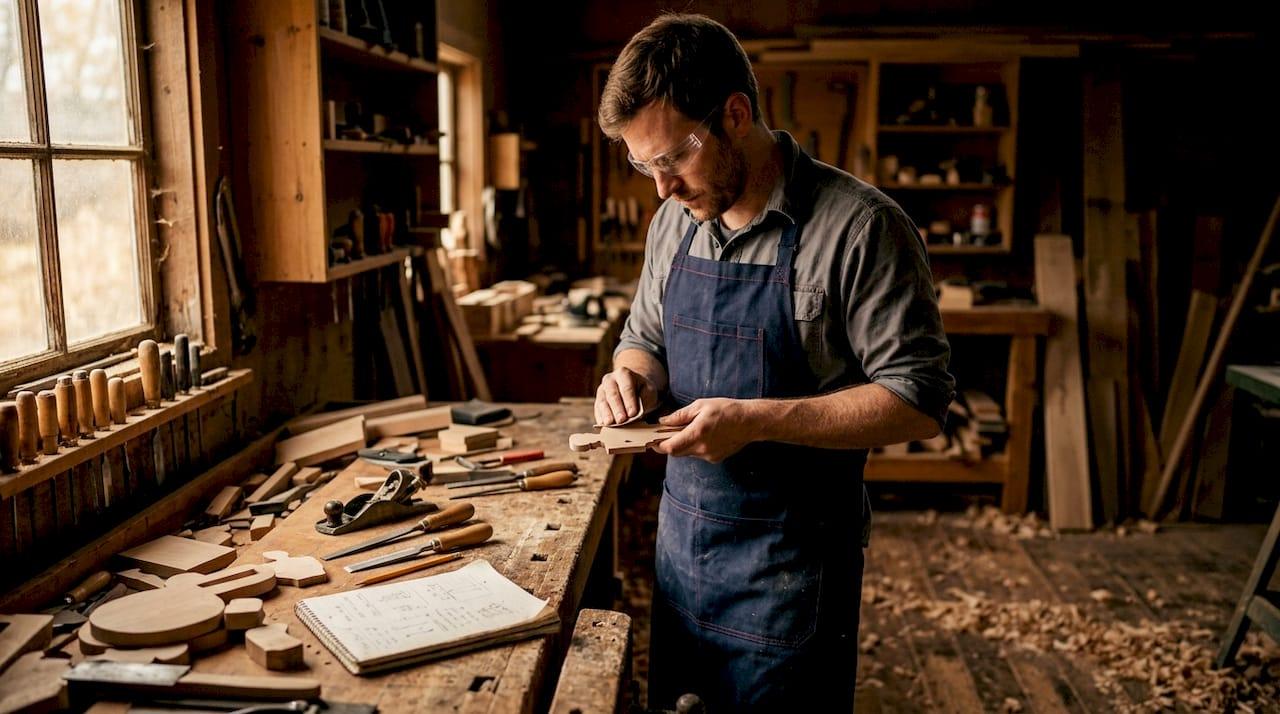
A laser cut soldier silhouette wood shape is a precisely cut wooden cutout depicting a military figure, produced by a computer-guided laser that burns through sheet wood to create clean, detailed outlines. These shapes have become a go-to choice for crafters building personalized military gifts, patriotic wall art, and holiday decor. Baltic birch plywood is the industry standard material, prized for its uniform core and minimal internal voids. Signaturelaserdesigns works with this same commitment to quality, offering custom laser engraving and cutting services that turn a simple wooden blank into something genuinely meaningful.
✦ Featured From Our Etsy Shop ✦
Handcrafted & Laser Engraved Just For You
1. What are the top types of laser cut soldier silhouette wood shapes?
The most popular wooden soldier cutout poses fall into four categories: saluting, kneeling in prayer, rifle-at-ready, and flag raising. Each pose carries a different emotional weight, so the right choice depends on the story you want the piece to tell. A saluting soldier reads as formal and honorable, while a kneeling pose works beautifully for memorial gifts.
Size is the next decision. Pre-cut silhouettes range from small tabletop accents to large door hangers, priced from $6.37 to $60.42 depending on detail and size. That range means you can pick up a simple ornament-sized blank for a paint party or go large with a statement wall piece.
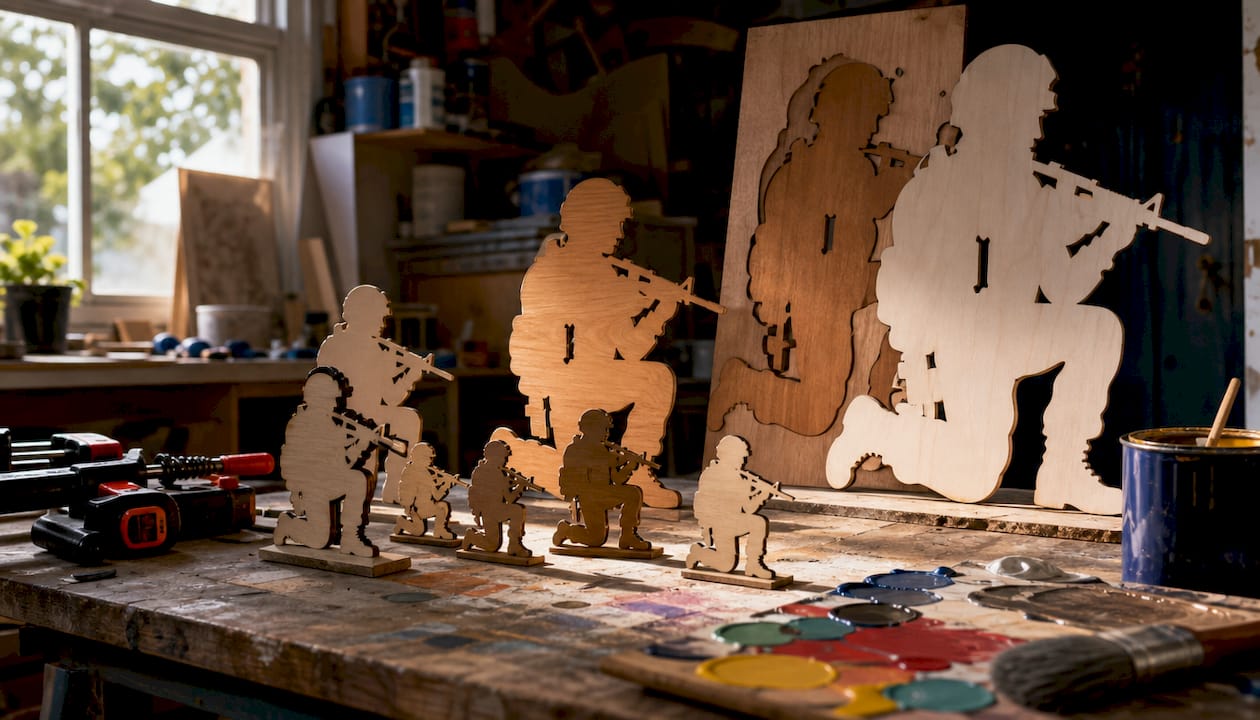
Specialty designs push the format further. Layered shadow box scenes, for example, stack a soldier silhouette over a terrain layer and a sky layer to create real depth. Combat scenes with helicopters, parachutes, and tree lines are another popular format, especially for veterans’ gifts. These multi-layer designs take more time to assemble but produce a finished piece that looks like framed artwork.
Thickness options typically run from 1/8 inch (3mm) for lightweight ornaments up to 1/4 inch (6mm) for structural wall hangers. Thicker stock holds fine detail better and resists warping over time. For door hangers or pieces that will be handled often, 1/4 inch is the smarter call.
Pro Tip: If you are ordering a soldier shape for a paint party, choose an unfinished 1/8 inch Baltic birch blank. The lighter weight is easier for guests to handle, and the smooth surface takes acrylic paint without priming.
2. How to select and prepare digital design files for laser cutting
SVG and DXF are the two file formats used for laser cut wood art. SVG files work best with software like Adobe Illustrator or Inkscape, while DXF files are standard for CAD-based laser controllers. Military-themed design files typically cost $1.60 to $4.00 and support 1/8 inch (3mm) materials like MDF, basswood, or acrylic. That low price point makes it easy to buy several designs and test them before committing to a large production run.
File cleanliness is the single biggest factor in cut quality. Vector files must have no open nodes or overlapping lines to prevent double cutting and fragile edges. Double cutting happens when the laser traces the same line twice, which scorches the wood and weakens thin details like rifle barrels or fingers.
Watch out for files originally designed for plasma cutting. Design files intended for plasma cutting may carry lead-ins or kerf compensation settings that are wrong for laser cutting, causing errors and breakage. Always confirm the file is laser-specific before you run a test cut.
Here is a quick preparation checklist before you send any file to the laser:
- Open the file in a vector editor and run a “find open paths” check.
- Remove all duplicate or overlapping lines manually.
- Confirm the file’s kerf compensation matches your laser’s actual kerf width.
- Scale the design to your target size and check that thin elements stay at least 1.5mm wide.
- Run a test cut on scrap material at the same thickness before cutting your final blank.
Pro Tip: Free military SVG files from community design sites often have path errors. Spend five minutes cleaning the file in Inkscape before cutting. It saves a ruined blank and a lot of frustration.
3. What are the best wood materials for laser cut soldier silhouette projects?
Baltic birch plywood is the top choice for intricate military silhouette work. Its uniform core and minimal internal voids prevent charred blowouts on fine details, which matters enormously when you are cutting a soldier’s rifle or helmet. The result is a clean, consistent edge that takes paint or stain evenly.
| Material | Cut quality | Best use | Finish options |
|---|---|---|---|
| Baltic birch plywood | Excellent | Detailed silhouettes, keepsakes | Paint, stain, clear coat |
| MDF | Good | Painted projects, budget builds | Paint only |
| Basswood | Very good | Fine detail, thin layers | Paint, light stain |
| Maple | Excellent | Heirloom keepsakes | Stain, oil, clear coat |
MDF is a solid budget option when the piece will be painted solid. It cuts cleanly and costs less than Baltic birch, but it does not stain well because it has no visible grain. Basswood sits between the two: it cuts with excellent detail and accepts a light stain, though it is softer than maple and can dent if handled roughly.
Master woodworkers note that sustainable fine-grained woods like maple enable intricate silhouettes that retain strength, making them ideal for keepsake gifts. Maple is harder to source in laser-ready sheet form, but the finished look justifies the extra effort for a high-value gift. For everyday craft projects, Baltic birch remains the practical standard.
4. How to finish and display your military silhouette wood art
Finishing transforms a raw wooden soldier cutout into a display-ready piece. The most impactful technique is pairing the silhouette with a contrasting backer panel. A matte black backer highlights the natural grain and texture of the wood silhouette and creates a subtle shadow effect that makes the figure pop. This technique works in any interior, from a rustic farmhouse to a modern living room.
Popular finishing approaches include:
Staining: Apply a medium walnut or ebony stain to the silhouette for a rich, natural look. Staining works best on Baltic birch or basswood, where the grain adds visual interest.
Painting: Flat black or dark gray paint on the silhouette against a natural wood backer reverses the contrast and creates a bold graphic effect. This is the most common approach for military-themed wall art.
Clear coating: A matte or satin clear coat protects the wood from humidity and UV light without changing the color. Always apply clear coat as the final step, after any paint or stain has fully cured.
Mounting options are just as important as the finish itself. Shadow boxes frame the piece and protect it from dust. Integrated sawtooth hangers on the back panel make wall mounting simple. Tabletop stands work well for smaller silhouettes used as desk decor or centerpieces. For door hangers, a jute rope loop threaded through a pre-drilled hole at the top is the classic and most durable choice.
Custom sizes for backer panels go up to 48×26 inches, which means you can build a truly large statement piece for a veteran’s home office or a military unit’s common room. Standard sizes around 40×24 inches are the most common for wall art.
5. Budget-friendly and advanced customization tips
MDF blanks are the most affordable starting point for painted soldier silhouette projects. You can buy unfinished MDF shapes in bulk, paint them with craft acrylics, and produce a dozen gifts for the cost of one premium finished piece. The trade-off is that MDF does not show wood grain, so the final look is graphic rather than natural.
Layered silhouette projects add depth without adding much cost. Using 1/8 inch material in layered designs provides good structural integrity without weight issues. Stack a foreground soldier layer over a mid-ground terrain layer and a background sky layer, each cut from the same 1/8 inch sheet, and the result looks three-dimensional.
Mixing materials like MDF and basswood requires attention to expansion differences and mounting techniques to prevent warping in changing climates. Floating mounts, where each layer attaches to the backer with small standoffs rather than full-surface glue, allow each piece to expand and contract independently. This is the right approach for any layered project that will hang in a space with seasonal humidity changes.
Negative space design elements like terrain or tree branches increase depth and personal meaning in military-themed wood art. Adding a simple horizon line or a silhouetted tree to the background layer transforms a plain soldier cutout into a scene with a story.
Pro Tip: Before cutting a full layered scene, cut just the soldier layer first and hold it against your backer material. Check the contrast and scale in person before committing the rest of your material.
Key Takeaways
The best laser cut soldier silhouette wood shapes combine Baltic birch plywood, clean SVG or DXF vector files, and a contrasting backer panel to produce durable, gift-ready military art.
| Point | Details |
|---|---|
| Material choice matters most | Baltic birch plywood delivers the cleanest cuts and best detail retention for intricate silhouettes. |
| File quality prevents waste | Vector files must be free of open nodes and overlapping lines before any cut begins. |
| Backers create visual impact | A matte black backer panel makes the silhouette stand out and adds professional depth. |
| Layering adds dimension | Stacking 1/8 inch layers with floating mounts builds depth and prevents warping. |
| Budget options exist | MDF blanks work well for painted projects and keep costs low on high-volume gift runs. |
What I have learned from years of working with soldier silhouette wood art
The crafters who get the best results are not the ones with the fanciest laser machines. They are the ones who spend time on material selection and file prep before the laser ever fires. I have seen gorgeous designs ruined by a single open path in the vector file, and I have seen simple designs on quality Baltic birch turn into heirloom pieces that families keep for decades.
The detail that surprises most people is how much the backer panel changes the finished piece. A secondary backer panel serves both functional and aesthetic purposes, enhancing depth and contrast in ways that the silhouette alone cannot achieve. A soldier cutout sitting flat against a white wall looks flat. The same cutout mounted over a matte black backer looks like gallery art.
My honest advice: do not skip the test cut. Run your file on a scrap piece of the same material and thickness before touching your good stock. The balance between material quality and precise cutting is what separates a forgettable craft project from a piece someone will hang in their home for years. That test cut costs you five minutes and saves you a blank you cannot replace.
— Gary
Signaturelaserdesigns: custom soldier silhouettes done right
Looking for a military silhouette that is truly one of a kind? Signaturelaserdesigns brings industrial-grade laser precision to every custom soldier shape, from small ornaments to large wall art panels. Our team handles custom sizing, material selection, and finishing guidance so you get exactly the piece you envisioned.
Whether you are building a personalized gift for a veteran or creating a full series of patriotic decor, our industrial laser engraving services cover every step of the process. You can also browse our full range of laser cut wood cutouts to find the right shape, size, and style for your next project. Great craftsmanship starts with the right partner.
FAQ
What wood is best for a laser cut soldier silhouette?
Baltic birch plywood is the top choice because its uniform core prevents charred blowouts on fine details. MDF works well for painted projects where grain is not needed.
How much do military silhouette design files cost?
Military-themed SVG and DXF files typically cost $1.60 to $4.00 and are compatible with 1/8 inch materials like MDF, basswood, and acrylic.
What size should a wooden soldier cutout be for wall art?
Standard wall art silhouettes run around 40×24 inches, with custom sizes available up to 48×26 inches for larger statement pieces.
How do I prevent warping in layered silhouette projects?
Use floating mounts with small standoffs between layers so each piece can expand and contract independently, especially when mixing materials like MDF and basswood.
Can I paint an unfinished soldier wood shape?
Yes. Unfinished Baltic birch and MDF blanks both accept acrylic paint well. Sand lightly with 220-grit paper first for the smoothest finish.
