Laser Etching, Engraving, and Marking: Key Differences
Laser etching, engraving, and marking are three distinct laser processes defined by how deeply and in what manner they interact with a material’s surface. Understanding what is the difference between laser etching, engraving, and laser marking matters because choosing the wrong process can scrap parts, reduce product life, or fail industry compliance standards. Each method suits specific materials, environments, and durability requirements. Whether you are personalizing a gift or marking industrial components, the right choice protects both your product and your investment.
✦ Featured From Our Shop ✦
Handcrafted & laser engraved in Georgia, just for you
What operations differentiate laser etching, engraving, and marking?
The fundamental difference between these three processes is material interaction. Laser marking creates a sub-surface color change without removing any material. Laser etching melts the surface layer to create a raised, tactile texture. Laser engraving vaporizes material entirely, forming a recessed cavity.
Depth tells the clearest story. Laser marking sits at near-zero depth, meaning it leaves no physical groove. Laser etching reaches 10–25 microns (0.001–0.025 mm) into the surface. Laser engraving cuts to 125 microns or deeper (0.005 inches or more). That depth gap is not trivial. It determines whether a mark survives sanding, painting, or years of heavy wear.
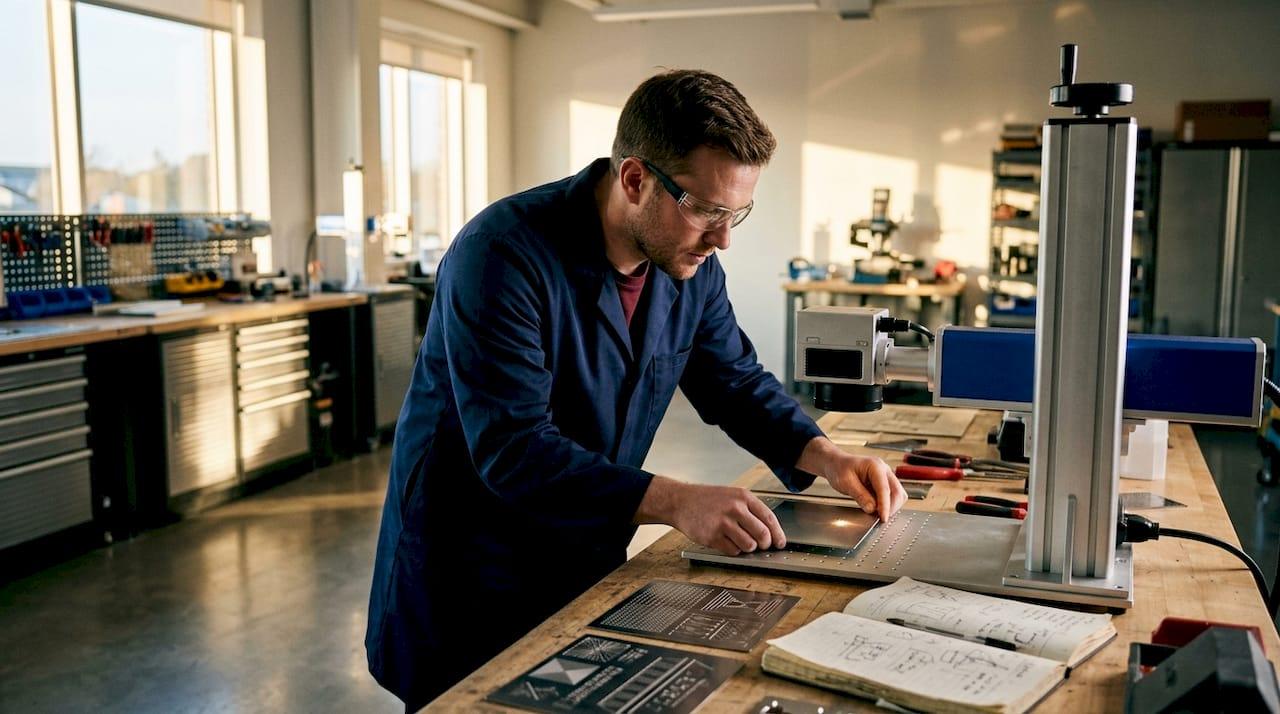
Laser marking works through a chemical or oxidation reaction triggered by concentrated heat. The surface stays intact, which is why the process is called sub-surface marking. Laser annealing, a specific type of laser marking, creates smooth dark marks beneath the surface without breaking it. This makes annealing the preferred choice for medical implants and food-grade parts where surface integrity is non-negotiable.
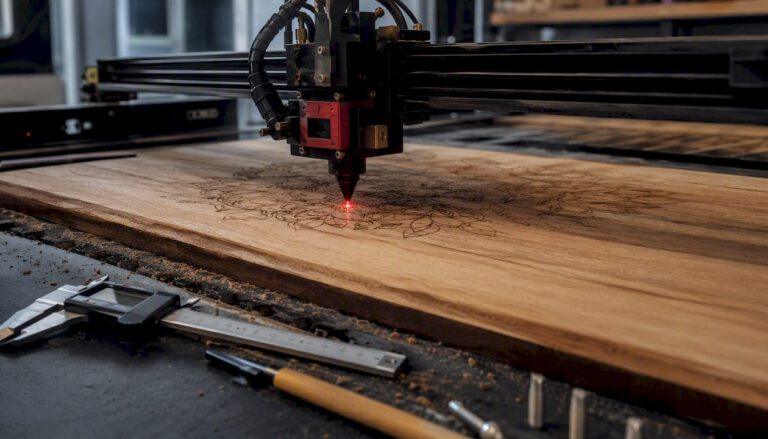
Laser etching melts the top layer of material, causing it to expand and rise slightly. The result is a mark you can feel with your fingertip. Laser engraving goes further, using high energy to vaporize material and leave a deep, permanent cavity. That cavity survives refinishing processes that would erase etched or marked surfaces entirely.
| Process | Depth | Material effect | Tactile feel |
|---|---|---|---|
| Laser marking | ~0 mm | Sub-surface color change | None |
| Laser etching | 0.001–0.025 mm | Surface melting, slight raise | Light texture |
| Laser engraving | 0.125 mm or more | Material vaporization, cavity | Deep groove |
Pro Tip: If you run your finger across the mark and feel nothing, it is laser marking. A slight bump is etching. A clear groove is engraving.
How do speed, cost, and durability compare?
Laser etching is the fastest of the three processes, making it the go-to for high-volume production runs. Laser marking sits in the middle for speed. Laser engraving is the slowest because vaporizing material requires more energy and more passes. Speed directly affects cost, so engraving carries the highest price per part in most production environments.
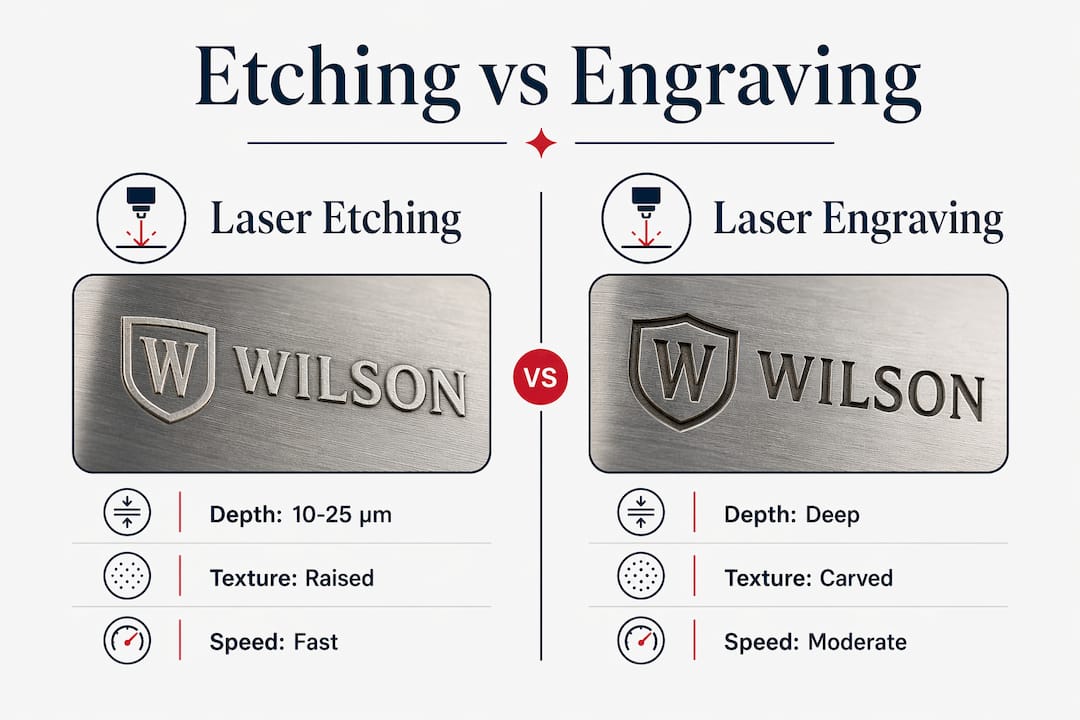
Durability follows the opposite order. Laser engraving produces the most durable marks. Engraving creates a deep cavity that survives painting, sanding, and heavy industrial wear. Etching produces shallow marks suited for nameplates and tags where speed matters more than long-term abrasion resistance. Laser marking depends on the surface coating for protection. If that coating wears away, the mark can fade.
Here is how the three processes compare across the key trade-offs you care about:
- Speed: Etching is fastest, marking is moderate, engraving is slowest.
- Cost per part: Etching is lowest, engraving is highest due to energy and time.
- Durability: Engraving outlasts etching and marking under heavy wear.
- Surface integrity: Marking preserves the surface completely; etching and engraving alter it.
- Environmental resistance: Engraving survives harsh chemicals and abrasion; marking relies on surface protection.
The right process depends on your production rate and the environment your product will face. Failing to consider both factors leads to poor choices that cost more to fix than to prevent. A barcode on a warehouse floor pallet needs engraving. A serial number on a stainless steel medical device needs marking.
What are the ideal use cases and materials for each process?
Each laser process has a natural home in specific industries and material types. Matching process to application is the single most important decision you will make.
Laser marking works best on metals that require corrosion resistance. Laser marking preserves dimensional integrity because it removes no material, making it the standard for serial numbers, barcodes, and medical part identification. Stainless steel, titanium, and anodized aluminum all respond well to marking. The FDA and ISO standards for medical device traceability frequently specify marking because it does not compromise the part’s surface.
Laser etching suits high-speed, shallow mark applications on metals, polymers, and ceramics. It is the preferred method for product nameplates, decorative tags, and circuit board identification where throughput matters. The raised texture from etching also improves readability under certain lighting conditions, which is a real advantage for barcodes scanned in variable light environments.
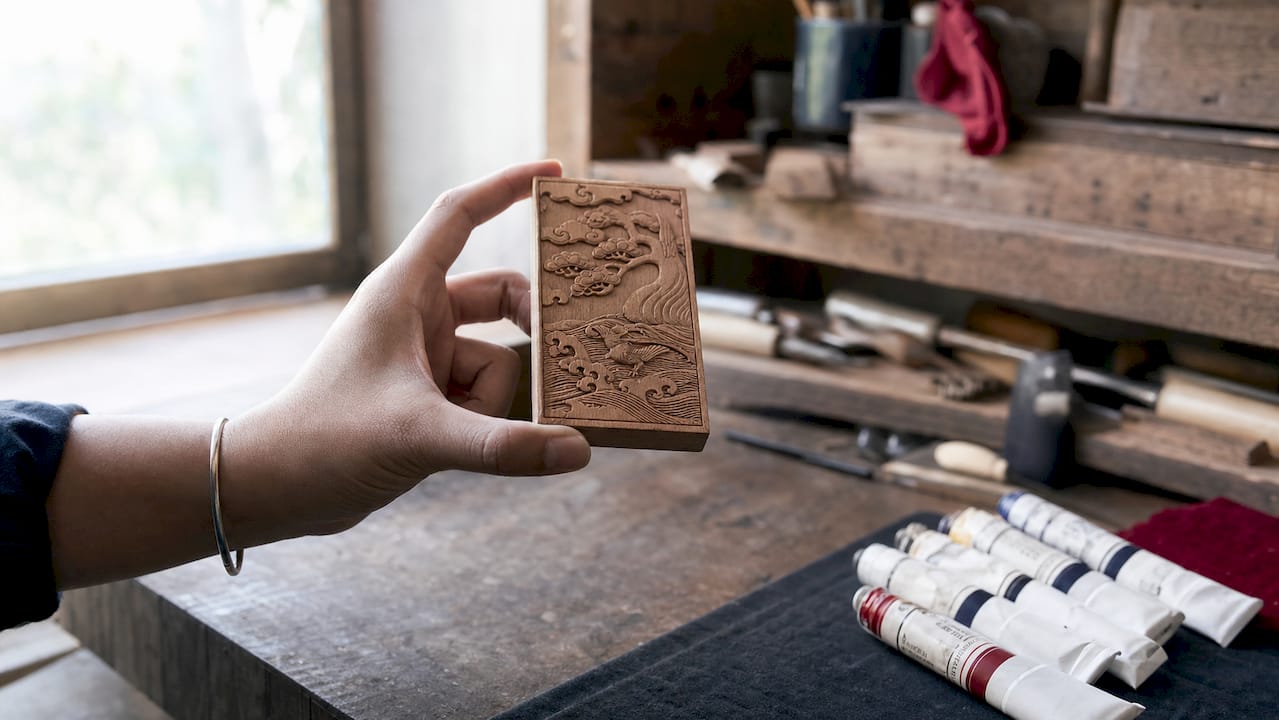
Laser engraving is the right choice for heavy-wear parts, wood, thick plastics, and deep personalization. For industrial laser engraving on parts that face grinding, painting, or chemical exposure, engraving is the only process that guarantees the mark survives. It is also the standard for custom gifts, trophies, and keepsakes where depth and visual impact matter.
- Marking: medical implants, food-grade equipment, aerospace serial numbers, anodized metals.
- Etching: product nameplates, polymer components, ceramics, high-volume metal tags.
- Engraving: wooden gifts, thick plastics, heavy industrial tools, personalized keepsakes.
Pro Tip: For custom text on manufacturing tools, engraving is almost always the right call. Shallow marks wear off fast on tools that see daily use.
What pitfalls should you watch for when choosing a laser process?
The biggest mistake is treating these three processes as interchangeable settings on the same machine. They are different parameter configurations, but the consequences of choosing wrong are real. Incorrect process selection can reduce part longevity or cause outright failure.
Ignoring material thermal sensitivity. High-carbon steels and thin polymers react differently to laser heat. A setting that works on stainless steel can crack a ceramic component or warp a thin plastic sheet. Always confirm material composition before selecting a process.
Using deep engraving on precision components. Deep engraving creates stress concentration points that can degrade fatigue life in load-bearing parts. It can also interfere with sensitive electronics on circuit boards. Etching preserves structural integrity in these applications.
Choosing the wrong laser source. Fiber lasers work best on metals, while CO2 lasers excel on plastics, wood, and organic materials. Using a fiber laser on acrylic or a CO2 laser on bare steel produces poor results and can damage the part.
Skipping a test run on the actual production material. Samples from different suppliers can have different surface coatings, alloy compositions, or thicknesses. A parameter set that worked last month may not work on a new batch.
Overlooking the final environment. A mark that looks perfect in the shop may fade in UV exposure, chemical wash cycles, or high-humidity storage. Engraving is recommended for heavy industrial wear precisely because it survives conditions that erase surface-level marks.
Understanding how laser settings influence results is the foundation of getting this right every time.
Key Takeaways
Laser engraving, etching, and marking each interact with material differently, and matching the right process to your application determines whether your mark lasts a lifetime or fails under the first coat of paint.
| Point | Details |
|---|---|
| Depth defines the process | Marking is near-zero depth; etching reaches 10–25 microns; engraving goes 125 microns or deeper. |
| Speed vs. durability trade-off | Etching is fastest and lowest cost; engraving is slowest but survives the harshest conditions. |
| Match process to environment | Marking suits corrosion-sensitive parts; engraving suits heavy-wear and refinished surfaces. |
| Laser source matters | Fiber lasers work on metals; CO2 lasers work on plastics, wood, and organics. |
| Wrong choice costs more to fix | Choosing incorrectly can scrap parts, void compliance, or produce marks that fail in the field. |
Why I always ask “where will this part end up?” before recommending a process
After years of working with custom laser projects, the question I ask first is never “how deep do you want it?” It is “where will this part live, and what will it face?” That single question eliminates most of the confusion between etching, engraving, and marking.
I have seen businesses order beautifully etched nameplates for outdoor equipment, only to find the marks nearly invisible after one winter. The surface was intact, but the shallow texture had filled with oxidation and grime. Engraving would have held. The cost difference between the two was small. The cost of reprinting and reapplying was not.
The other mistake I see regularly is assuming engraving is always the premium choice. It is not. On thin circuit boards or precision aerospace components, deep engraving creates stress points that can cause cracks under load. Etching or marking is the right answer there, and pushing for engraving because it “looks more professional” is a real risk.
My honest advice: work with a specialist who asks about your material, your environment, and your production volume before quoting a process. The difference between engraving and etching is not just aesthetic. It is structural. Getting it right the first time saves money, protects your product, and keeps your customers happy.
— Gary
Custom laser work made easy with Signaturelaserdesigns
Whether you need deep engraving on industrial tools or a beautifully marked personalized gift, Signaturelaserdesigns handles both with care and craftsmanship. Our team works with a wide range of materials, from stainless steel and aluminum to wood and acrylic, and we match the right process to your specific needs.
From custom industrial parts engraving (on Etsy) built to survive heavy wear, to thoughtful personalized keepsakes that last a lifetime, we make the process straightforward and the results worth showing off. Visit our custom engraving shop to browse options, get a quote, or start your next project today.
FAQ
What is the main difference between laser etching and engraving?
Laser etching melts the surface to a depth of 10–25 microns, creating a raised texture. Laser engraving vaporizes material to depths of 125 microns or more, forming a deep, permanent cavity.
Is laser marking permanent?
Laser marking is permanent as long as the surface coating it relies on remains intact. On bare metals, annealing-type marking creates a sub-surface color change that is highly durable without removing any material.
Which laser process is best for medical devices?
Laser marking, specifically laser annealing, is the standard for medical devices. It creates identification marks without disrupting the surface, preserving corrosion resistance and meeting hygiene requirements.
Can the same laser machine do etching, engraving, and marking?
Yes. The three processes are different parameter settings on the same laser system, not different machines. The laser source type, power, speed, and frequency are adjusted to achieve each result.
What laser is best for wood and plastic?
CO2 lasers work best on wood, plastics, and organic materials. Fiber lasers are optimized for metals. Using the wrong laser source on a material produces poor marks and can damage the part.
Recommended