Personalized Guitar Shape Wood Blank: Builder’s Guide
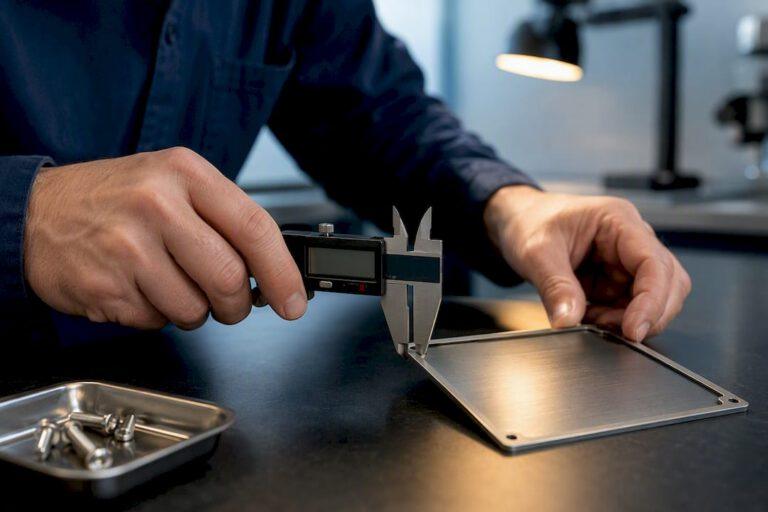
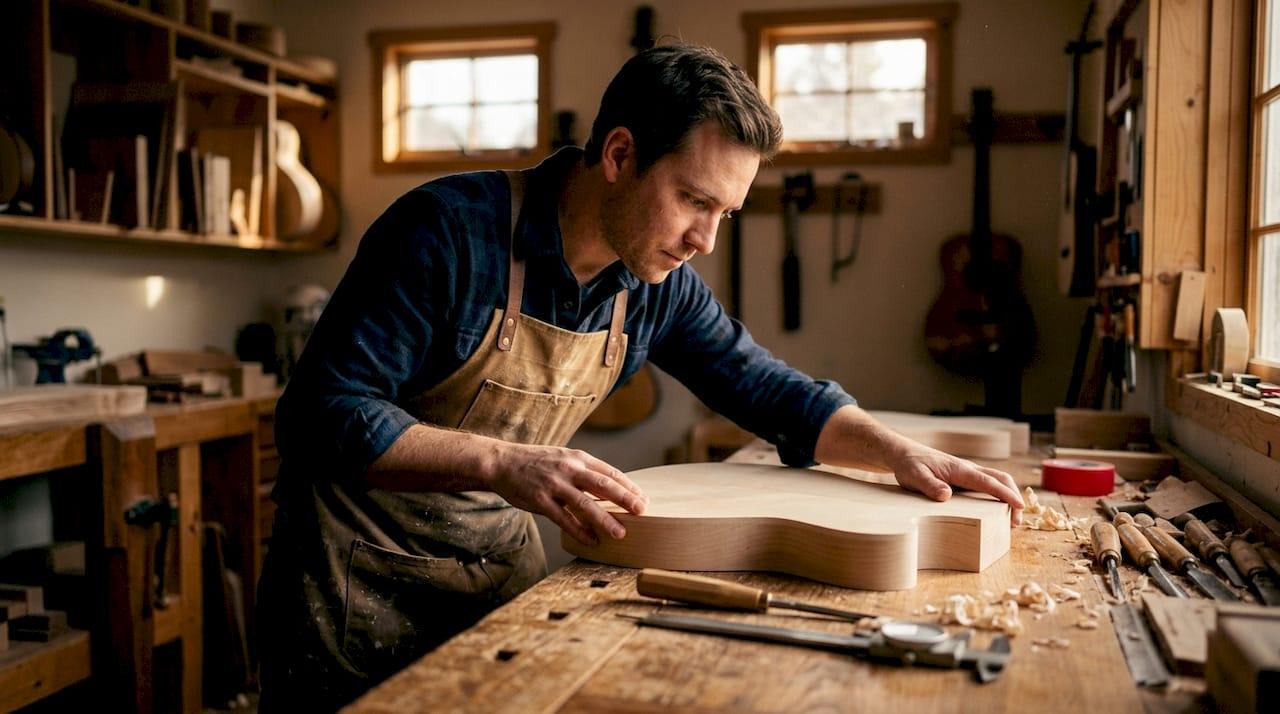
A personalized guitar shape wood blank is a precisely cut, unfinished wood piece shaped like a guitar body, ready for custom instrument builds or decorative projects. Unlike raw lumber, these blanks arrive pre-shaped to a specific guitar outline, saving builders significant time on rough cutting. The industry term for this category is “tonewood body blank,” and understanding that vocabulary helps you communicate clearly with suppliers and custom shops. Whether you are building a one-of-a-kind electric or creating a unique gift, the right custom guitar wood blank is the foundation everything else depends on.
1. What are the most common woods for personalized guitar blanks?
Wood species determines tone, weight, and how easily you can shape and finish a blank. Black Walnut and Basswood are two of the most popular choices for guitar body wood blanks, and each serves a different builder profile.
✦ Featured From Our Shop ✦
Handcrafted & laser engraved in Georgia, just for you
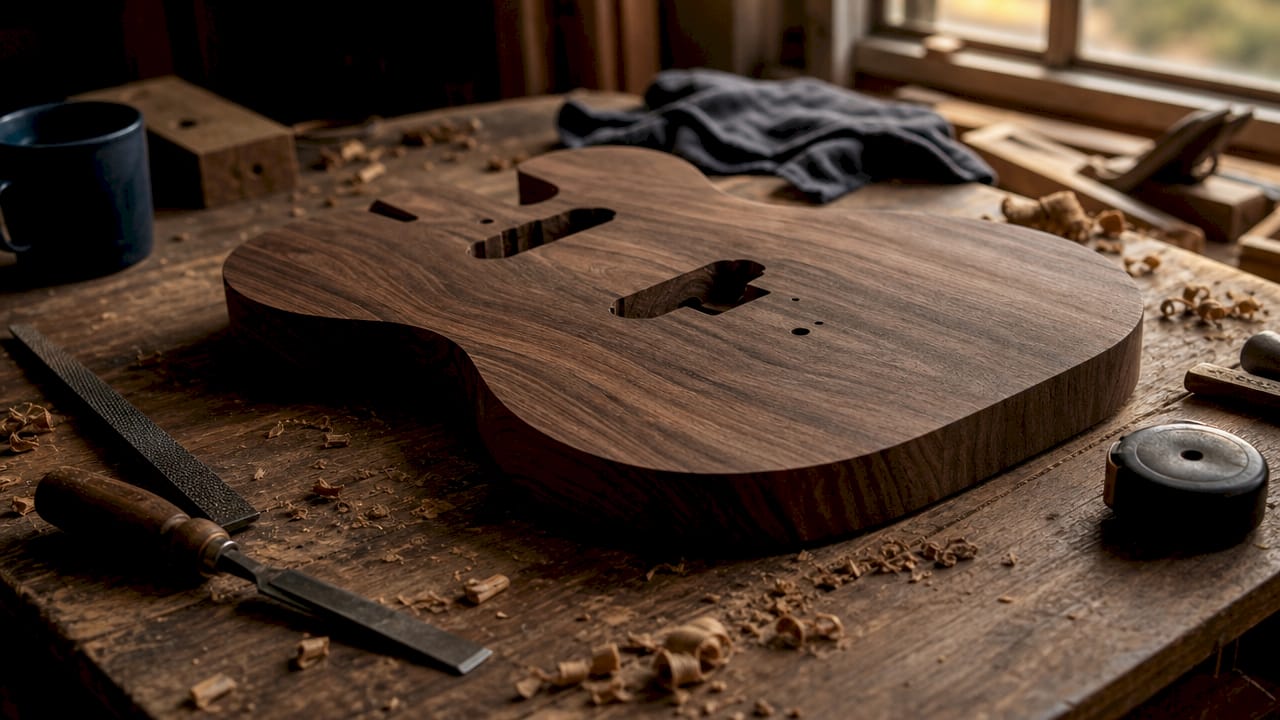
Black Walnut delivers a rich, warm tone with a tight grain that holds detail well under carving and engraving. It is heavier than Basswood, which suits players who prefer a solid, resonant feel. The dark chocolate color also makes it a standout choice for display or gift blanks where visual impact matters.
Basswood is lighter, softer, and easier to work with hand tools and CNC machines. Its neutral tone makes it a favorite for builders who plan to paint or heavily finish the body. Basswood blanks are widely used in production guitar manufacturing precisely because the wood machines cleanly and accepts finishes evenly.
Both species perform best when kiln dried to 6–7% moisture content. That level of dryness removes the traditional waiting period builders once needed after purchase to let wood stabilize. Beginners often assume any dry-looking wood is ready to use. Kiln drying to the correct moisture level is what actually prevents warping after the build is complete.
Pro Tip: Ask your supplier for a moisture content certificate before ordering. A blank at 10% or higher moisture will move after you route it, and that movement can crack a finish or shift hardware alignment.
2. What are the typical dimensions for a guitar body wood blank?
Standard guitar body blanks follow consistent sizing conventions that align with common guitar body styles. Dimensions typically range from 21 to 28 inches in length and 14 to 18 inches in width, covering most electric and acoustic body shapes.
Thickness is where builders face a real decision. Most suppliers offer two options: 2-inch unplaned or 1-3/4-inch planed. Planed blanks reduce thickness by about 1/4 inch compared to unplaned stock. That difference matters more than it sounds.
| Blank Type | Thickness | Best For |
|---|---|---|
| Unplaned | 2 inches | Builders who want to plane to their own spec |
| Planed | 1-3/4 inches | Immediate routing and hardware fitting |
| Multi-piece | Varies | Wide bodies or figured wood combinations |
Choosing between planed and unplaned affects hardware fit directly. Most electric guitar bridges and tremolo systems are designed around a 1-3/4-inch body. If you order an unplaned blank and skip the planing step, your bridge posts may not seat correctly. Acoustic builders often prefer the full 2-inch thickness for carving a top arch.
Pro Tip: Always confirm your hardware specs before ordering. Bridge saddle height and pickup routing depth are both tied to body thickness, and correcting a mismatch after routing wastes both wood and time.
3. How are personalized guitar shape blanks made?
The production process for a made-to-order guitar blank starts with a design file, not a saw. Most professional shops require a CAD file before any cutting begins. If you arrive with a hand-drawn sketch, that sketch must be converted to a production-ready digital file first.
Converting a sketch to CAD involves significant professional time. Custom design work typically runs around $100 per hour, with CAD conversion for a complex body shape taking roughly 9 hours. CNC shop time adds another layer of cost at approximately $75 per hour. Understanding these rates helps you budget realistically for a truly custom guitar shape wood cutout.
Transitioning from hand-drawn sketches to CAD is not optional for complex designs. Hardware routing, neck pocket placement, and control cavity positions all require exact coordinates that only a proper CAD file can deliver. Skipping this step leads to misaligned components that no amount of hand fitting can fully correct.
Once the CAD file is approved, a CNC router cuts the blank to shape with high accuracy. However, CNC-machined blanks still require manual sanding, hardware routing, and fret leveling before the blank is assembly-ready. Machine tool marks remain on the surface after cutting. A builder who expects a CNC blank to arrive fully finished will be surprised by how much hand work remains.
Options like neck-through blanks and multi-piece glue-ups add complexity and cost. Neck-through designs require the blank to extend the full length of the instrument, which demands longer stock and more precise grain matching. Multi-piece blanks join two or more pieces of wood to achieve the required width, and a well-executed glue joint is structurally as strong as solid wood.
4. What customization options go beyond the basic shape?
A guitar shape wood cutout is just the starting point. The real personalization happens through engraving, staining, wood selection, and hardware integration choices.
Laser engraving is one of the most popular ways to personalize a guitar blank for display or gifting. Names, logos, artwork, and custom text can be burned directly into the wood surface with high detail. Laser-cut wood blanks from materials like Baltic birch offer paintable surfaces that accept both engraving and color finishes cleanly. This makes them excellent for decorative projects where tone is secondary to appearance.
Beyond engraving, builders and gift-givers can explore these personalization paths:
- Wood veneer overlays: A thin layer of figured maple or exotic wood bonded to the face of a plain blank adds visual depth without the cost of a full figured body.
- Multi-wood layering: Combining two species in a single blank, such as a Walnut core with a Maple cap, creates visual contrast and can influence resonance.
- Custom staining and grain filling: Water-based dyes applied before sealing bring out grain patterns in ways that natural finishes alone cannot achieve.
- Hardware routing integration: Specifying pickup cavity shapes, control plate cutouts, and strap button locations during the blank order saves routing time later.
- Personalized engraving for gifts: A guitar-shaped wood blank with a musician’s name and a meaningful date makes a genuinely unique gift that no retail store carries.
The design inspiration possibilities for custom blanks are wide. Signaturelaserdesigns works with customers to bring specific design ideas to life through precision laser engraving, whether the project is a functional instrument body or a decorative wall piece.
5. How to select the best guitar blank for your project
Matching a blank to your project starts with being honest about what the finished piece needs to do. A display blank and a playable instrument blank have different requirements, and buying the wrong type wastes money.
Body shape drives every other decision in a custom guitar build. Guitar Kit World notes that body shape determines ergonomic balance and fret access before wood species even enters the conversation. Choose your outline first, then select wood based on weight and appearance rather than tone alone.
For playable builds, prioritize kiln-dried hardwoods like Black Walnut or Mahogany, planed to the correct thickness for your hardware. For gift or display blanks, lighter woods like Basswood or Baltic birch work well and cost less. Budget matters too. Personalized gifts cost more when design complexity increases, and custom guitar blanks follow the same logic. A simple silhouette cut from Basswood costs far less than a figured Walnut blank with routed cavities and laser-engraved artwork.
Work with a supplier who can confirm moisture content, provide accurate dimensions, and accept your CAD file or help you create one. Shops that offer both CNC cutting and laser engraving under one roof reduce handoff errors between production steps.
Key takeaways
The best personalized guitar shape wood blank combines kiln-dried tonewood, accurate CAD-driven cutting, and the right thickness for your hardware and build goals.
| Point | Details |
|---|---|
| Wood species matters | Black Walnut suits resonant builds; Basswood suits painted or lightweight projects. |
| Moisture content is critical | Order blanks kiln dried to 6–7% to prevent warping after the build. |
| Thickness affects hardware fit | Planed blanks at 1-3/4 inches fit most electric hardware; unplaned at 2 inches suits carving. |
| CAD conversion adds cost | Budget $100/hr for design time before CNC cutting begins at around $75/hr. |
| Personalization goes beyond shape | Laser engraving, veneer overlays, and custom routing all add meaningful differentiation. |
What I have learned working with custom guitar blanks
The single biggest mistake I see builders make is ordering a blank before finalizing their hardware list. Body thickness, pickup cavity depth, and bridge post spacing are all interdependent. Changing one after the blank is routed usually means starting over.
I also think the industry undersells kiln-dried wood as a feature. Builders new to the craft assume any wood sold as “dry” is ready to use. The 6–7% moisture standard exists for a reason. Wood at higher moisture levels will move as it acclimates to your shop, and that movement shows up as a twisted neck pocket or a finish that cracks along the grain six months after completion.
My honest advice: start every project with the body shape drawn to scale, confirm your hardware dimensions, then order your blank. If your design is complex, invest in proper CAD conversion. The $900 you might spend on design and CNC time is far less than the cost of a ruined blank and a rebuild. Collaboration with a shop that handles both cutting and engraving in one workflow, like Signaturelaserdesigns, removes a lot of the coordination headaches that come from using multiple vendors.
— Gary
Custom guitar blanks and engraving at Signaturelaserdesigns
Looking for a wood blank that is truly yours from the first cut? Signaturelaserdesigns brings precision laser engraving and custom wood cutting together in one place, so your guitar project does not get lost between vendors.
Our team works with musicians, luthiers, and gift-givers to create custom laser-engraved blanks that match your exact design. Whether you need a display piece with a name and date burned into Black Walnut or a functional body blank ready for routing, we handle the details. Explore our personalized gift options to see how a guitar shape wood blank becomes a gift no one forgets. Reach out to our team and tell us what you are building.
FAQ
What wood is best for a personalized guitar body blank?
Black Walnut and Basswood are the most popular choices. Black Walnut offers warmth and visual appeal; Basswood is lighter and easier to finish.
What thickness should a guitar shape wood blank be?
Most electric guitar builds use a planed blank at 1-3/4 inches thick. Unplaned blanks at 2 inches suit builders who want to plane to a custom spec or carve a top arch.
Do laser-cut guitar blanks need additional finishing?
Yes. Even CNC and laser-cut blanks require manual sanding, hardware routing, and surface preparation before assembly or finishing.
How much does a custom guitar blank cost to produce?
CAD design runs around $100 per hour and CNC shop time around $75 per hour. Total cost depends on design complexity and wood species selected.
Can a guitar shape wood blank be used as a personalized gift?
Absolutely. A laser-engraved guitar-shaped blank with a name, date, or custom artwork makes a unique gift that no retail product can replicate.