The Right Metal Data Plate Spec for Your Machinery, Fast
For most industrial machinery, the vendor-ready default is anodized aluminum with laser-marked or photo-anodized graphics, mounted with studs or rivets. Here’s why we recommend it as your starting spec:
✦ Featured From Our Shop ✦
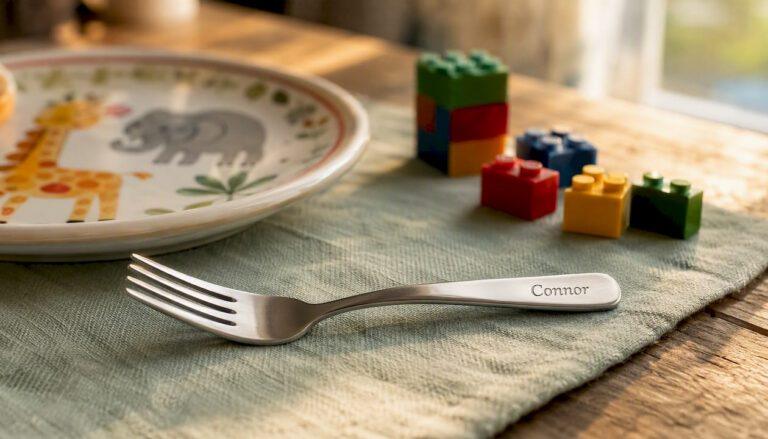
Handcrafted & laser engraved in Georgia, just for you
- Photo-anodized and laser-marked aluminum can survive decades outdoors when produced correctly
- It meets the legibility and contrast needs of barcodes, QR codes, and compliance text
- It costs less than stainless while holding up to most industrial environments
Send your vendor this now: vector artwork, plate dimensions, material choice, every data field you need listed, quantity, and a photo of the mounting surface.
Key Takeaways
The most reliable machinery data plate spec pairs a material matched to environmental exposure with a marking method that embeds the mark below the surface, not on top of it.
| Point | Details |
|---|---|
| Default spec | Anodized aluminum with laser or photo-anodized marking covers most industrial use cases. |
| Include digital fields | Add ProductInstanceUri, AssetId, and a QR code to support asset tracking. |
| Match marking to environment | Reserve stainless steel and etching for salt spray, heat, or washdown conditions. |
| Order a proof first | A pre-production sample catches contrast and spacing errors before a full run. |
| Recommended supplier | Signaturelaserdesigns offers material selection, embedded marking methods, and quote-ready ordering for industrial data plates. |
Table of Contents
- What Fields Belong on Customized Metal Data Plates for Machinery?
- Which Material and Marking Method Should You Choose?
- What File and Design Specs Do Vendors Need?
- [How Should You Mount and Finish the Plate?](#how-should-you-mount-and-finish-the-platehttpsmgftoolseu)
- What Drives the Price of a Custom Metal Data Plate?
- How Do You Evaluate a Data Plate Supplier?
- What Do Suppliers Wish Buyers Knew Before Ordering?
- Get Your Machinery Data Plates Made Right the First Time
- Frequently Asked Questions
- Sources
What Fields Belong on Customized Metal Data Plates for Machinery?
Every machinery data plate needs a core identity block: manufacturer name, model number, serial number, and year of construction. Add voltage, amperage, and load ratings if the machine is electrical or load-bearing. These aren’t optional extras. They’re what a technician reaches for first when troubleshooting equipment three states away from where it was built.
Beyond the basics, OPC UA’s machinery nameplate guidance recommends a formal identification layer for anything that will eventually connect to digital asset systems: a ProductInstanceUri (a globally unique product identifier), AssetId, ComponentName, and Location. These fields sound like software jargon, but they’re increasingly expected on physical plates for equipment tied into maintenance databases or IoT platforms.
A field list you can paste directly into your RFQ:
- Manufacturer, model, serial number, year of construction
- ProductInstanceUri or manufacturer URI
- Voltage/amperage/load rating and relevant part numbers
- AssetId, ComponentName, Location
- QR code or barcode linked to your asset record
- Contact info, warranty terms, and a logo area
Pro Tip: If your maintenance team already uses a CMMS or asset-tracking tool, ask your engraving vendor to encode that same asset ID into the QR code. It turns a static plate into a two-second lookup for technicians in the field.
The OPC UA specification even sets recommended field lengths for consistency, such as AssetId supporting at least 40 characters. That level of formality matters more than it sounds like it should once you’re managing hundreds of machines across multiple sites.
Which Material and Marking Method Should You Choose?
Match the material to the environment, not the catalog page. Anodized aluminum is the workhorse: light, corrosion-resistant, and affordable enough for most indoor and outdoor industrial applications. Stainless steel earns its higher price tag around heat sources, marine environments, or anywhere aluminum would corrode faster than it should. Brass looks great on day one but tarnishes in harsh industrial settings, so we generally steer buyers toward it only for indoor, low-abuse applications like control panels or decorative nameplates.
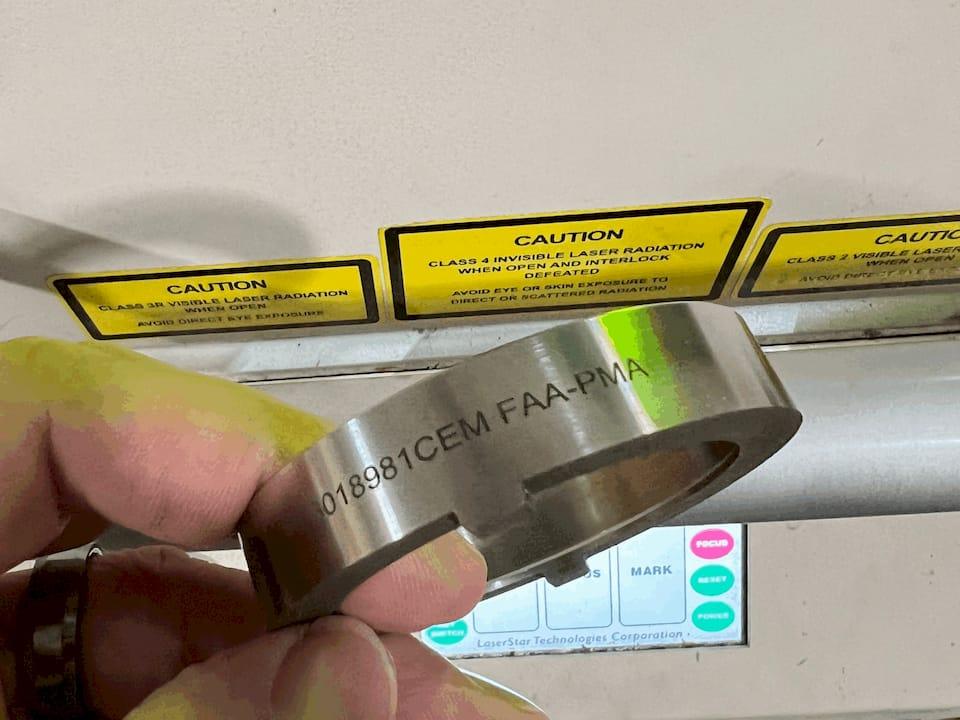 (on Etsy)
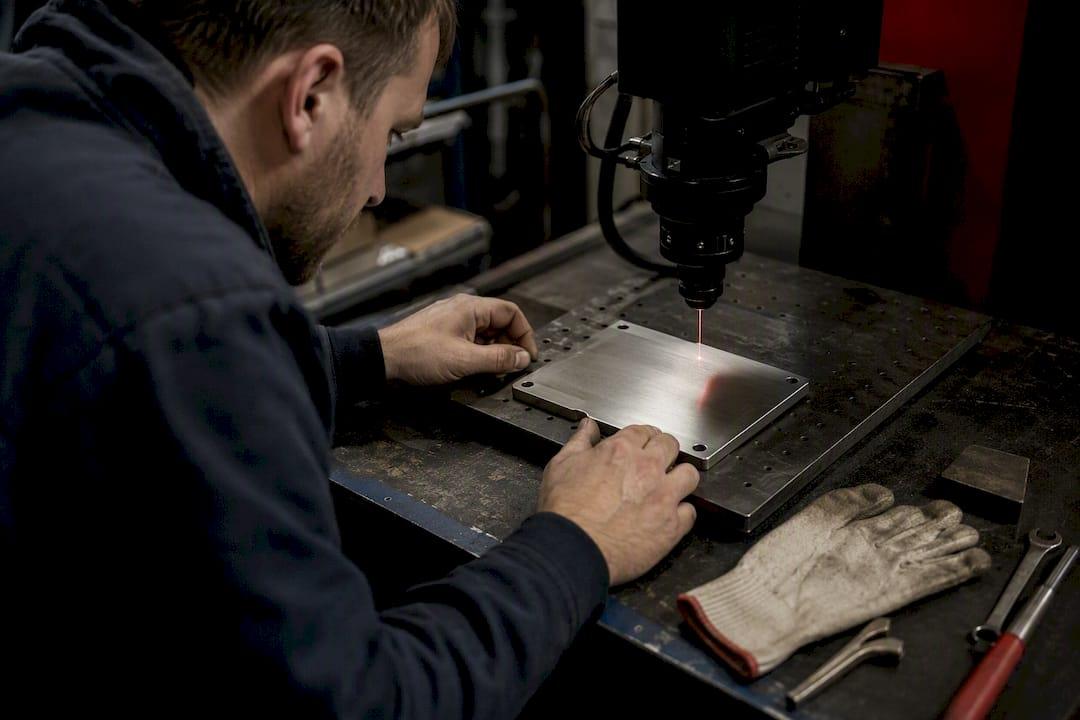
Marking method matters as much as substrate. Screen printing is the cheapest option, but it sits on top of the metal rather than in it, which means it wears off under abrasion or solvent exposure. Laser marking, chemical etching, and photo-anodized (MetalPhoto) processes all embed the mark below the surface instead of on it. Chemical etching typically cuts to a depth of .0015 to .008 inches and can be color-filled for contrast.
Here’s the environmental shorthand:
- Salt spray or marine exposure: stainless steel, photo-anodized or deep-etched
- High heat or washdown cycles: stainless steel, laser marked
- General outdoor/industrial use: anodized aluminum, laser marked or photo-anodized
- Abrasion-heavy environments: any embedded method, avoid screen printing
Properly specified photo-anodized and etched plates are commonly rated for 20+ years outdoors, which tells you something: the upfront cost difference between screen printing and etching is small compared to the cost of replacing an unreadable plate on a machine that’s still running fine.
Pro Tip: When failure isn’t an option, whether it’s a load rating tag or a compliance plate, pick a method that embeds the mark. Surface-applied graphics are the first thing to go under real-world wear.
What File and Design Specs Do Vendors Need?
Send vector artwork, not raster images. Files should be .AI, .EPS, or .PDF with all fonts outlined, so nothing shifts during production. Raster files can work for photos or complex logos, but text and line art should always arrive as vectors to keep edges crisp at any size.
Legibility rules aren’t arbitrary. Variable data like serial numbers needs a minimum font size to stay readable after months of grease and handling, and stroke widths need enough contrast against the background finish. Glossy finishes look premium but create glare that trips up barcode scanners, so if your plate includes a QR code, request a matte finish.
| Spec Element | Recommendation |
|---|---|
| Artwork format | Vector (.AI, .EPS, .PDF), fonts outlined |
| Minimum text height | Sized for legibility at arm’s length; smaller for fixed data, larger for variable data |
| Barcode/QR quiet zone | Clear margin equal to at least one module width around the code |
| Finish for scannable codes | Matte, to reduce scanner glare |
| Edge margin | Keep text and codes clear of mounting holes and plate edges |
Pro Tip: Avoid tiny reversed (light text on dark background) type for anything below a few characters. It reads fine on a screen and disappears in low light on a shop floor.
How Should You Mount and Finish the Plate?
Mounting choice depends on whether the plate ever needs to come off. Screws or studs work best when a plate might be updated later, like when a machine gets refurbished or resold. Rivets are the permanent option, harder to remove and less prone to loosening under vibration. Structural adhesive suits smooth, low-vibration surfaces where drilling isn’t practical or would compromise a housing.
Finish selection is as important as the mounting hardware. A clearcoat protects laser-marked aluminum from surface oxidation, while a baked enamel fill adds contrast and protection to chemically etched plates. For plates going on equipment in caustic or high-moisture environments, a hardcoat anodize grade adds real service life.
| Condition | Best Mounting Approach |
|---|---|
| High vibration | Rivets or studs, not adhesive alone |
| Frequent washdown | Rivets or welded studs with sealed edges |
| Smooth, non-drillable surface | Structural adhesive |
| Plate may need future updates | Screws into threaded studs |
Pro Tip: Specify your mounting hardware and hole locations directly in the RFQ. Retrofitting mounting holes after a plate is already engraved is one of the most avoidable delays in this whole process.
What Drives the Price of a Custom Metal Data Plate?
Material and marking method set the floor, but complexity, quantity, and finishing move the number from there. A simple anodized aluminum tag with a few static fields costs far less than a stainless plate with variable serialized data, a QR code, and a hardcoat finish.
Send this checklist with your quote request:
- Final artwork files (vector format)
- Exact plate dimensions and hole locations
- Complete list of required data fields
- Photo of the mounting surface
- Quantity needed, including a buffer for spares
- Required lead time
Prototype runs typically turn around faster than production batches, but expect a short lead time for both, plus additional time if you request a pre-production proof. Proofs cost a little extra upfront, but they catch spacing, contrast, or barcode issues before you’re committed to a hundred identical plates.
To trim cost without sacrificing durability, ask about substituting anodized aluminum for stainless where the environment allows it, or reducing plate complexity by moving secondary data (like full specs) to a linked QR code instead of engraving every field. Full pricing mechanics, including how material and complexity interact, are broken down on our laser engraving cost page.
How Do You Evaluate a Data Plate Supplier?
Before you commit, ask any vendor for sample plates so you can check marking depth and finish quality in person, not on a screen. Confirm they follow production controls like ISO 9001 or an equivalent quality system, and ask directly about salt spray, abrasion, and solvent resistance testing if your equipment will face harsh conditions.
A vendor evaluation checklist worth using:
- Sample quality and marking depth on your actual material choice
- Documented production controls and quality certifications
- Experience with your specific marking method (etch, laser, photo-anodize)
- Support for traceability fields like QR codes and asset IDs
- Realistic turnaround times and references from similar industrial clients
Pro Tip: Ask for a small batch of test plates on your actual mounting surface before committing to a full production run. It’s the cheapest insurance you’ll buy all year.
Signaturelaserdesigns works directly with manufacturers and equipment operators on exactly this kind of spec, from material selection through variable data and QR integration. Our industrial engraving services page walks through capabilities in more depth, and getting a quote starts with sending us your field list and plate dimensions.
What Do Suppliers Wish Buyers Knew Before Ordering?
The mistakes we see most often aren’t material choices. They’re incomplete RFQs: buyers skip fields they’ll need later, assume a mounting method without checking the surface, or choose screen printing for a plate headed outdoors. The fix is simple. List every field up front, photograph the mounting surface before you order, and match marking depth to the actual environment, not the easiest option on the price sheet.
Get Your Machinery Data Plates Made Right the First Time
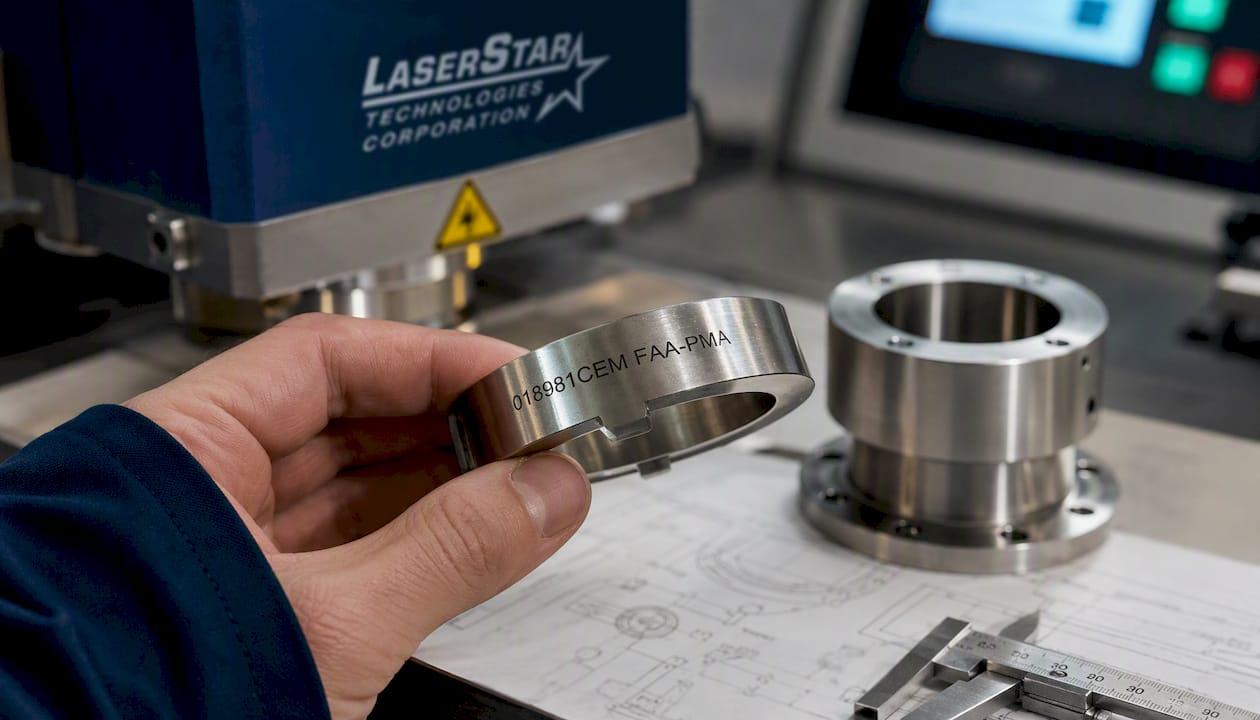
Signaturelaserdesigns handles the full range of what this guide covers, anodized aluminum, stainless steel, and brass plates, laser marking, chemical etching, and photo-anodized finishes, sized for prototypes or full production runs.
 (on Etsy)
Getting a quote is straightforward: send your vector artwork, plate dimensions, required data fields, and quantity, and we’ll walk you through material and finish options based on where the equipment lives and how hard it works. For buyers who want to see the process end to end before committing, our industrial laser engraving listing (on Etsy) shows real examples of finished parts marking work, and our metal engraving services page breaks down turnaround categories for prototypes versus production batches. Send us your specs today and we’ll turn around a fast, honest estimate.
Frequently Asked Questions
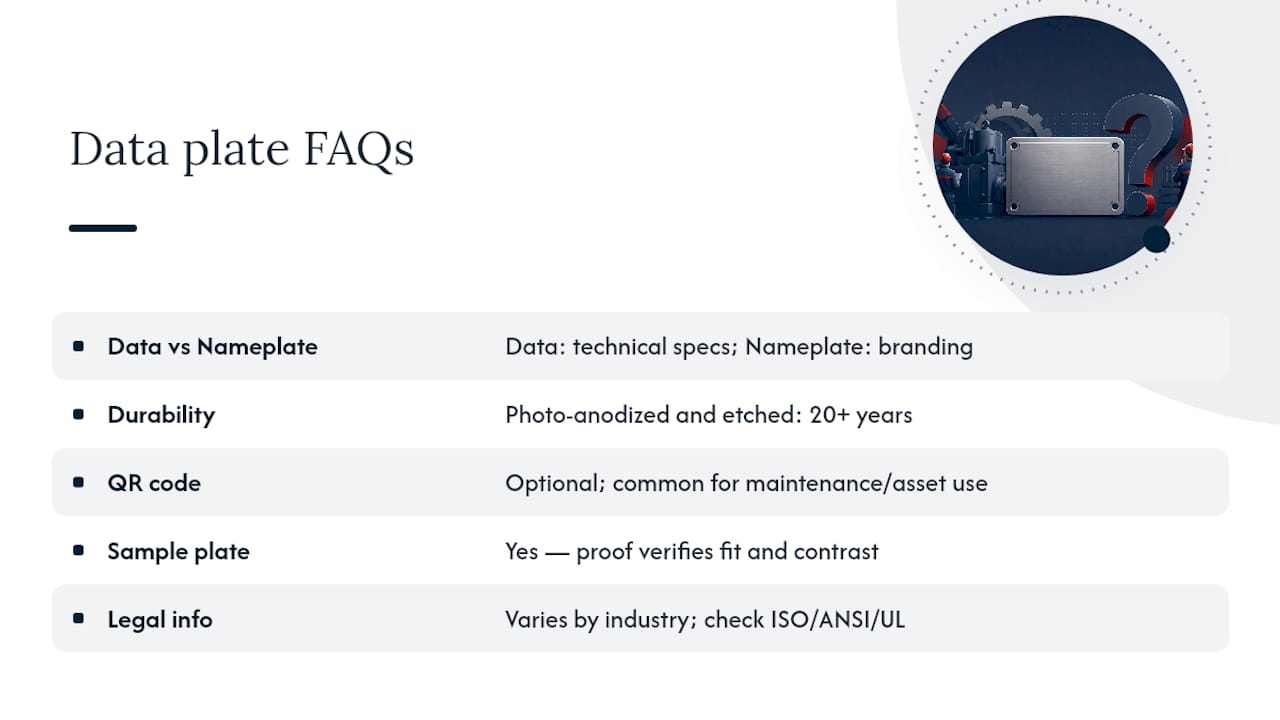
What’s the difference between a data plate and a nameplate?
The terms are often used interchangeably, but a data plate typically carries technical specifications, ratings, and compliance data, while a nameplate can be purely for branding or identification. Many industrial plates serve both purposes at once.
How long should a metal data plate last?
Photo-anodized and properly etched plates are commonly rated for 20+ years outdoors, which typically matches or exceeds the service life of the machinery itself.
Do I need a QR code on my machinery data plate?
Not always, but it’s increasingly standard for equipment tied into maintenance tracking or asset management systems, since it lets technicians pull up full specs and service history instantly in the field.
Can I order a single sample plate before committing to a full batch?
Yes, and we recommend it. A pre-production proof lets you verify contrast, spacing, and mounting fit on your actual equipment before ordering in volume.
What information is legally required on machinery data plates?
Requirements vary by industry, equipment type, and jurisdiction, so check applicable standards (ISO, ANSI, or UL guidance relevant to your equipment category) and consult your compliance team for your specific application.
Sources
For deeper technical reference, the OPC UA machinery nameplate documentation backs the ProductInstanceUri and AssetId field recommendations used throughout this guide. Supplier durability data on etched and anodized nameplates and long-service data plates supports the material lifespan claims. If durability is contract-critical for your application, request salt spray or abrasion test data and certificates directly from your vendor rather than relying on catalog claims alone.
- Machinery Basic Building Blocks – 8.5 IMachineTagNameplateType
- Custom Metal Nameplates — Etched & Anodized | JASPER
- Custom Data Plates for Equipment & Safety | Metal Marker Mfg
Recommended