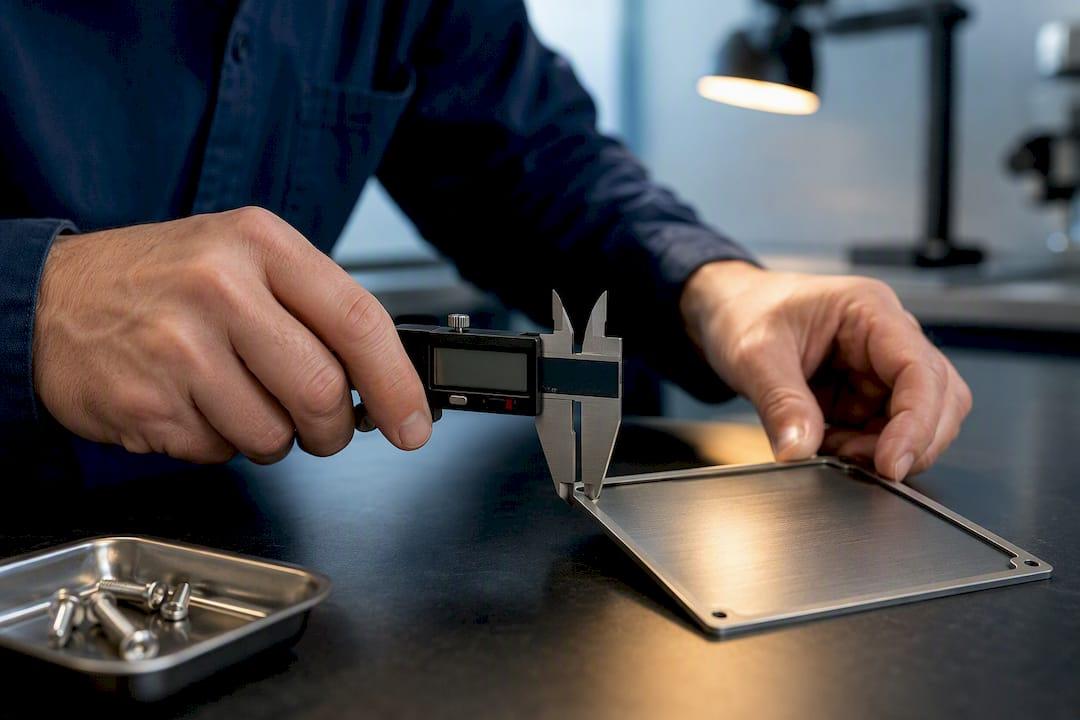
There is no single best thickness for a machinery data plate. The right choice depends on mounting method and environment, and it falls into three practical bands: ultra-thin adhesive skins suitable for curved or cosmetic panels, mid-range plates practical for most general labeling, and heavy-duty plates for high-vibration or outdoor equipment. Match your band to your mounting hardware and material before you finalize a spec.
✦ Featured From Our Etsy Shop ✦
Handcrafted & Laser Engraved Just For You
Key Takeaways: Choosing the Right Data Plate Thickness
- Ultra-thin plates rely heavily on surface prep and adhesive quality, making them suitable only for controlled environments and smooth surfaces.
- Mid-range plates, around 0.03 to 0.06 inches thick, offer the best balance for most industrial and outdoor nameplate applications across materials.
- Thicker plates are necessary for high-vibration or outdoor settings that require mechanical fasteners, but they can add unnecessary cost and complexity for lightweight enclosures.
- Material type influences recommended thicknesses because of differing stress, weather resistance, and fastening needs, with aluminum and Metalphoto often tolerating thinner gauges.
- Mounting method should guide thickness selection, as adhesive bonds need surface preparation, while fasteners require enough material to grip without tearing or deforming.
Table of Contents
- What Thickness Ranges Work Best for Different Uses?
- How Does Material Choice Change the Right Thickness?
- Which Mounting Method Fits Which Thickness?
- What Manufacturing Rules Affect Your Thickness Choice?
- How Does Signature Laser Designs Match Thickness to Your Job?
- What Mistakes Do We See Most Often in Data Plate Specs?
- Get Samples and a Quote for Your Data Plates
- Where to Go for Deeper Technical Specs
- Sources
What Thickness Ranges Work Best for Different Uses?
Think of thickness as a trade-off between flexibility and rigidity, not a quality score. Thicker isn’t automatically better. It’s often just heavier and pricier for no real benefit.
Ultra-thin plates work well as adhesive-backed foil or metal skins on curved or cosmetic surfaces, like control panel overlays or branded housings where a metal look matters more than mechanical toughness. Adhesive-backed nickel skins fall in this range specifically because they conform to curves without bulk. The tradeoff: these plates depend entirely on the adhesive bond. A poor surface prep job means the plate peels within a season, especially outdoors.
Mid-range plates (0.012"–0.032" / 0.3–0.8 mm) are the workhorses of industrial labeling. Suppliers consistently point to the 0.03"–0.06" band as the sweet spot for general-purpose nameplates because it balances flexibility with enough rigidity to accept adhesive or small rivets. This is where most equipment ID plates, serial tags, and compliance labels land.
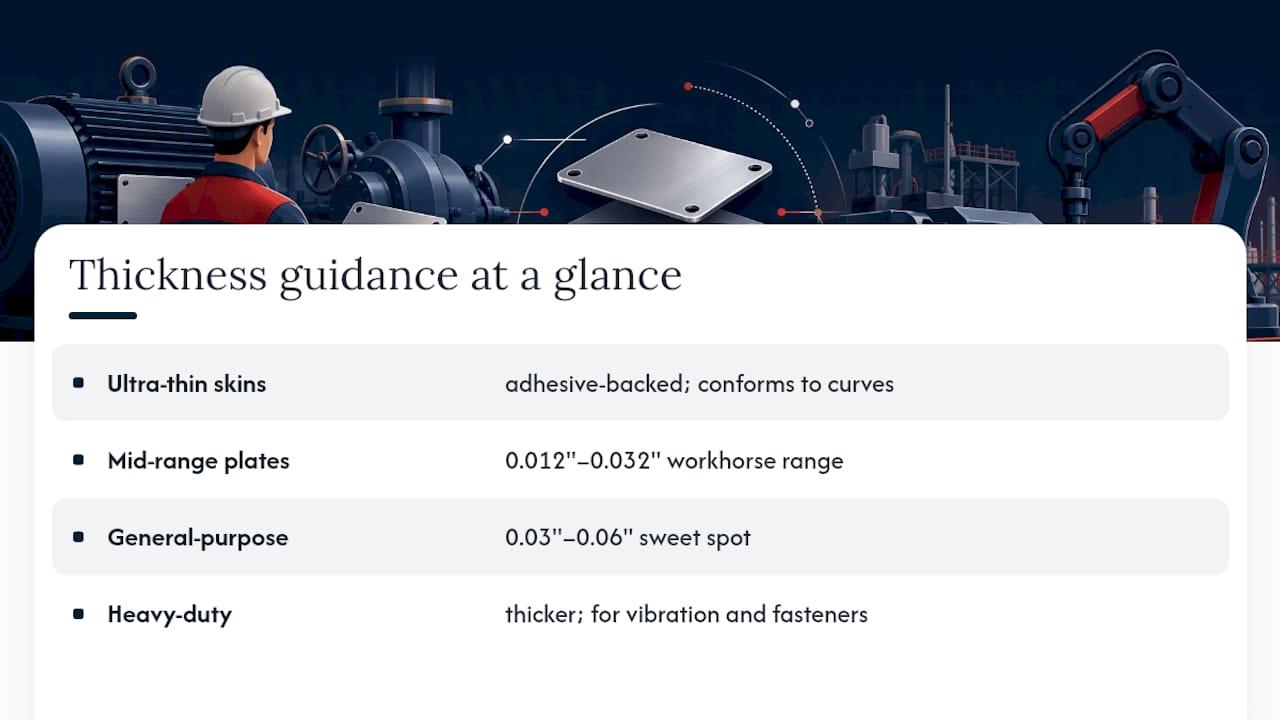
Heavy-duty plates hold up on high-vibration equipment, outdoor installations, and anything requiring mechanical fasteners rather than adhesive alone. Extra thickness also allows deeper engraving, which stays legible even after years of abrasion or weather exposure.
Common mistake worth flagging: specifying a heavy-duty plate for a lightweight enclosure just because it “feels more durable.” That extra mass can add cost, complicate mounting, and even stress thin sheet-metal housings it’s fastened to.
How Does Material Choice Change the Right Thickness?
Thickness recommendations shift depending on what metal you’re specifying, because each material behaves differently under stress, weather, and fastening loads.
Anodized aluminum performs well in a medium thickness range for most outdoor applications. The anodized layer resists corrosion effectively on its own, so you’re choosing thickness mainly for rigidity and mounting compatibility rather than weatherproofing. It accepts adhesive, rivets, or screws depending on where you land in that range.
Metalphoto can run thinner than you’d expect and still deliver excellent long-term outdoor durability. Its anodized aluminum base with sealed photographic image lets it survive UV exposure and abrasion at gauges that would fail with standard printed labels. Thickness here is less about protecting the graphic and more about matching the mounting method.
Stainless steel earns its reputation in washdown, chemical, and marine environments, but it usually needs a relatively thicker gauge to support mechanical fastening and resist the flexing that repeated pressure washing or chemical cycling can cause over time.
Brass and other decorative metals offer visual warmth that stainless and aluminum can’t match, but they’re softer and scratch more easily. Specifying a suitably moderate thickness helps ensure engraving depth that survives years of handling.
Quick reference: The mid-range band, roughly 0.03" to 0.06", covers the majority of industrial nameplate orders across materials, according to nameplate industry guidance.
For UV, moisture, or chemical exposure specifically, pairing the right material with the right finish matters as much as thickness. Our guide to weatherproof outdoor tag materials breaks down which combinations actually last outdoors.
Which Mounting Method Fits Which Thickness?
Your mounting method should decide your thickness range, not the other way around. Get this backwards and you’ll end up with a plate that either won’t bond properly or can’t take a fastener without deforming.
- Adhesive mounting works best on plates within a certain moderate thickness range. Surface prep matters more than people assume: clean the substrate with isopropyl alcohol, apply a primer on porous or oily surfaces, and step up to a high-bond tape like 3M 468MP as you approach the thicker end of that range.
- Rivets and screws need enough material to grip without tearing out. Thin plates under about 0.020" usually require a backing plate or a countersunk hole to distribute load; anything thicker can typically take a standard rivet directly.
- Weld-on tabs and studs are reserved for the heavy-duty band, roughly 0.5mm to 3.0mm, and make sense on equipment exposed to constant vibration where adhesive alone would eventually fail.
Pro Tip: Before finalizing a spec, test the actual bond area on a sample of the real surface, not a clean lab panel. Painted, textured, or oily equipment housings behave very differently than a flat aluminum test coupon, and that gap is where most adhesive failures start.
What Manufacturing Rules Affect Your Thickness Choice?
Thickness isn’t just a durability decision. It’s a manufacturability constraint that determines what your fabricator can actually cut, punch, and finish without warping the part.
- Hole diameter should generally be at least equal to material thickness, and edge distance should run 1.5 to 2 times the thickness to avoid tear-out during punching.
- Tabs and notches need roughly 2× thickness minimum to survive the fabrication process intact.
- Stock thickness comes in standard gauge increments, so your “ideal” 0.028" spec might actually round to the nearest available gauge your fabricator stocks.
- Larger plates need proportionally more thickness to resist sagging. A 2-inch by 3-inch tag can stay thin; a 12-inch equipment placard usually can’t, unless you add stiffening ribs or a backing frame.
One rule of thumb worth remembering: hole diameter at or above material thickness prevents the kind of distortion that turns a clean design file into a rejected production run.
How Does Signature Laser Designs Match Thickness to Your Job?
We start every machinery data plate quote by asking about mounting method and environment first, because that determines the thickness band before material selection even comes into play. Our customized metal data plates for machinery service walks through this exact process, and our broader metal engraving services page covers how engraving depth interacts with each material.
Pricing depends on four factors: material, thickness, engraving complexity, and quantity. Thicker stock and deeper engraving both add machine time, so specifying only what your application needs keeps costs reasonable.
When you’re ready to order, have these details ready:
- Preferred thickness range or mounting method
- Material (anodized aluminum, stainless steel, Metalphoto, or brass)
- Plate size and quantity
- Artwork file or text/logo specifications
- Required lead time
What Mistakes Do We See Most Often in Data Plate Specs?
We regularly get orders specifying heavy-duty stainless for an indoor control panel that never sees vibration or moisture. It works fine, but the customer pays for rigidity they don’t need. Three checks catch most problems before they become returns: test the adhesive on the actual mounting surface (not a clean sample), verify test bond area under real load, and confirm engraving depth doesn’t exceed a safe fraction of material thickness.
— Gary
Get Samples and a Quote for Your Data Plates
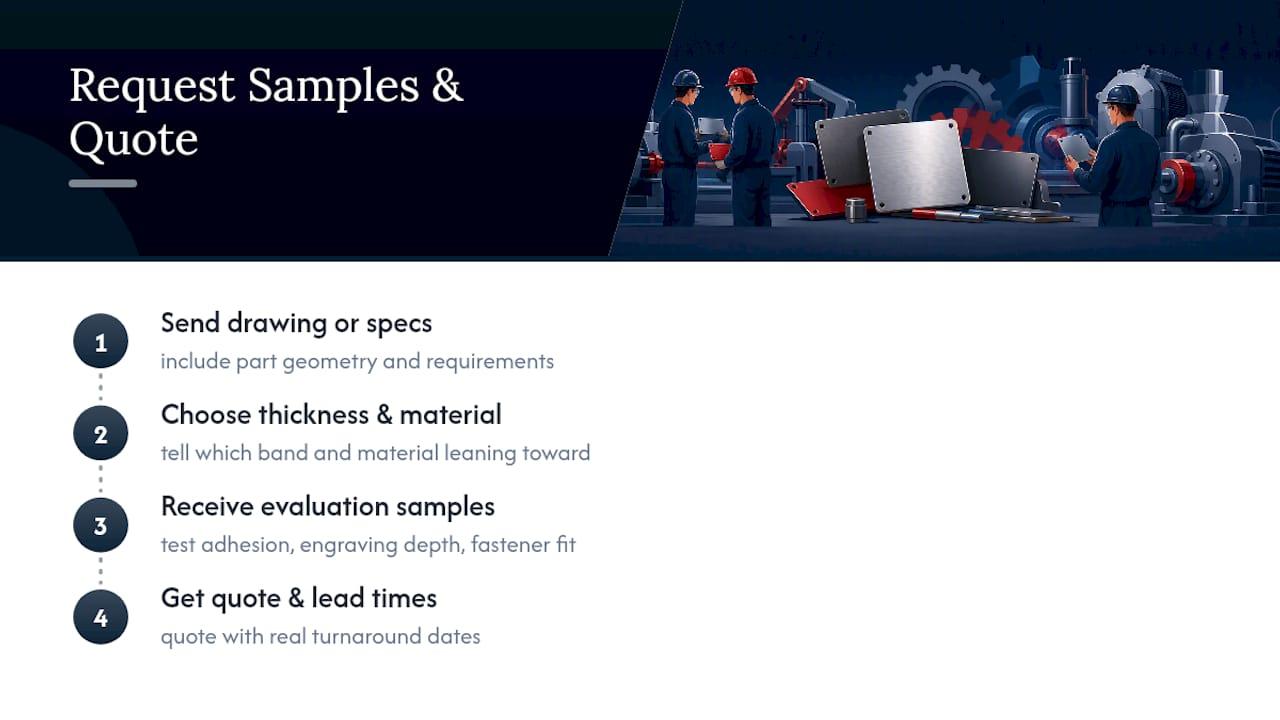
Signaturelaserdesigns turns thickness questions like these into a working plate, not just a spec sheet. If you’re weighing material and gauge options for a production run, we can send evaluation samples so you can test adhesion, engraving depth, and fastener fit on your actual equipment before committing to quantity.
Lead times typically run faster than a traditional nameplate manufacturer because orders route directly through our shop rather than a multi-vendor supply chain, and there’s no minimum order that forces you into stocking plates you don’t need yet. Getting started is simple: send us your drawing or specs, tell us which thickness band and material you’re leaning toward, and we’ll return a quote with real turnaround dates.
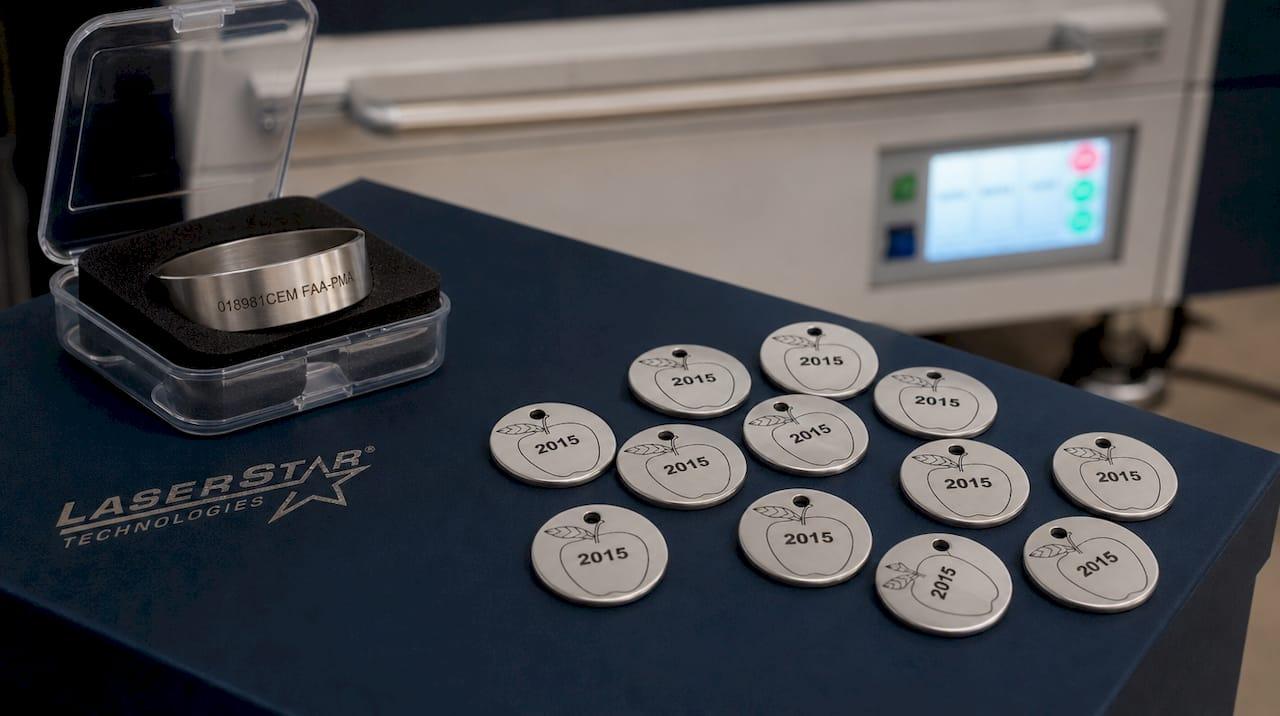
Browse our industrial laser engraving services for parts marking projects, or check out a stainless steel charm example if you’re exploring smaller-format tags alongside your machinery plates. Either way, request your sample and quote today.
Where to Go for Deeper Technical Specs
For readers who want to cross-check the engineering details before finalizing a spec, these sources cover the rules referenced throughout this guide:
- Protolabs’ sheet-metal design guidelines for hole/edge minima and standard stock thickness availability
- Precision Cuttings’ data plate marking guide for thickness-to-mounting-method mapping
- Pacific Nameplate’s thickness guide for cross-checking mid-range band recommendations
- HLH Sheet Metal’s fabrication blog for broader DFM context on punching, forming, and tolerance limits
Sources
- Sheet Metal Fabrication | Design Guidelines
- Data Plates Laser Marking | Toronto & Mississauga
- Understanding Nameplate Thicknesses: Choosing the right fit for your application
Recommended
- The Right Metal Data Plate Spec for Your Machinery, Fast
- Metal Engraving Services for Industrial Applications
