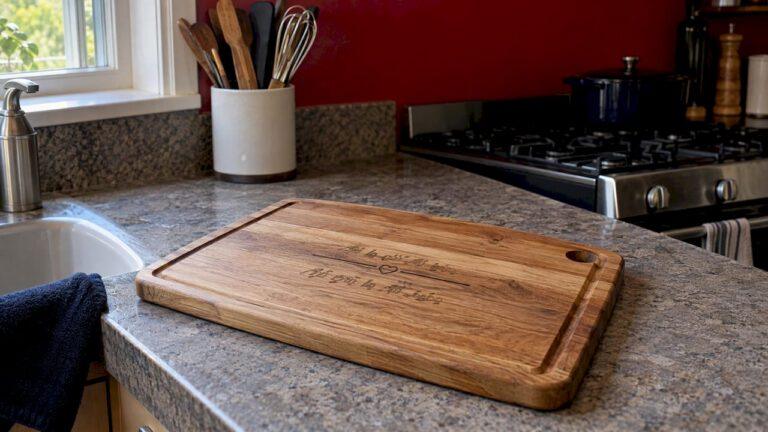
High-Quality Custom Pet ID Tags: Reviews and Comparison
A high-quality custom pet ID tag is one a stranger can read at a glance, that stays on the collar through real life, and that carries contact details you will still answer a year from now. Reviews help, but only if you know what to look for in them. Below we compare the main types of custom tags, show how to read the reviews that matter, and explain where our own laser engraved pet tags fit.
✦ Featured From Our Shop ✦
Handcrafted & laser engraved in Georgia, just for you
TL;DR
- Judge a tag on four things: how the name and number are marked, how much text fits, how it attaches, and how it holds up to daily wear.
- Reviews that mention months of use, a described pet and a clear photo tell you more than five-star ratings alone.
- Put a phone number first, then a name, and add a second contact or medical note only if space allows.
- A tag is your pet’s first line of identification. Microchips are the backup, not a replacement.
- Our personalized pet ID tags are custom engraved to order, with personalization included.
Table of Contents
- What “high quality” means on a pet tag
- The main types of custom pet tags compared
- How to read pet tag reviews so they actually help
- What to put on the tag
- Attaching the tag securely and comfortably
- Which size and shape suit your pet
- Perspective: why we laser engrave our pet tags
- How our tags compare on the criteria that matter
- Ordering a tag for a group, rescue or business
- Ready to order your pet’s tag
- A quick checklist before you buy any tag
- FAQ
- Sources
What “high quality” means on a pet tag
When shoppers search for tag reviews, they usually want to know one thing: will this still be readable when my dog has been swimming, digging and rolling in gravel for a year? That question breaks into a few concrete parts.
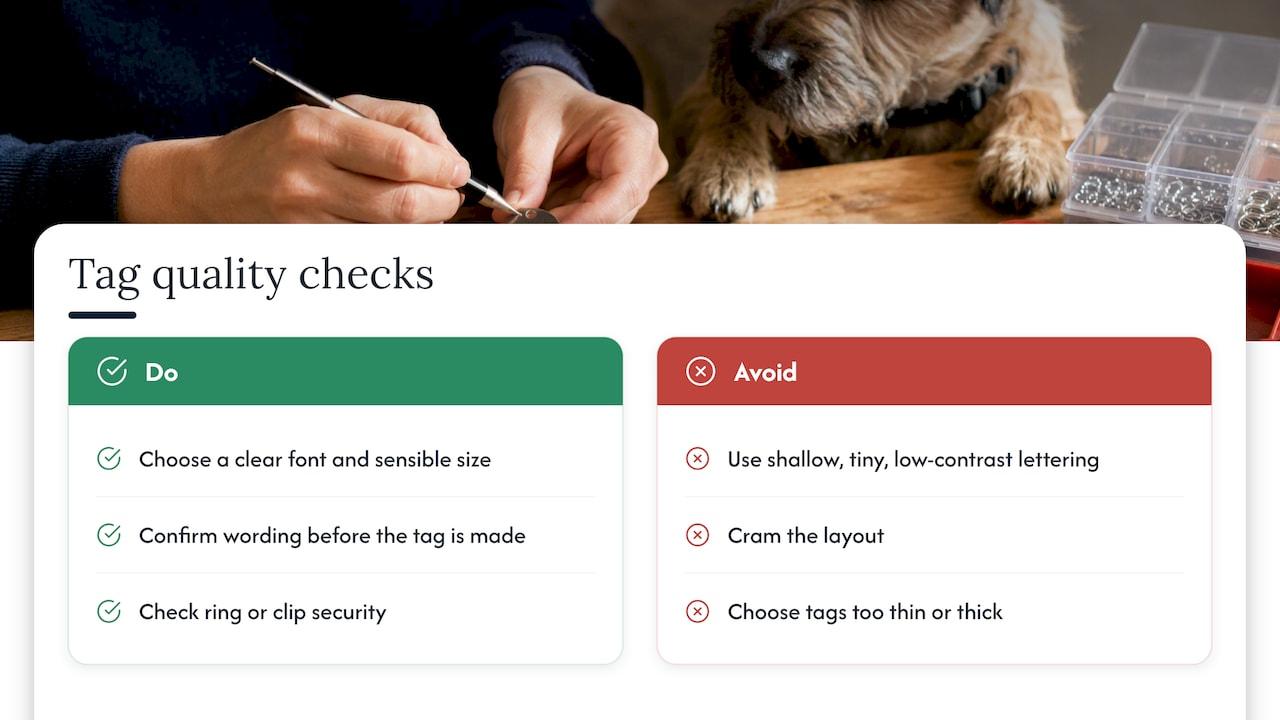
Legibility. The tag exists so a finder can call you. If the lettering is shallow, tiny or low contrast, the tag has failed no matter how pretty it looks on the product page. Look for tags with a clear font, sensible letter size and a layout that is not crammed.
Marking method. Tags are made by stamping, by engraving with a rotary tool, by laser engraving, by printing, or by chemical etching. Each leaves a different kind of mark. Laser engraving gives crisp, consistent lettering and handles small text and graphics well, which is why we use it for everything we make. We explain the difference with stamped tags in more detail in our guide to laser etched vs. stamped metal tags.
Thickness and edges. A tag that is too thin can bend in a bite or a tangle. One that is too thick gets heavy on a small collar, especially for cats and toy breeds. Smooth edges matter for the pet’s neck and for your hands.
Hardware. The ring or clip is part of the tag. If the ring opens, the best engraving in the world ends up in the grass.
Proof of what you ordered. A good seller lets you see or confirm the wording before it is made, or at least makes it easy to enter it correctly.
A quality specification for any tag, as manufacturers describe it, covers material, finish, marking method, layout, legibility, edges and hardware. That is a useful checklist even when you are only buying one tag for one pet.
The main types of custom pet tags compared
Rather than rank brands, here is how the common types stack up on the things that matter day to day. Prices vary by seller and change often, so check the product page for the current amount.
| Tag type | Marking | Best for | Watch for |
|---|---|---|---|
| Laser engraved metal tag, such as ours | Laser engraved to order | Clear, detailed text, names, phone numbers, small icons | Choose a simple font and keep lines short |
| Stamped metal tag | Letters pressed into the metal | A classic, tactile look | Limited fonts and little room for text |
| Mall kiosk or in-store machine tag | Engraved on the spot | Same-day need | Limited shapes, wording often rushed |
| Printed or enamel-coated tag | Ink or coating on the surface | Bright colors and photo designs | Surface can wear, so ask how the print is protected |
| Silicone slide-on or collar-attached tag | Printed or embroidered | Quiet collars, no dangling | Small space, check readability |
| QR code or smart tag | Engraved or printed code linking to a profile | Extra info such as vet details and medical notes | Needs a working link and a finder who scans |
No single type wins for every pet. A big dog that swims every weekend needs something different than an indoor cat. The sections below walk through how to match them.
Laser engraved metal tags
This is our category. A laser removes or marks the surface of the metal with a precise, repeatable pattern, so the lettering is consistent from the first tag to the hundredth. It suits names, phone numbers and short messages, and it lets us offer shapes and designs beyond a plain disc. Each of our pieces is laser engraved in our small Georgia shop and made to order, with your personalization entered right on the product page.
We offer a few styles. Our engraved aluminum pet ID tag is our everyday option for dogs and cats. Our bone-shaped pet ID tag carries a name and phone number in a shape dog owners love. For something more decorative, our crystal QR code pet tag is engraved for pets whose owners want to link to more details.
Stamped tags
Stamped tags have a loyal following because the characters are pressed in rather than marked on the surface. The look is classic and the feel is tangible. The tradeoff is usually flexibility: font choices are limited, small text is harder and line counts are low. If you want a very traditional tag and only need a name and number, stamped tags can do the job. If you want a cleaner layout, a decorative shape or a tiny second line, laser engraving gives you more room to work.
Same-day kiosk tags
These are handy when you adopted a dog this morning and need something on the collar tonight. The compromise is usually fewer shapes, a short list of fonts and wording typed at the counter. Many people order a kiosk tag as a stopgap and a custom tag online later, so the dog has a considered, readable tag for the long run.
Printed, enamel and silicone options
Color and fun designs are the appeal here. Silicone slide-on tags also solve the jingling problem, which matters for noise-sensitive pets and owners. As with any tag, the question is the same: after a few months, will the text still be easy to read? Read reviews from people who have used the tag for a while rather than in the first week.
QR code and smart tags
A code on the tag can point to a page with several phone numbers, medical notes and your vet. That is useful when a four-line tag cannot hold everything. The practical point is that a finder has to know to scan it, so it works best alongside a plainly written phone number, not instead of one.
How to read pet tag reviews so they actually help
Reviews for pet tags run into a pattern. Many are written the day the package arrives, when every tag looks great. Here is how to find the useful ones.
Look for time. A review that says “after eight months of daily wear” is worth ten that say “looks great, arrived fast.” Search the page for words like “months,” “year,” “swim,” “scratches” and “still readable.”
Look for the pet. A tag on a lap dog tells you little about how it holds up on a hunting dog. Match the review to your pet’s size and lifestyle.
Look for photos. A close-up of the engraving after use shows you the thing you are paying for. Look at contrast and the edges of the letters.
Look for what was ordered. Good reviews mention the wording, the number of lines and the font. That tells you whether the lettering stays legible at that size.
Read the middle. Three-star reviews are often the most honest. They usually describe a specific, fixable thing, such as a ring that was too small or lettering that was too small for four lines.
Check the seller’s response. Sellers who reply politely and fix problems tend to be the ones who care about the product.
One caution applies to durability claims. A claim such as “scratch-proof” means little without a stated test, and engineers who write about tag manufacturing say the same: credible claims name what was tested and how. Treat absolute words in listings with a little skepticism and trust specifics instead. Reviewers also point out that cheaper tags can scratch and become hard to read, which is why Rover’s guide to what goes on a dog’s tag is a handy companion when you are shopping.
What to put on the tag
Four lines is a common limit on a pet tag, so choose carefully. Here is the order we suggest, which lines up with Rover’s guidance on tag contents.
- Phone number. This is the line that gets your pet home. Use a number you answer, ideally a mobile.
- Pet’s name. It helps a finder call the pet and reassures a scared animal.
- A second contact or your name. Useful if you do not always pick up.
- A short note. Something like “Needs meds” or “Microchipped,” if space allows.
What about an address? Rover notes that a phone number and email can stay reliable when you move often, whereas an address goes out of date. If you are relocating, a tag with a phone number will not need replacing. Our shoppers moving to a new state often pair a pet tag with a home-state gift from our shop to mark the change.
If one tag cannot hold everything, Rover suggests a second tag. A QR code tag can also carry the longer details.
Tag plus microchip
A tag is not the only line of defense. The American Kennel Club says a collar and tag are a first line of defense, and it recommends permanent backup identification because collars can fall off and tags can break. Its guidance on ID tags and microchips says a microchip is a good option for that backup, and it says a dog should wear a collar with ID whenever it is safe to do so. If you have a microchip, keep the registration details current and say so on the tag.
Attaching the tag securely and comfortably
A lost tag is the most common tag failure, and it is usually the ring, not the tag itself.
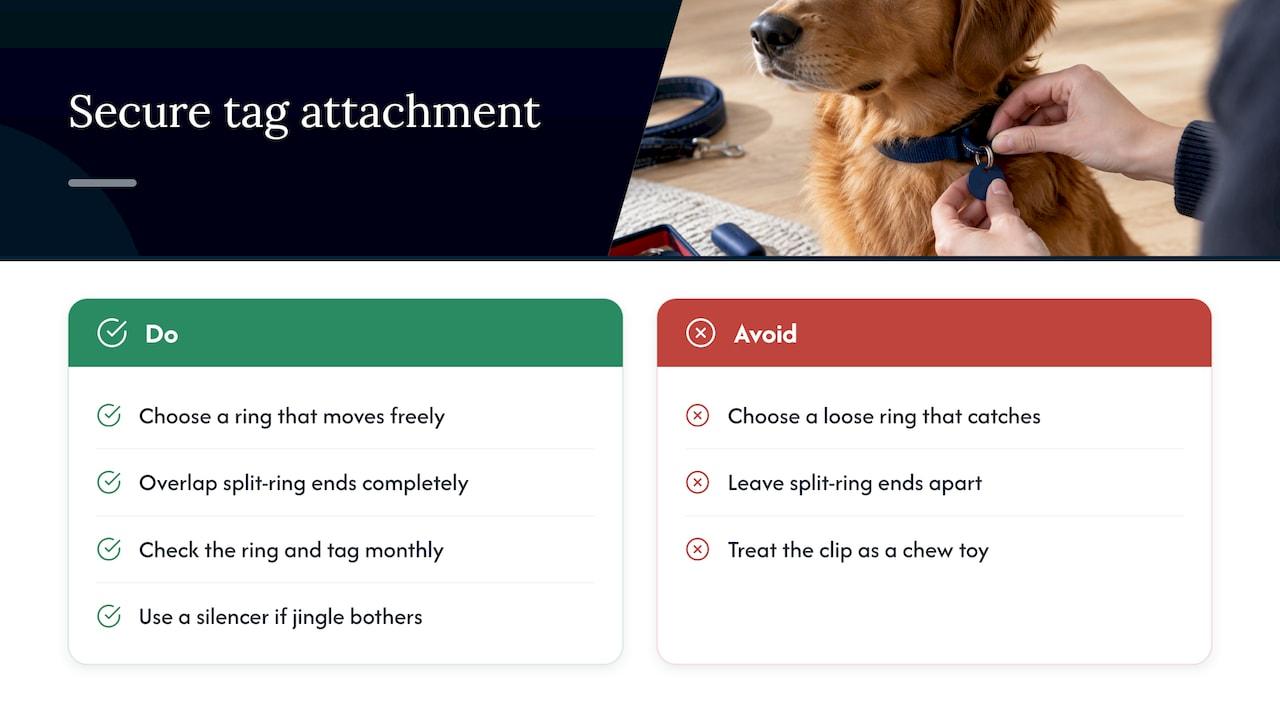
Pick the right ring size. The ring should be large enough to move freely but not so loose it catches on things. A smaller ring on a small tag keeps it close to the collar.
Close the ring fully. Make sure the two ends of the split ring overlap completely. Run your thumbnail around the full loop once.
Consider a quick-connect clip. Some owners like a locking carabiner for changing tags between collars. Niteize describes its S-Biner TagLock as clipping the tag to one gate and the D-ring to the other, then twisting the center lock. It has a 3-pound weight rating and is meant to be used under supervision, and it is not a chew toy, so pick a clip that matches your pet’s size and habits.
Quiet the jingle. If the sound bothers you or your pet, Rover recommends a tag silencer, a small sleeve that keeps the tag from banging against other tags or a bowl.
Check it monthly. When you wash the collar or trim the coat, look over the ring and the tag. It takes thirty seconds.
Which size and shape suit your pet
A tag should suit the pet wearing it, not just the owner buying it.
- Cats and small dogs. Choose a lightweight tag and keep the text short. Thicker tags add weight, so a slim profile is more comfortable on a small collar.
- Medium and large dogs. You have room for four lines and a larger disc or a bone shape.
- Active and outdoor dogs. Smooth edges and a snug ring matter most. Consider a tag that sits flat against the collar.
- Multiple pets. Use different shapes or names so each tag is quickly recognizable.
As a general guide, a metal tag in the range of one to two millimeters is often described as resisting bending without being heavy, so use that as a rough reference when you compare listings.
Perspective: why we laser engrave our pet tags
We started engraving gifts, and pet tags quickly became some of our favorite orders. People do not buy them casually. They buy them for a puppy that just came home, for a rescue dog’s first day, or for a cat that tends to slip out the door.
That is why we focus on clear lettering and on getting your wording right. Laser engraving lets us make the name and phone number crisp and consistent, and personalization is included, so you type what you want right on the product page and we make it to order.
Our advice to every pet owner is simple. Put the phone number first, keep the font plain, and do not squeeze in more than the tag can hold comfortably. If you need more, add a second tag or use our QR code style.
We also like seeing tags become part of a larger gift. A tag for the dog, a custom engraved gift for the owner, and a keepsake for the family can all come from the same small Georgia shop.
Gary
How our tags compare on the criteria that matter
Here is how we approach each of the quality points from earlier. These are our own design aims, and the product pages show the details of each style.
| Quality point | How we approach it |
|---|---|
| Legibility | Laser engraved lettering, with plain fonts recommended for phone numbers |
| Wording | Personalization entered on the product page, included in the price |
| Style choice | Aluminum disc, bone shape and crystal QR code style |
| Made to order | Each tag is custom engraved after you order |
| Where to buy | Direct from our online store, so you can see each style and enter your wording |
If you want to browse every style in one place, our pet tags collection lists them all. For wider gift ideas, our dog lover gifts include more custom engraved pieces for the person who loves the dog.
Ordering a tag for a group, rescue or business
Some of our customers need more than one tag. Rescues, groomers, trainers, boarding businesses and vet offices often hand out identification tags to the animals in their care or as a welcome gift for new clients. We take multi-item orders and can quote volume pricing. Our bulk orders page is the place to start, and our bulk dog tags collection shows examples. Because logo orders get a proof before engraving, you can see your design before we make it.
Ready to order your pet’s tag
Start with the style that fits your pet, type the name and phone number on the product page, and we will custom engrave it to order. Our shop is the main place to buy, and the engraved aluminum pet ID tag is a good first pick for most dogs and cats. If you want a longer read on materials first, our piece on what decides crystal dog tag durability walks through the base metals behind our crystal styles.
A quick checklist before you buy any tag
Whatever you choose, run through these questions before you check out.
Does the listing show the exact marking method? Can you see the layout and number of lines? Is the text size readable at the tag’s real dimensions? Does the seller say how the tag attaches and what ring comes with it? Do reviews mention months of use, not just first impressions? Can you enter your wording clearly and review it before it is made? Do you have a plan for a backup, such as a microchip with current registration?
If you can answer yes to most of these, you are looking at a tag that is likely to serve your pet well.
FAQ
What is the best material for a custom pet ID tag?
The best material is the one that suits your pet’s size and lifestyle. Heavier metals feel substantial, while lightweight metals are easier on cats and small dogs. Focus on legible lettering, smooth edges and a secure ring, and choose a style that matches how your pet lives.
How many lines of text fit on a pet tag?
Four lines is common, although it depends on the tag size and font. Rover suggests prioritizing a phone number, a name and any time-critical information, and using a second tag if you need more room. A QR code tag can carry longer details.
Should I put my address on the tag?
It is up to you, but a phone number is the most important line. Rover points out that phone and email can stay reliable if you move often, while an address can go out of date. If you are planning a move, a phone-first tag saves you from reordering.
Does my pet still need a microchip if it wears a tag?
Yes. The AKC explains that collars can fall off and tags can break, so a permanent backup such as a microchip is recommended. Keep the registration information up to date and wear the tag whenever it is safe.
Can I order the same tag for several pets?
Yes. You can order one tag for each pet and use different names or shapes to tell them apart. For rescues, trainers and other groups, we can quote volume pricing on our bulk orders page.
Sources
- Rover: What Should I Put On My Dog’s Tag?
- American Kennel Club: Are ID Tags Enough? The Importance of Identifying Your Dog
- Nite Ize: S-Biner TagLock Stainless Steel
Recommended
- Personalized Pet ID Tag | Engraved Dog & Cat Name Tag
- Personalized Bone Pet ID Tag | Engraved Dog Tag with Name & Phone
- QR Code Pet ID Tag | Engraved Crystal Dog & Cat Tag