18–36 Inch Options: Wood Cutout Size and Laser Kerf Tips for Makers
For a standard front door, go with a wood cutout sized smaller than your door’s width by a moderate amount, often about one-third smaller. This sizing rule is common among wreath makers. Narrower doors (30 to 32 inches) look best with 18 to 20 inch cutouts, while wide or double doors call for 30 to 36 inches. Exceptions apply if you have a storm door, deep sidelights, or a house set far back from the street.
✦ Featured From Our Shop ✦
Handcrafted & laser engraved in Georgia, just for you
TL;DR:
- The recommended size for a wood cutout is typically about one-third smaller than the door’s width, with specific dimensions for narrow, wide, or double doors.
- Use Baltic birch plywood or hobby plywood for durability, with 1/8 to 1/4 inch thickness depending on the weight and mounting method.
- Measure the door width minus 12 inches and check clearance around hardware to determine the ideal cutout diameter, usually around 20 to 30 inches.
- For fully decorated wreaths, choose a smaller cutout than the final visual size, as embellishments add perceived volume.
- Mounting hardware options vary from over-the-door hooks to screws or magnets, with weight limits and hole sizing considerations based on the piece’s thickness and placement.
Table of Contents
- How Big Should a Wood Cutout Be for Your Door?
- Which Wood and Thickness Work Best?
- Measuring Your Door the Right Way
- Mounting Methods and Weight Limits
- How Fullness Changes the Size You Actually Need
- Notes From the Shop Floor
- A Ready-Made 1/4 Inch Cutout Worth Considering
- Sources
- FAQ
How Big Should a Wood Cutout Be for Your Door?
The math behind that 24 inch number isn’t a guess. According to The Painted Hinge’s wreath sizing guide, subtracting 12 inches from a 36 inch door leaves about 6 inches of clearance on each side, which reads as balanced instead of cramped or swallowed up by the frame. That’s the sweet spot: enough breathing room around the wreath that it doesn’t look wedged in, but not so much that it disappears against the door.
There’s a second rule worth knowing, and it’s handy when the subtraction method feels too small for your entryway. D and G Flooring’s sizing guide recommends sizing your wreath at half to two thirds of your door’s width, which naturally pushes wider entries toward bigger, bolder pieces. For a 36 inch door, that lands you in the same 20 to 24 inch range. For a 42 inch or custom door, it jumps you up to 28 to 30 inches, more than the subtraction rule alone would suggest.
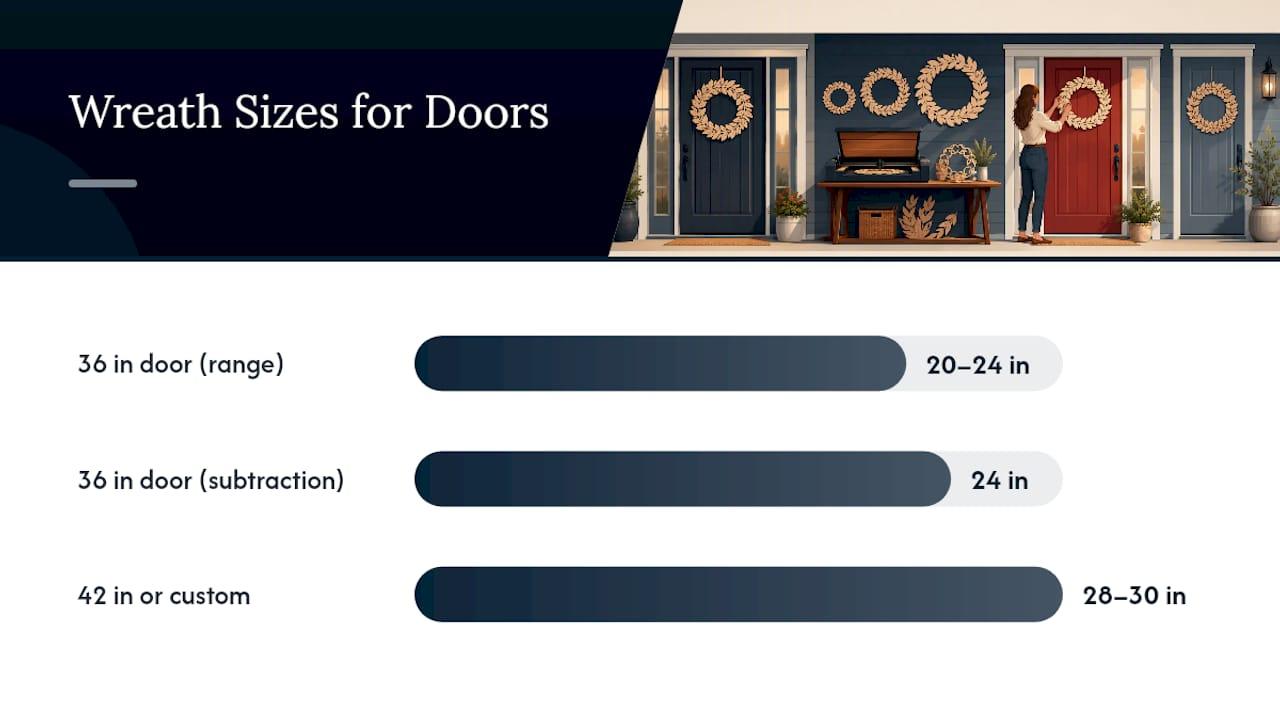
Here’s a quick reference for common door widths:
A few situations push you outside this chart entirely:
- Storm doors: measure the storm door’s width, not the door behind it, since that’s the surface your hardware actually mounts to.
- Double doors: center a larger cutout (30 to 36 inches) over the seam, or use two matching smaller pieces, one per door.
- Long viewing distances: if your porch sits well back from the sidewalk or street, size up. A cutout that looks right up close can read as too small from 20 feet away.
- Sidelights or glass panels: leave extra margin so the cutout doesn’t crowd the glass trim.
Which Wood and Thickness Work Best?
Baltic birch plywood and standard hobby plywood are the two materials that consistently hold up for laser cut wreath cutouts. Both cut cleanly and finish well with paint or stain. MDF and softwoods, by contrast, tend to swell, delaminate, or splinter once they’re exposed to humidity and temperature swings on an exterior door, so save those for indoor projects only.
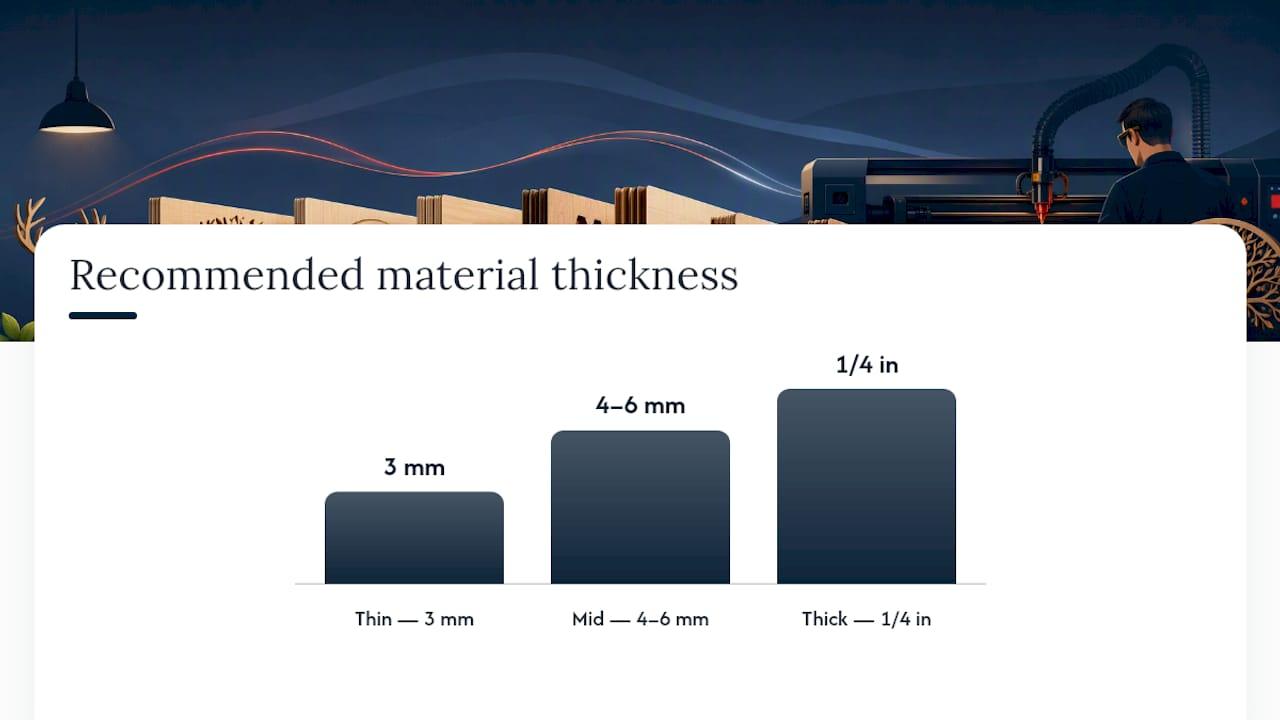
Thickness depends on how you plan to mount the piece:
- 3mm (1/8 inch): ideal for a lightweight wreath center or accent piece that won’t carry much weight on its own.
- 4 to 6mm: a middle ground that adds durability without much extra heft, good for pieces that see some handling.
- 1/4 inch: a common craft thickness that gives you a sturdier, more substantial feel, especially for freestanding door signs or cutouts meant to be the main event rather than an accent.
If you’re cutting your own designs (or having them cut), a couple of technical details matter more than most first timers expect. Kerf, the small amount of material the laser beam burns away, typically runs 0.08 to 0.2mm depending on material and settings. That’s tiny, but it adds up on tight-fitting joints or slots. Any holes you design for hanging hardware should be sized at least 1.5 times the material’s thickness so the kerf doesn’t leave you with a hole too small for your hook or screw.
Expect some edge darkening from the laser, which is normal and part of the process, not a flaw. Baltic birch cuts cleanly with minimal charring when the settings are dialed in, according to Atomm’s laser cutting guide, but you’ll still want to sand the edges lightly and seal the piece before it goes outside.
Pro Tip: Run a single kerf test cut on a scrap piece of your exact material before cutting your final design. It takes five minutes and saves you from a hole or slot that’s just slightly too tight to use.
Measuring Your Door the Right Way
Getting the size right starts with an accurate measurement, and this is where a lot of DIY projects go sideways before they even begin.
- Measure the visible door width, from edge to edge, not including the frame or trim. Apply the subtraction rule (width minus 12) to get your target diameter.
- Check clearance around hardware. Measure the distance from your planned hanging spot to the peephole, knocker, and mail slot. Your cutout’s full diameter, not just its center point, needs to clear all three.
- Set your placement height. Center the piece about 57 to 60 inches from the floor, or roughly 14 inches down from the top on a standard 80 inch door. That lines up with natural eye level for most visitors.
- Adjust for taller doors or unusual sightlines. On an 8 foot door or an entry with a steep porch step, you may need to shift the measurement up or down a couple inches so it still reads at eye level from the walkway.
- Account for storm doors and sidelights. If a storm door sits in front, your cutout mounts to that surface, and the depth of the storm door frame may limit how much protrusion you have room for.
Mounting Methods and Weight Limits
Your mounting method should match both your door type and how heavy the finished piece gets once wreath materials are added.
- Over the door hooks work well for solid wood doors and distribute weight evenly without any drilling.
- Reinforced nails or screws give you the most secure hold for heavier cutouts, especially anything past 1/4 inch thick or loaded with a full wreath.
- Adhesive or magnetic hooks are the right call for metal doors or glass storm doors, but only for lightweight combinations. Keep the total hanging weight under about 2 to 3 pounds when relying on adhesive or magnetic mounts.
- Multiple fasteners or a spreader plate help on thicker or heavier pieces by spreading the load and reducing the torque that pulls a single hook loose over time.
Whatever hardware you choose, size your mounting holes larger than the kerf and beam width of your cut, following the same 1.5 times thickness rule used for laser cut fastener holes, and use stainless or otherwise weatherproof hardware for anything staying outside.
Pro Tip: If your wreath feels front heavy once it’s fully decorated, add a second hook a few inches below the main one and loop a small wire tie between the cutout and the hook. It stops the whole piece from swinging or tilting in wind.
How Fullness Changes the Size You Actually Need
A wood cutout doesn’t exist in isolation. Once you add greenery, ribbon, or floral clusters around it, the piece reads bigger than its raw dimensions suggest. A lush, densely decorated 22 inch wreath can visually compete with a bare 26 inch frame, simply because volume and texture trick the eye into perceiving more size than the tape measure shows.
That means your cutout’s actual diameter should usually sit a size or two smaller than your finished, fully decorated wreath will appear. A few practical notes for balancing the two:
- Keep the wood silhouette large enough to stay visible once embellishments go on, rather than picking a piece so small it disappears under greenery.
- Secure the cutout to a wreath frame at multiple points, not just one, so weight distributes evenly and nothing sags or tilts.
- Avoid layering embellishments over any cutout details, text, or engraving you actually want visitors to see.
Notes From the Shop Floor
Many customers choose a 24 inch cutout, often based on measuring a standard 36 inch door and applying common sizing guidelines. The 1/4 inch plywood blank is a popular thickness for wreath centers, as it balances durability and ease of handling during decorating.
The mistakes I see most often: skipping the actual door measurement and guessing, ignoring hole sizing until a hook won’t fit, and choosing 1/4 inch plywood for a magnetic hanger that can’t support it. Finished blanks may be available in raw, sanded, or sealed options; check product details before ordering if you plan to finish it yourself.
— Gary
A Ready-Made 1/4 Inch Cutout Worth Considering
If measuring, designing, and cutting your own blank sounds like more weekend than you have available, Signature Laser Designs already solved that problem. Our Howling Wolf Wood Cutout in 1/4 inch plywood (on Etsy) is cut to a thickness that suits most wreath centers and standalone door pieces without the guesswork on kerf or hole sizing, since we’ve already dialed that in on our end.
A 1/4 inch thickness typically provides sufficient sturdiness for mounting with screws or reinforced hooks and remains light enough for many wreath frames. Thinner options may be preferable for magnetic or adhesive mounts. Guidance on sanding and sealing before outdoor use is advisable when finishing the piece yourself. Browse the full catalog of laser cut wood cutouts or head straight to the Howling Wolf listing to check sizing and customization options.
Sources
- Wreath Size and Placement: Fit Any Door the Right Way – The Painted Hinge
- Designing for laser cutting – ProleanTech
- How to make laser cut wooden puzzles – Atomm
- Wreaths for Front Door: Complete Guide to Choosing the Perfect Wreath in 2026 – D and G Flooring
FAQ
What size wood cutout do I need for a front door wreath?
Subtract a reasonable length from your door’s width to estimate the cutout size. Standard narrower doors work better with proportionally smaller cutouts.
Is a 24 inch wood cutout too big for a small door?
Not for a standard 36 inch door, but for a narrower 30 to 32 inch door, drop down to 18 to 20 inches to keep proportions balanced.
What thickness plywood should I use for a wreath cutout?
Use 3mm (1/8 inch) for lightweight pieces mounted with adhesive or magnetic hooks, and 1/4 inch or 4 to 6mm for heavier, more durable cutouts mounted with screws or hooks.
How high should I hang a wreath on my front door?
Center it about 57 to 60 inches from the floor, or roughly 14 inches down from the top of a standard 80 inch door.
Do double doors need a bigger wood cutout?
Yes, double doors typically call for a 30 to 36 inch cutout, centered over the seam or split into two matching smaller pieces.
Recommended