Which Industries Use Custom Stainless Steel Valve Tags Most
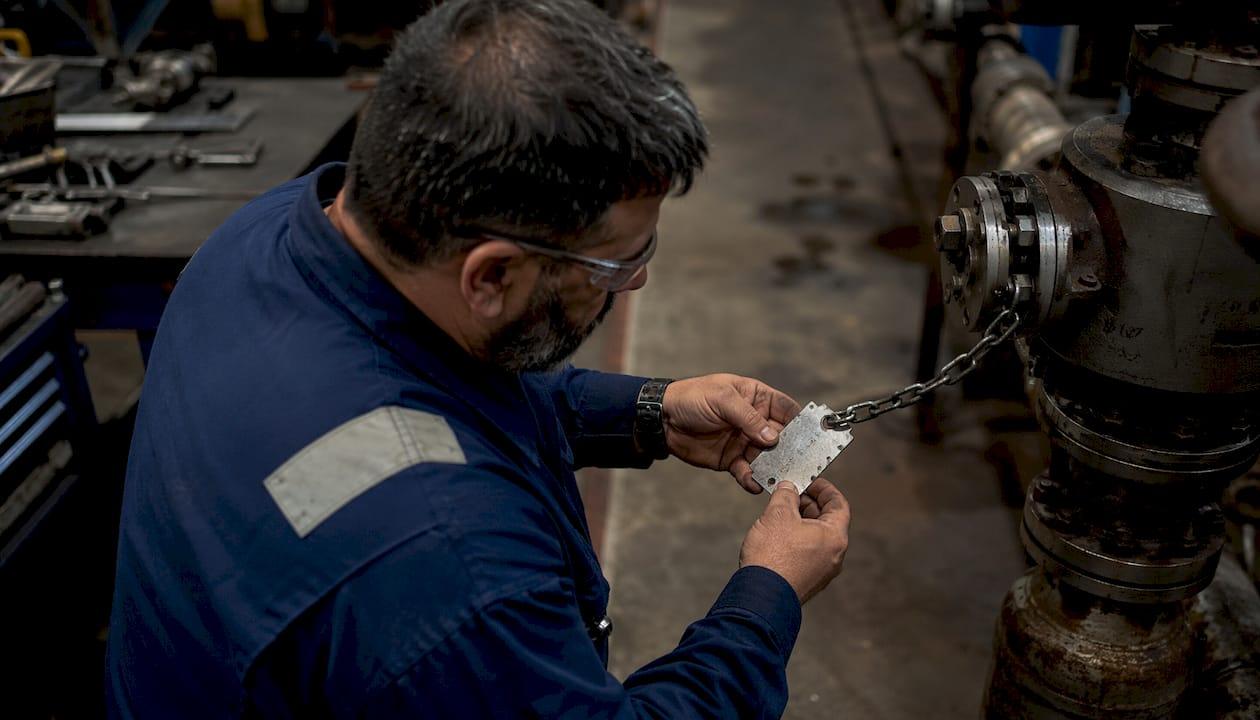
The industries that use custom stainless steel valve tags the most are oil & gas, chemical/petrochemical, water & wastewater treatment, power generation, and food & beverage manufacturing. Pharmaceutical facilities, HVAC and building services, and marine/shipping operations round out the top tier. What ties all of them together is a shared need for tags that survive corrosion, heat, and aggressive cleaning without losing legibility — and that integrate cleanly with modern maintenance systems through QR codes or barcodes.
✦ Featured From Our Etsy Shop ✦
Handcrafted & Laser Engraved Just For You

The top industries at a glance:
- Oil & gas (refineries, pipelines, offshore rigs)
- Chemical and petrochemical processing
- Water and wastewater treatment
- Power generation
- Food and beverage manufacturing
- Pharmaceutical and biotech facilities
- HVAC and building services
- Marine and shipping
Swagelok specialists, Signaturelaserdesigns, and standards like ASME/ANSI A13.1 all point to the same conclusion: stainless steel is the go-to material when a tag must outlast the environment it lives in.
Table of Contents
- Why do industries prefer stainless steel over other tag materials?
- How each industry actually uses valve tags in the field
- How do you choose between 304 and 316 stainless steel for valve tags?
- What should you specify when placing a small-batch order?
- What drives cost and lead time for custom stainless valve tags?
- When is stainless steel overkill, and what should you use instead?
- How do professionally engraved tags reduce safety risks and support compliance?
- Key Takeaways
- A perspective on small-batch industrial tags
- Signaturelaserdesigns can handle your valve tag order from spec to delivery
- Useful sources for valve tag standards and guidance
Why do industries prefer stainless steel over other tag materials?
Stainless steel valve tags are recommended whenever corrosion is a concern — outdoors, in chemical plants, and in washdown environments. That covers most of the industries listed above. The material resists moisture, heat, and chemical exposure while staying legible for years, which is exactly what a maintenance team needs when a technician is troubleshooting a valve at 2 AM.
Key operational benefits:
- Corrosion and chemical resistance — survives salt spray, acids, and solvents that destroy plastic or aluminum tags
- High-temperature performance — holds up in steam lines, furnace areas, and outdoor installations
- Washdown durability — stainless tags remain legible under repeated moisture, heat, and chemical exposure
- Fewer replacements — longer service life lowers total cost over a plant’s lifecycle
- Compliance readiness — facilities align tag design with ASME/ANSI A13.1 pipe-marking conventions to avoid confusion during inspections and emergency response
Relying on handwritten labels or passed-down institutional knowledge increases risk. Professionally engraved tags function as active safety tools, not just labels.
Pro Tip: In food processing or pharmaceutical environments, choose a brushed or electropolished 316 stainless finish. It resists chloride-based cleaning agents and has no surface crevices where bacteria can accumulate.
How each industry actually uses valve tags in the field
The table below summarizes typical specs by sector. Detailed notes follow.
| Industry | Typical Grade | Marking Method | Attachment | QR/Barcode? |
|---|---|---|---|---|
| Oil & gas | 316 SS | Laser engraved | Wire/chain | Yes |
| Chemical/petrochemical | 316 SS | Laser engraved | Screw/rivet | Yes |
| Water & wastewater | 304 or 316 SS | Laser engraved | Wire/chain | Often |
| Power generation | 304 SS | Laser engraved | Screw/rivet | Sometimes |
| Food & beverage | 316 SS | Laser engraved | Screw/rivet | Sometimes |
| Pharmaceutical | 316 SS | Laser engraved | Screw/rivet | Yes |
| Marine/shipping | 316 SS | Laser engraved | Wire/chain | Rarely |
| HVAC/building services | 304 SS | Laser engraved | Wire/zip tie | Rarely |
| Manufacturing (auto/aero) | 304 or 316 SS | Laser engraved | Screw/rivet | Sometimes |
| Mining/construction | 304 SS | Stamped or engraved | Wire/chain | Rarely |

Oil & gas tags carry valve ID, system media, operating pressure, temperature rating, and installation date. Offshore rigs demand 316 grade for salt-spray resistance. Choose when: any valve in a corrosive or high-pressure fluid system.
Chemical/petrochemical facilities add trace ID and chemical compatibility notes. Tags often include serialization for audit trails. Choose when: the process fluid is aggressive or regulated.
Water & wastewater plants use tags for isolation valve identification and inspection scheduling. Custom metal tags support safety markings, inspection schedules, and bypass system identification. Choose when: outdoor or buried valve installations require long-term readability.
Power generation tags cover turbine isolation, cooling water, and steam systems. Tags must survive high heat and vibration. Choose when: valves are near heat sources or subject to mechanical stress.
Food & beverage facilities require tags that withstand daily sanitizer washdowns. Stainless steel’s antimicrobial properties make it the preferred choice for food processing and packaging lines. Choose when: hygiene compliance is non-negotiable.

Pharmaceutical plants need full traceability. Tags carry batch numbers, calibration dates, and QR codes linking to digital records. Choose when: FDA or GMP audit readiness is required.
Marine/shipping environments expose tags to constant salt spray and humidity. 316 grade is the only practical choice. Choose when: any valve is within reach of seawater or marine atmosphere.
HVAC and building services use tags for air handler isolation, chiller valves, and fire suppression systems. Compliance with HVAC and power generation tagging standards supports preventive maintenance programs. Choose when: building codes or insurance requirements mandate valve identification.
Manufacturing (automotive, aerospace) tags cover coolant, hydraulic, and compressed-air valves. Serialization and QR codes tie tags to digital asset management systems. Choose when: production uptime depends on fast valve identification.
Mining and construction use tags on heavy equipment and site infrastructure. Durability matters more than hygiene here. Choose when: tags will be exposed to mud, abrasion, and outdoor weather.
How do you choose between 304 and 316 stainless steel for valve tags?
Practitioners specify 304 or 316 over aluminum or brass for resistance to chemicals, salt spray, and high temperatures. The choice between the two grades comes down to the environment.
| Feature | Grade 304 | Grade 316 |
|---|---|---|
| Chloride/salt resistance | Moderate | Excellent |
| Chemical resistance | Good | Superior |
| Typical environments | Indoor, light outdoor, HVAC | Marine, chemical, food/pharma |
| Cost tendency | Lower | Slightly higher |
| Common uses | Power gen, HVAC, manufacturing | Oil & gas, pharma, marine |
Thickness and finish matter too. Heavier gauge tags (20 gauge or thicker) resist bending and damage in high-traffic areas. A brushed finish hides minor scratches; a mirror finish is easier to clean but shows wear. For small batches, Signaturelaserdesigns offers 20-gauge 1-inch stainless steel tags with flexible layout options.
Laser engraving is the preferred marking method for permanent, high-contrast text and QR codes. Chemical etching is an alternative for very fine detail. Stamped tags are durable but harder to read at a distance.
Design checklist before you order:
- Tag size (standard 1" × 2" or custom dimensions)
- Number of text lines (max ~5 lines, ~25 characters per line)
- Hole placement (single, double, corner)
- Finish (brushed, mirror, or electropolished)
- QR code or barcode inclusion and file format
- Attachment method (wire, screw, rivet, or wrap)
What should you specify when placing a small-batch order?
Giving your supplier complete specs up front cuts back-and-forth and speeds delivery. Here is a supplier-ready checklist:
- Quantity — total tags and whether serialization is needed
- Material grade — 304 or 316 stainless steel
- Dimensions — width × height, and thickness/gauge
- Text content — exact wording, line breaks, and character count per line
- Hole pattern — number of holes, diameter, and placement
- Attachment method — wire, screw, rivet, or wrap-around
- Finish — brushed, mirror, or electropolished
- Marking method — laser engraving, chemical etch, or stamped
- Serialization — sequential numbering range or custom serial format
- QR/barcode files — vector or high-resolution image files if applicable
- Required lead time — standard or expedited
Laser-engraved QR codes on stainless tags connect directly to digital asset management systems, letting technicians scan and pull maintenance history on the spot. If you plan to use QR codes, prepare your asset management URL or data string before submitting the order.
Pro Tip: Group serialized tags into a single order rather than placing multiple small runs. Per-unit cost drops significantly as quantity increases, and a single art approval covers the whole batch.
What drives cost and lead time for custom stainless valve tags?
Pricing for small-batch custom tags depends on several factors working together, not just material cost.
Key price drivers:
- Material grade — 316 costs more than 304; heavier gauge adds cost
- Tag size and thickness — larger or thicker tags use more material
- Engraving density — more text lines, fine detail, and QR codes increase machine time
- Finishing — electropolishing or passivation adds a processing step
- Attachment hardware — pre-installed wire or rivets add per-unit cost
- Quantity — the biggest single driver; small runs (under 25 tags) carry higher per-unit cost than runs of 100 or more
A simple tag with basic text in a standard size sits at the low end of the cost range. Add serialization, a QR code, and a custom size, and the project moves to the mid range. Full custom dimensions, electropolished finish, and pre-installed hardware push it to the high end.
Lead times for small batches typically run faster than large industrial orders. Standard turnaround is usually one to two weeks; expedited options can cut that in half, though they add cost. Ordering standard sizes and grouping serials into one run are the two most reliable ways to keep both cost and lead time down.
When is stainless steel overkill, and what should you use instead?
Stainless steel is not always the right call. For light-duty or short-term applications, lower-cost materials perform well enough.
Plastic/polypropylene — best for light indoor use where no chemical or heat exposure is expected. Low cost, easy to print, but not suitable for washdown or outdoor use.
Aluminum — good for non-corrosive outdoor environments. Lighter than stainless, lower cost, and easy to engrave. Not suitable where chlorides or aggressive chemicals are present.
Anodized aluminum — adds color-coding capability, which is useful for valve type or system identification. Holds laser engraving well. Avoid in heavy washdown or marine environments.
Brass — works well for aesthetic applications or low-corrosion indoor environments. Attractive finish, but softer than stainless and not suitable for chemical exposure. Signaturelaserdesigns offers custom engraved brass tags for decorative and low-stress industrial uses.
Pro Tip: Match material to the worst-case condition the tag will face, not the average condition. A tag that fails in a single aggressive cleaning cycle costs more to replace than the premium for stainless steel.
How do professionally engraved tags reduce safety risks and support compliance?
Clear, permanent tags reduce human error during maintenance and emergency shutdowns. A technician who can read valve ID, media, and pressure at a glance makes faster, safer decisions than one who has to trace a line back to a drawing.
Benefits of professional engraving for safety and compliance:
- Reduces wrong-valve interventions during maintenance
- Speeds emergency isolation by making valve function immediately visible
- Supports audit readiness by providing traceable, permanent identification
- Enables QR-code-linked maintenance records, reducing unplanned downtime
Compliance in manufacturing operations increasingly requires documented asset identification. Professionally engraved stainless tags satisfy that requirement in a way that handwritten labels or adhesive stickers never can. The ROI shows up in fewer near-misses, faster maintenance cycles, and cleaner audit records.
Key Takeaways
Oil & gas, chemical/petrochemical, water & wastewater, power generation, and food & beverage are the industries that rely on custom stainless steel valve tags most heavily, driven by corrosion resistance, compliance requirements, and the need for permanent, scannable identification.
| Point | Details |
|---|---|
| Top industries | Oil & gas, chemical, water/wastewater, power generation, and food & beverage use stainless tags most. |
| Grade selection | Choose 316 for chloride, marine, or chemical environments; 304 suits HVAC, power gen, and light outdoor use. |
| Marking method | Laser engraving delivers the most permanent, QR-code-compatible marks for industrial valve identification. |
| Ordering prep | Prepare quantity, grade, dimensions, text, hole pattern, finish, and serialization before requesting a quote. |
| Signaturelaserdesigns | Offers small-batch industrial laser engraving for stainless valve tags with flexible specs and QR code support. |
A perspective on small-batch industrial tags
The conventional wisdom in industrial tagging is that quality engraving is only worth the investment at high volumes. That framing misses something real. A single wrong-valve event during maintenance can cost far more than an entire run of custom stainless tags. The math changes completely when you account for downtime, safety incidents, and failed audits.
What often gets overlooked is how much the ordering process itself shapes the outcome. Buyers who come to a job with complete specs — grade, dimensions, text layout, serialization range, attachment method — get better tags faster and at lower cost than those who figure it out mid-order. The tag is only as good as the brief behind it.
Small-batch buyers also tend to underestimate how much a laser-engraved QR code changes the usefulness of a tag. A static tag tells a technician what a valve does. A QR-linked tag tells them what it does, when it was last serviced, and what the maintenance history looks like. That is a meaningful difference in a plant running 24/7.
The other thing worth saying plainly: stainless steel tags are not just for large facilities. A small HVAC contractor, a craft brewery, or a pharmaceutical startup with 20 valves to label has the same compliance and safety needs as a refinery. The quantity is smaller; the stakes are not.
Signaturelaserdesigns can handle your valve tag order from spec to delivery
Custom stainless steel valve tags for industrial use don’t have to mean a long procurement process or a minimum order of 500 pieces. Signaturelaserdesigns offers industrial laser engraving services for small-batch and custom runs, including QR code integration, serialization, and flexible material options — all with transparent pricing based on your actual specs.
Before reaching out, gather your supplier-ready checklist: quantity, material grade (304 or 316), tag dimensions, text content, hole pattern, finish, marking method, and any serialization or QR code requirements. The more complete your brief, the faster we can turn around an accurate quote. Our team reviews every order for art and spec accuracy before production starts, so what you approve is exactly what gets engraved.
Ready to get started? Submit your specs through our custom industrial parts engraving listing or contact us directly for a quote on your next valve tag project.
Useful sources for valve tag standards and guidance
- Swagelok — Valve and Hose Tagging — Specialist guidance on tagging all fluid system components, tag field recommendations, and text capacity limits.
- Brady — Valve Tagging Standards — Overview of when stainless steel is recommended and how to align tags with facility safety programs.
- Creative Safety Supply — Valve Tags 101 — Covers tag types, ASME/ANSI A13.1 alignment, and material selection based on environmental demands.
- Valve World Americas — Valve Tags and Maintenance Programs — Explains how QR-code-enabled tags integrate with digital asset management to reduce downtime.
- Metal Marker Mfg. — Custom Valve Tags — Industry breadth overview covering energy, construction, oil & gas, and government applications.
- MetalTagsMaker — Metal Valve Tag Applications — Technical breakdown of 304 vs. 316 grade selection and industrial application examples.
- Metalphoto of Cincinnati — Valve Tagging Guide — Covers stainless steel’s antimicrobial properties and suitability for food processing environments.
- ASME/ANSI A13.1 — The recognized pipe-marking standard facilities use to align tag color and text with inspection and emergency response protocols. Consult the standard directly for current requirements.