Best Oil for Engraved Cutting Boards and Wooden Tools
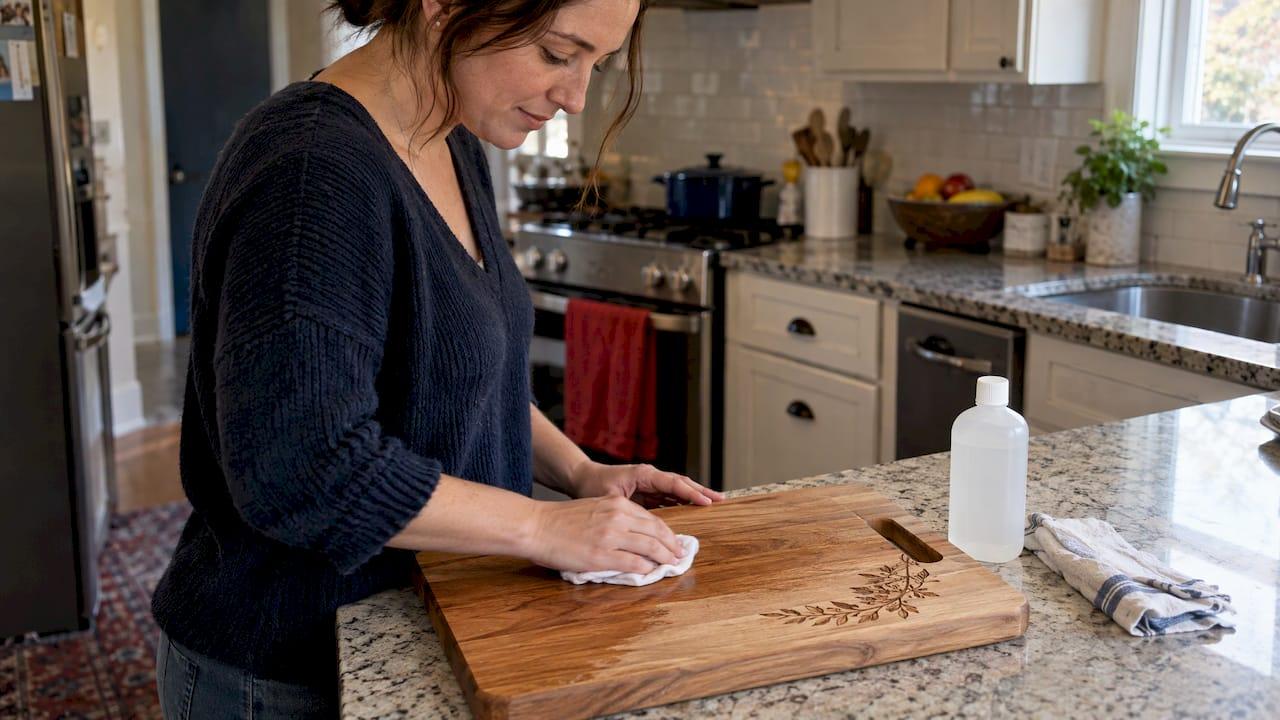
The best oil to preserve a custom engraved cutting board or wooden kitchen tool is food-grade mineral oil. It stays liquid, it has no taste or smell, and it does not turn rancid the way cooking oils can. Apply it to a clean, dry board, let it soak in, wipe off the excess, and repeat when water stops beading on the surface. The engraving gets the same oil as the rest of the wood, so a few minutes of care keeps a personalized piece looking the way it did the day it arrived.
✦ Featured From Our Shop ✦
Personalized & laser engraved in Georgia, just for you
If you are giving an engraved board as a wedding, anniversary or housewarming gift, or ordering a set for a team or client list, this is the care routine to pass along with it.
TL;DR
- Use oil labeled food-grade mineral oil (USP grade). It will not go rancid and is made for contact with food.
- Oil a new board two or three times in its first days, then add one thin layer about monthly in a busy kitchen, or a few times a year for light use.
- Wipe the oil across the whole board, engraved lines included, let it soak for hours or overnight, then buff off what is left.
- Wash with warm water and mild soap, dry it standing on its edge, and never soak it or run it through a dishwasher.
- Board cream (mineral oil plus beeswax) is an optional finishing layer on top of the oil, not a replacement for it.
Table of Contents
- Why food-grade mineral oil is the standard
- Oils to leave in the pantry
- How to oil an engraved cutting board, step by step
- Does engraving change how you care for the board?
- How often to oil
- Washing and drying between oilings
- Board cream and beeswax: an optional finishing layer
- Wooden spoons, servers and other tools
- Giving an engraved board as a gift
- Our view on keeping engraved wood looking its best
- FAQ
- Sources
Why food-grade mineral oil is the standard
Wood is a bundle of tiny tubes that drink water. A dry board swells and shrinks unevenly, and that is how boards warp and crack. Oil fills those pores so water has a harder time getting in.
Mineral oil is the usual answer for three reasons.
It does not spoil. Serious Eats explains that mineral oil is less prone to oxidation than cooking fats, so it stays fluid through heat and time. Cooking oils oxidize, and once they smell off inside the wood, washing will not pull the smell back out.
It is made for food contact. Food-grade mineral oil is tasteless and odorless. One widely sold board oil states that it is USP food-grade and meets FDA rules for direct and indirect food contact, citing 21 CFR 172.878 and 21 CFR 178.3620(a). Those are the federal regulations that cover white mineral oil used with food.
It is simple. Serious Eats puts it plainly: any food-safe mineral oil will do for a wooden cutting board. You do not need a special blend to get a good result.
Read the label
Mineral oil is sold in more than one grade. The same Serious Eats piece on mineral oil in the kitchen stresses using oil marked food-grade on wood and metal kitchen items. Look for the words “food grade” or “USP” on the bottle, and use the product sold as cutting board or butcher block oil. Skip anything sold for machinery, tools or lubrication.
Oils to leave in the pantry
Olive, vegetable and other cooking oils are tempting because they are already in your kitchen. The trouble is that they are unsaturated fats that react with oxygen over time. That produces the sour, stale smell of rancid oil, and the smell sits deep in the wood.
That is why most care guides steer you to mineral oil for boards and spoons. A board you use for fruit, bread and cheese should not smell like old fryer oil. If you only have cooking oil on hand, wait for the right bottle instead of oiling a gift board with it.
How to oil an engraved cutting board, step by step
The routine is the same for a maple or walnut board, a butcher block, or a wooden serving piece. Here is what it takes and where it usually goes wrong.
- Wash and dry the board completely. Use warm water and mild soap, then let it dry on its edge. Oil sealed over damp wood traps moisture. If the board still feels cool or damp, give it more time.
- Pour on the oil. Use a generous, even layer on the face. A new board takes more than an older one. Keep the oil off the counter by working over a towel or a sheet pan.
- Rub it in with a clean cloth. Work with the grain, then do the edges, the sides, the back and any handle. Bon Appétit’s guide says to cover all surfaces, including grooves, grips and handles. Uneven oiling is how one side ends up thirsty and warps.
- Press the oil into the engraved lines. Go over the name, date or design a second time with the cloth so the oil reaches the bottom of each line.
- Let it soak. The product directions on one board oil call for each coat to soak at least an hour. The Kitchn recommends letting it sit for hours or overnight.
- Buff off the excess. Wipe with a dry cloth until the board feels smooth, not wet. Pooled oil does not help. Chef Bosio, quoted in Bon Appétit, warns that too much oil prevents the wood from breathing properly.
- Repeat for a new board. Serious Eats suggests saturating a new board and repeating about three times. The product label for one board oil asks for at least two coats on a new board, and three or four on a thick butcher block.
The first round is the one people rush. Spread it over a couple of days instead of one evening, and the board will drink in more.
Does engraving change how you care for the board?
The short answer: you care for an engraved board the same way you care for any good wood board, with a little extra attention on the engraved area.
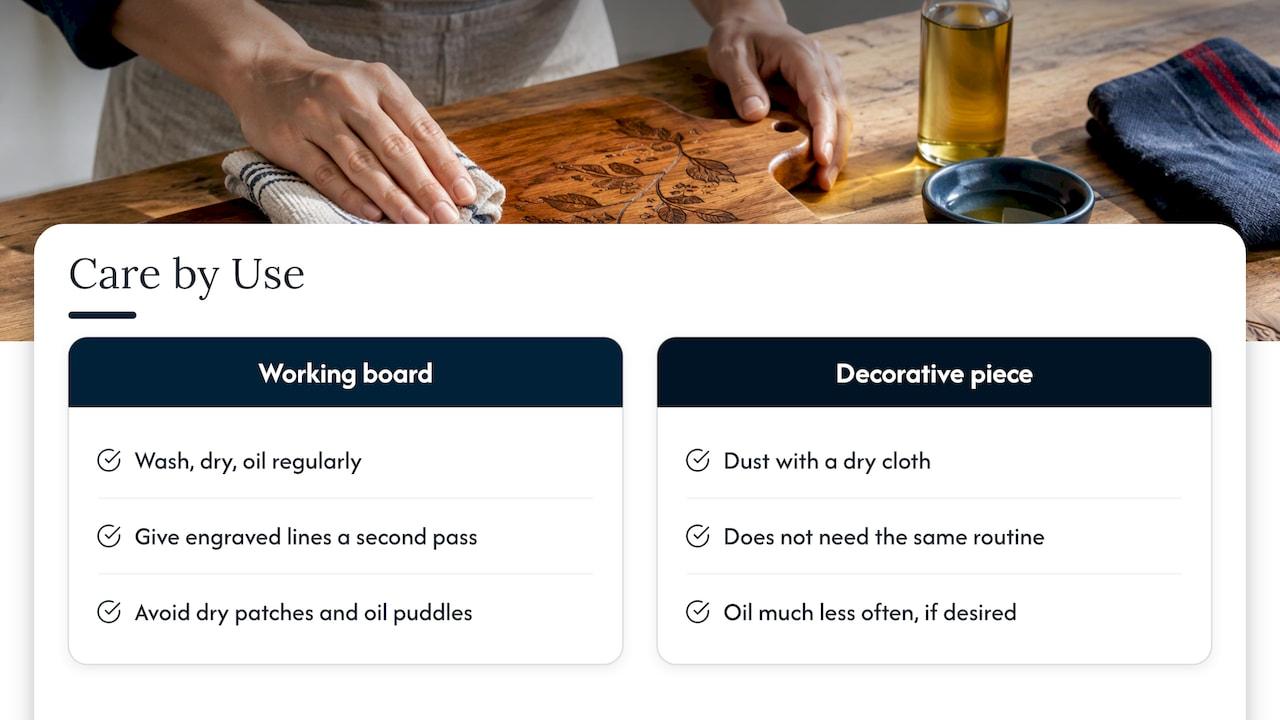
Laser engraving removes a thin layer of wood to leave the name, monogram or design. The engraved lines are shallow, and they sit in the same wood as the rest of the board. Because they are open grain, we suggest giving the lettering a second pass with the oil cloth, so the lines are conditioned with everything else. The goal is simple: no dry patches, and no puddles of oil sitting in the grooves.
What engraving does not change is what the board is for. It is still a board to chop on, serve on or display, and it still needs washing, drying and regular oil. Our guide to caring for laser engraved wood goes deeper on the wood itself.
A decorative piece that never touches food, such as a sign, a keepsake box or an ornament, does not need the same routine. A dry cloth for dusting is usually all it asks. If you want to use oil on one of those pieces, the same food-grade mineral oil is a safe, simple choice, but the rhythm is much slower than a working board.
How often to oil
There is no fixed calendar, because kitchens differ. A board that gets washed every day dries out faster than one that comes out for a holiday cheese plate.
Serious Eats’ J. Kenji López-Alt offers a workable rule: after the first few coats, add one thin layer whenever the board looks worn, about monthly for an active kitchen or two or three times a year for light use.
The water bead test
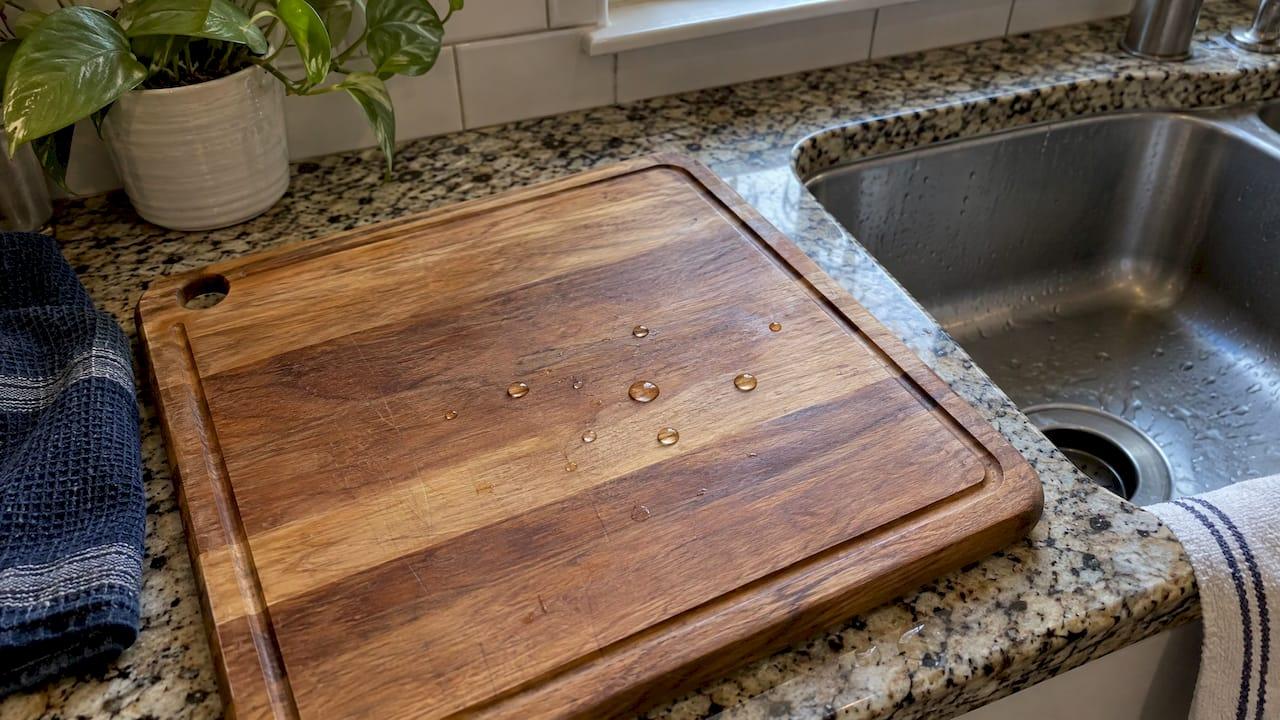
Splash a few drops of water on the board. If they bead up, the oil is still working. If the drops spread out and soak in, or the wood looks pale and dull, it is time for another coat. Epicurious also lays out a monthly board-care routine: clean, dry the board completely, oil every edge and side, and let it soak an hour or two.
A good habit is to tie oiling to something you already do. Oil the board when you sharpen your knives, on the first of the month, or when you switch out your seasonal kitchen towels.
Washing and drying between oilings
The oil does its best work when the board is not being soaked.
- Wash it after each use with warm water and mild soap, including the bottom, edges and sides. Bon Appétit notes that washing only one face leads to uneven swelling and warping.
- Dry it with a towel, then stand it on its edge so air reaches both faces.
- Keep it out of the dishwasher and out of standing water in the sink.
- For odors or stains, Bon Appétit shares chef Bosio’s reset: scrub with coarse salt and lemon, leave it about 15 minutes, rinse, dry fully, then re-oil.
That last step matters. A scrub strips some of the oil, so follow it with a fresh coat.
Board cream and beeswax: an optional finishing layer
Many people like to follow mineral oil with a cream that blends food-grade mineral oil and beeswax. The Kitchn’s testing picked a mineral oil and beeswax board cream as the best store-bought option, applied in an even layer to clean, dry wood, left to soak, then buffed.
Think of the cream as a topcoat. Oil first, let it soak, then add a thin layer of cream or beeswax the next morning, and buff. Epicurious describes the same optional beeswax layer, dried overnight. The wax gives the surface a soft sheen that makes engraved lettering stand out, and it helps water roll off.
Wooden spoons, servers and other tools
The same oil works on spoons, spatulas, pie servers, salad hands and wooden handles. Wipe on a thin coat, let it soak, and buff. Serious Eats makes the same point about food-grade mineral oil on wood and metal kitchen items.
A few notes for engraved tools:
- Hand wash tools and dry them right away. Long soaks in the sink are what crack wooden handles.
- Small pieces need very little oil. A few drops on a cloth is plenty.
- For a wooden-handled knife, see our notes on caring for a laser engraved pocket knife.
- If the wood species matters to you, our guide to wood types for laser cutting explains how different woods behave.
Giving an engraved board as a gift
A board that arrives with its first coat of oil, or with a bottle of food-grade mineral oil tucked into the box, feels thought through. It also takes the guesswork out for the person who unwraps it. A short note works well too: “Wash by hand, dry on its edge, oil monthly.”
We laser engrave boards, spoons and serving pieces to order, with personalization entered right on each product page. Our hardwood cutting board with juice groove and butcher block cutting board are made to order with your names, dates or message. For smaller gifts, there is the personalized bamboo wooden spoon and the personalized engraved pie server at $16.07. Browse everything in Kitchen & Serving, or start from the main shop.
Ordering for a team, a church, a school or a client list? Our bulk orders page is where to ask for a quote and volume pricing. A care note in each box is an easy way to make a group gift last.
Our view on keeping engraved wood looking its best
We engrave a lot of wood, and the question we hear most after “can you add a date?” is “how do I keep it nice?”
Our answer is the one in this guide: food-grade mineral oil, a gentle wash, and a habit of drying the board on its edge. It costs a few dollars and takes a few minutes a month, and it is what lets a personalized board become a kitchen fixture, not a one-season gift.
That is also why we like engraved wood for keepsakes. Every piece is laser engraved to order, so the name or date is part of the board itself. With regular oil, the wood stays warm and rich, and the lettering stays easy to read.
If you are choosing a piece for someone, pick one you can picture on their counter for years, then add a short care note. Questions about wording, wood or what will engrave well are always welcome.
Gary
FAQ
What is the best oil for a custom engraved cutting board?
Food-grade mineral oil. It is tasteless, odorless and does not go rancid, and it is the oil most care guides point to for boards and wooden tools. Check the label for “food grade” or “USP” so you know it is made for contact with food.
Can I use olive oil or vegetable oil instead?
We would not. Cooking oils can oxidize and turn rancid inside the wood, and that smell is hard to wash out. Mineral oil is the safer choice for a board you will use with food.
Do I oil the engraved part too?
Yes. Oil the whole board, and give the engraved lettering a second pass with the cloth so the lines are conditioned along with the rest of the wood. Wipe off any excess so oil does not pool in the grooves.
How do I know my board needs more oil?
Splash a few drops of water on it. If they bead, the oil is still working. If they spread and soak in, or the wood looks dry and pale, add a thin layer and let it soak overnight.
Can I put an oiled engraved board in the dishwasher?
No. Hot water and long soaks dry out the wood and can cause warping and cracking. Wash by hand with warm water and mild soap, then dry the board on its edge.
Sources
- Why Mineral Oil Belongs in Every Kitchen, Serious Eats
- How to Season and Maintain a Wooden Cutting Board, Serious Eats
- Cutting Board Oil, Food Grade Mineral Oil, Howard Products
- How to Clean a Wooden Cutting Board So It’ll Last Forever, Bon Appétit
- How to Oil Wooden Cutting Boards and Spoons, The Kitchn
- How to Clean a Wooden Cutting Board, Epicurious
Recommended
- Oil Every 2–3 Months to Keep Engraved Wooden Pocket Knife Gifts Sharp
- Butcher Block Cutting Board | Personalized & Engraved
- Personalized Acacia Cutting Board | Engraved Bamboo Board
- Butcher Block Inlay Cutting Board | Personalized & Engraved