Best Clear Coat for Outdoor Wooden Signs: Durable Finishes
For most outdoor wooden signs, a spar-formulated exterior urethane is the best all-around clear coat for protecting a custom outdoor wooden sign. It flexes with seasonal wood movement, carries UV stabilizers, and holds up to rain, sun, and temperature swings without cracking or peeling. Here is how the top picks break down by situation:
✦ Featured From Our Shop ✦
Handcrafted & laser engraved in Georgia, just for you
- Raw wood, maximum longevity: Automotive-style catalyzed polyurethane (2K urethane) delivers the hardest, most UV-stable film available. Professional sign shops use systems like PPG Autothane for exactly this reason. Requires spray equipment and proper ventilation.
- Best all-around DIY exterior: Oil-based or water-based spar urethane with an explicit outdoor or marine rating. Brushable, widely available, and forgiving on curved or routed surfaces.
- Painted or vinyl-decal signs: Water-based polycrylic or acrylic spar urethane. Polycrylic stays clear over light paints and vinyl without the yellowing risk of oil-based products, though it offers less long-term weather protection than a full spar urethane.
- High-gloss encapsulation look: UV-stabilized epoxy or resin topcoat. Stunning depth and gloss, but standard epoxy yellows outdoors unless the formula explicitly carries UV stabilizers.
Two rules apply to every scenario. First, always test a small patch on scrap or a hidden corner before finishing the whole sign. Second, check the can for an explicit outdoor or marine rating and a UV-stabilizer claim. Interior-grade polyurethane fails within a single season outdoors because it lacks the UV absorbers and mildewcides that outdoor exposure demands.
Table of Contents
- How do the main clear-coat types compare for outdoor signs?
- What should you check before buying a clear coat for your sign?
- How do you prep and apply a clear coat for a lasting outdoor finish?
- How long will a clear coat last, and when should you recoat?
- What about vinyl decals, painted lettering, and edge-sealing?
- Key Takeaways
- Why surface prep matters more than the brand on the can
- Signaturelaserdesigns handles the finishing so you do not have to
- Manufacturer and authority resources to consult before you buy
How do the main clear-coat types compare for outdoor signs?
Choosing the right product family matters more than choosing the right brand. Each finish type behaves differently on wood, and the wrong choice can mean a sign that looks great in October and peels by April.
| Finish type | Best for | UV resistance / yellowing | Film vs. penetrating | Abrasion resistance | DIY ease | Typical recoat interval |
|---|---|---|---|---|---|---|
| Oil-based spar urethane | Raw wood, carved signs | Good; slight amber tone | Film | High | Moderate (brush/wipe) | 3–5 years |
| Water-based spar urethane | Raw or lightly stained wood | Very good; near-clear | Film | Moderate–high | Easy (brush/spray) | 3–5 years |
| Marine varnish | High-moisture or coastal exposure | Good; slight amber | Film | High | Moderate | 1–2 years |
| Water-based polycrylic / acrylic | Painted signs, vinyl decals | Good; non-yellowing | Film | Moderate | Very easy | 1–2 years |
| Automotive 2K catalyzed urethane | Maximum durability, high-traffic | Excellent; non-yellowing | Film | Excellent | Low (spray rig required) | 4–6 years |
| Penetrating oil (tung, danish) | Raw natural-wood aesthetic | Poor alone; needs topcoat | Penetrating | Low | Very easy | Annual |
| Epoxy / resin topcoat | Encapsulation, deep gloss | Poor unless UV-stabilized | Film | Excellent | Moderate | 3–5 years |
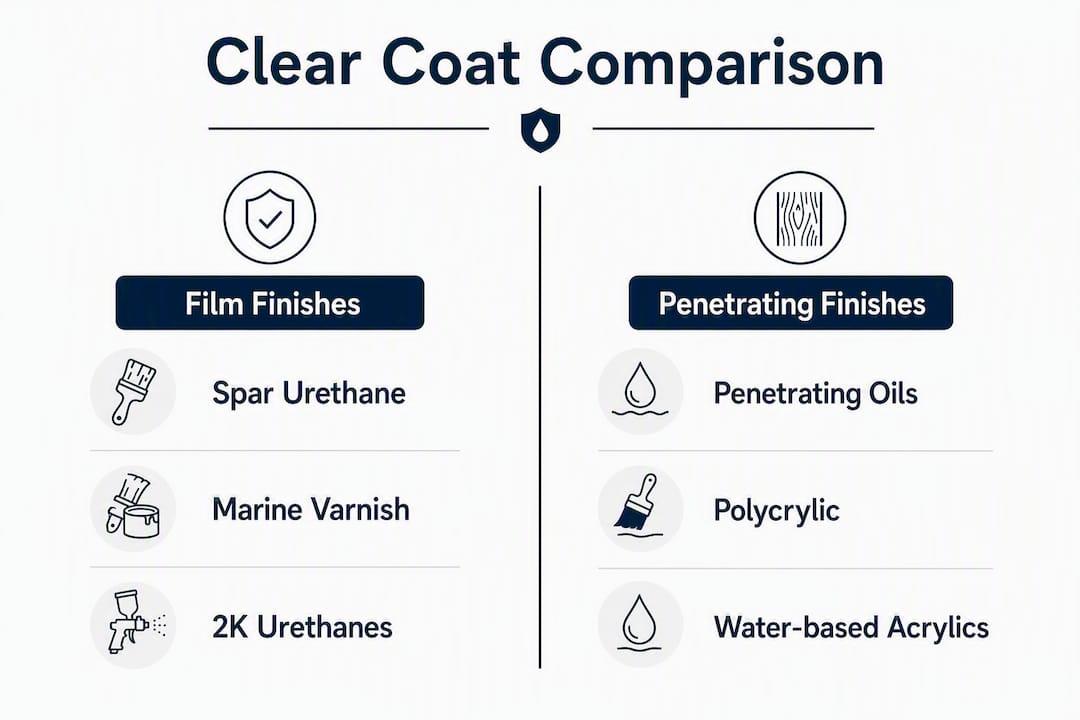
Spar urethane is the workhorse of outdoor sign finishing. The “spar” formula adds more flexible resins and UV absorbers than standard interior polyurethane, which lets the film move with the wood rather than crack. Oil-based versions add a warm amber tone that suits natural wood beautifully. Water-based versions stay nearly water-clear, which matters when the sign has white or pastel lettering.
Marine varnish is the traditional choice for coastal and high-humidity environments. It builds a tough, flexible film and tolerates salt air well, but it tends to need more frequent recoating than modern urethane systems.
Polycrylic and water-based acrylics are the go-to for painted signs and vinyl decals. They stay clear over light colors and do not react with most vinyl adhesives. The trade-off is lower long-term weather resistance compared to a full exterior urethane. Products like General Finishes’ Exterior 450 Topcoat add UV absorbers and mildewcides for vertical exterior surfaces, with a full cure around 21 days and a typical service life under normal exposure. Note that even this product can cause yellowing over white or very light paints, so testing is non-negotiable.
Automotive 2K urethanes sit at the professional end of the spectrum. Sign shops favor them for non-yellowing film and superior abrasion resistance, but they require accurate mixing ratios, proper spray equipment, and controlled ventilation. The upfront complexity pays off in high-exposure settings where a consumer-grade product would need recoating every couple of years.
Penetrating oils alone are not sufficient for outdoor signs. They protect the wood fiber but leave no protective surface film, so they offer minimal defense against abrasion or standing water.
What should you check before buying a clear coat for your sign?
The right clear coat depends on four questions you should answer before you walk into the store or add to cart.
- Is the sign painted, stained, or raw wood? Painted and vinyl signs need a water-based, non-yellowing formula. Raw wood can handle oil-based spar urethane without color concerns.
- How much direct sun and moisture will it get? A shaded porch sign has very different needs from a post-mounted sign facing south in a sunny climate. More sun means UV stabilizers matter more. Coastal or rainy climates push you toward marine-rated products.
- Is vinyl or a decal involved? Some solvent-based finishes soften vinyl adhesives. Stick to water-based options or confirm compatibility with the decal manufacturer before applying.
- How will you apply it? Brush-on products are forgiving for DIY work. Spray cans are fast but thin. Professional 2K systems need spray equipment and safety controls.
Once you have those answers, check the product label for these five things:
- “Exterior” or “marine” rating on the front label, not just in the fine print.
- UV stabilizers or UV absorbers listed in the product description or technical data sheet.
- Mildew or mold inhibitor for humid or shaded locations.
- Compatibility notes for water-based vs. oil-based base coats.
- Recommended number of coats and recoat window so you can plan your schedule.
On cost: consumer spray cans and brush-on spar urethanes run a few dollars per coat and are widely available at hardware stores. Professional 2K catalyzed systems cost significantly more per application and require equipment, but their lifetime value in high-exposure settings often makes them cheaper over the sign’s full life because recoat cycles stretch to 4–6 years.
Pro Tip: Before you commit to any finish on your actual sign, brush or spray a small test area on a painted scrap of the same wood species. Let it cure fully, then check for adhesion, color shift, and any lifting at the edges. This one step prevents most finish failures.
Some consumer sealants carry surprisingly long cure requirements. Outdoor Mod Podge, for example, lists a 28-day cure time before weather exposure, which is easy to miss on the label and can lead to premature failure if the sign goes outside too soon.
Ready-made engraved wood pieces
Prefer to skip the finishing work? These pieces are laser engraved with your names, dates or message and arrive ready to display or give.
- Personalized Wood Plaque: Walnut, Bamboo, Alder, Cherry, Clock and Faux Leather to Pinterest (opens in a new window)
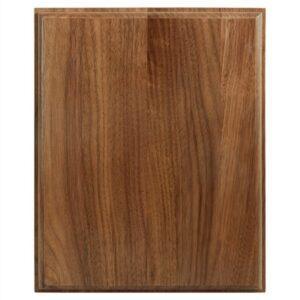
Personalized Wood Plaque: Walnut, Bamboo, Alder, Cherry, Clock and Faux Leather
Price range: $32.99 through $335.99Select options This product has multiple variants. The options may be chosen on the product page 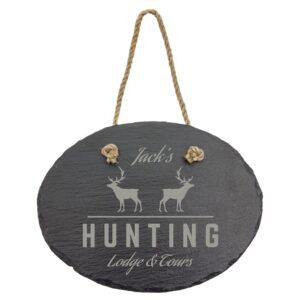
Personalized Slate Sign, Engraved Home Decor
Price range: $19.99 through $32.99Select options This product has multiple variants. The options may be chosen on the product page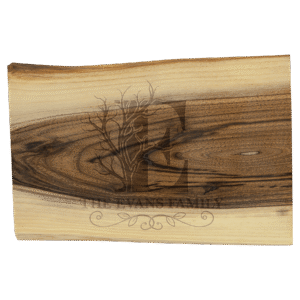
Personalized Black Walnut Cutting and Charcuterie Board
Price range: $30.99 through $68.99Select options This product has multiple variants. The options may be chosen on the product page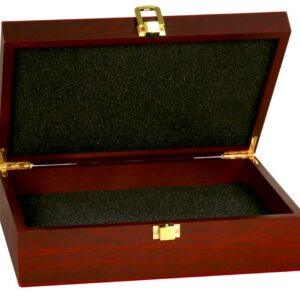
Personalized Wood Keepsake Box, Engraved Rosewood or Red Alder
Price range: $43.99 through $79.99Select options This product has multiple variants. The options may be chosen on the product page
How do you prep and apply a clear coat for a lasting outdoor finish?
Surface preparation is the single most important factor in how long any clear coat lasts. Industry professionals consistently report that peeling and delamination trace back to inadequate prep far more often than to the wrong topcoat choice.
Surface prep sequence
Start with a clean, dry, oil-free surface. Wipe down the sign with a tack cloth or a lint-free rag dampened with mineral spirits (for oil-based topcoats) or water (for water-based). Sand bare wood with 120-grit to open the grain, then finish with 180-grit for a smooth base. For painted surfaces, a light 220-grit scuff improves adhesion without cutting through the paint.
Resinous woods like cedar or pine can bleed tannins through a clear topcoat, causing brown staining. Seal those surfaces with a shellac-based primer or a dedicated tannin-blocking sealer before applying your topcoat. For engraved wood, the interaction between surface texture and topcoat means you may need an extra thin coat to fill engraved channels evenly.
Application method
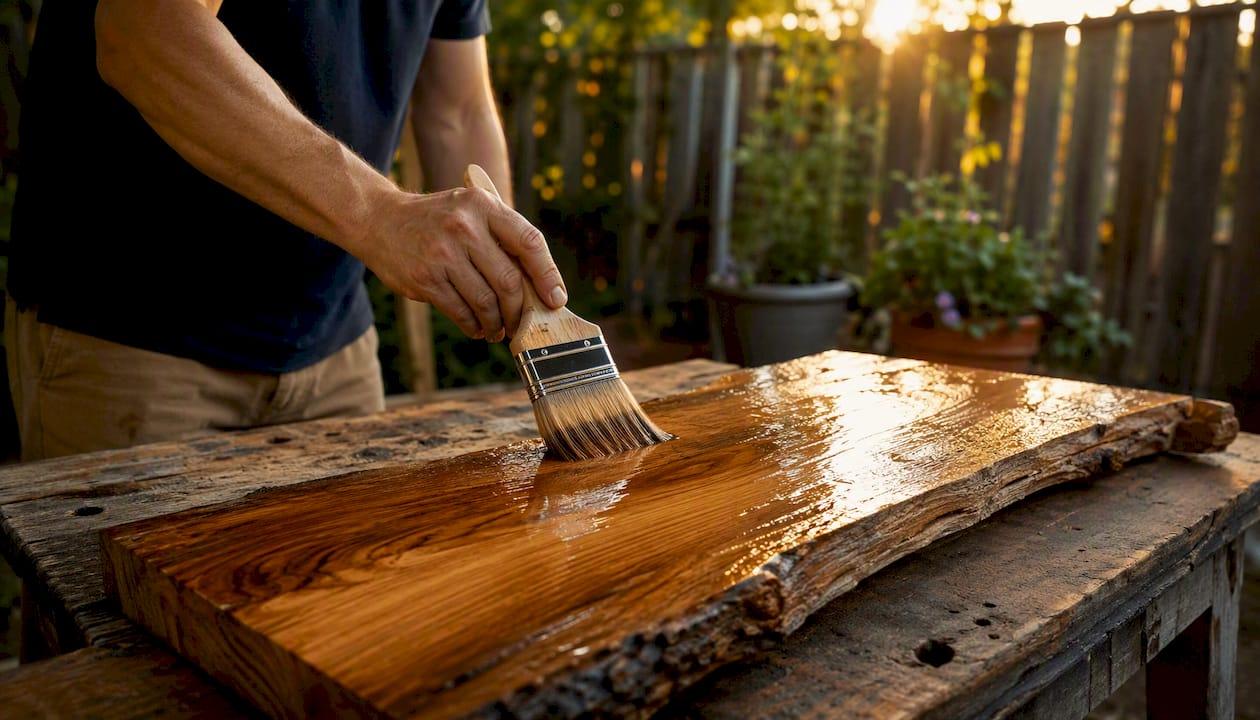
Brush application works well for small signs and textured surfaces. Use a quality natural-bristle brush for oil-based products and a synthetic brush for water-based. Apply thin, even coats and work with the grain. Foam rollers leave a slightly stippled texture that some makers prefer for a matte look.
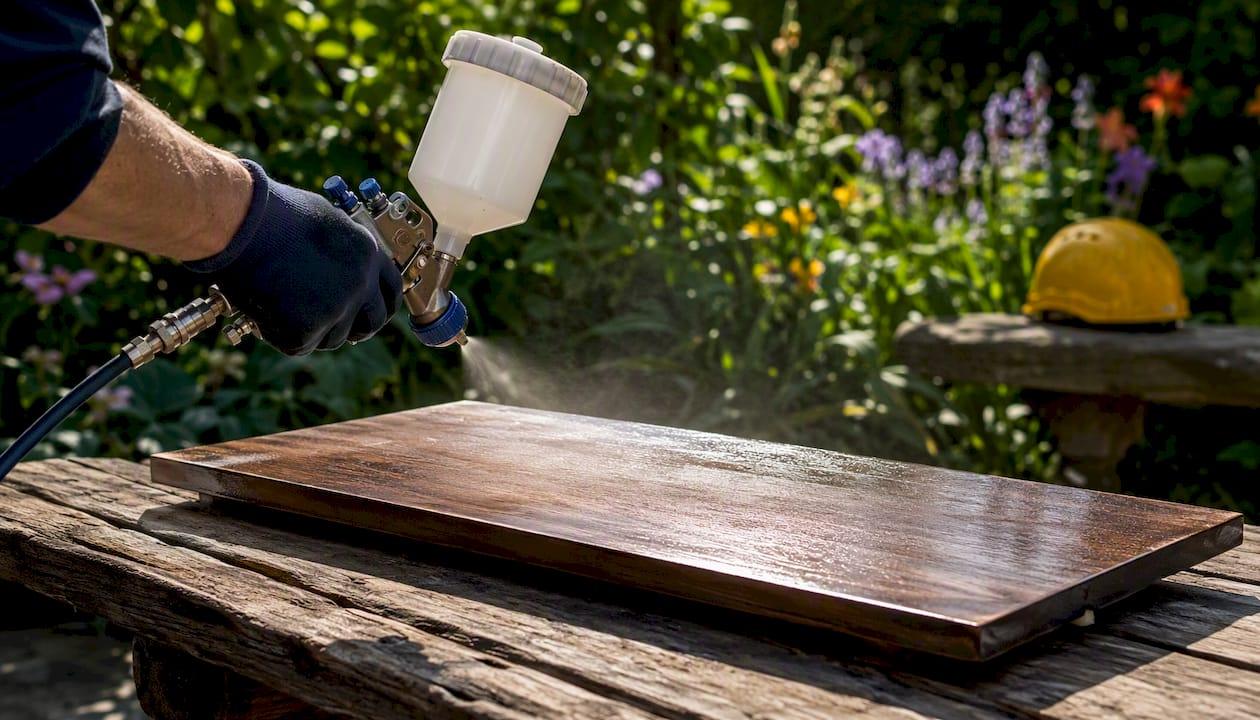
Spray application, whether from a can or an HVLP gun, produces a smoother, more factory-like film. Hold the nozzle 8–12 inches from the surface and keep the pass moving to avoid runs. For 2K catalyzed systems, a professional spray rig with proper air filtration is required, not optional.
For most exterior spar urethanes, apply 3 coats minimum. Sand lightly with 320-grit between coats to improve adhesion and knock down any dust nibs. The final coat gets no sanding. Allow each coat to dry to the touch before recoating, following the manufacturer’s recoat window exactly.
Pro Tip: For oil-based products, apply wet-on-wet only if the manufacturer specifically supports it. Most consumer spar urethanes need a full dry between coats. Rushing this step is one of the most common causes of inter-coat adhesion failure.
Safety and ventilation
Oil-based and solvent-based systems release VOCs that accumulate quickly in enclosed spaces. Work outdoors or in a well-ventilated area, wear a respirator rated for organic vapors (not just a dust mask), and keep ignition sources away. For 2K catalyzed systems, the isocyanate hardener requires a supplied-air respirator or a properly fitted P100/OV combination cartridge. Dispose of solvent-soaked rags by spreading them flat outdoors to dry before discarding, as they can self-ignite when bunched.
How long will a clear coat last, and when should you recoat?
Realistic expectations save a lot of frustration. No clear coat lasts forever on an outdoor wooden sign, and climate has a bigger effect on service life than most people expect.
| Finish family | Typical recoat interval | Climate impact notes |
|---|---|---|
| Consumer polycrylic | 1–2 years | Shortens quickly in high UV or wet climates |
| Water-based spar urethane | 3–5 years | Good UV resistance; coastal moisture reduces interval |
| Oil-based spar urethane | 3–5 years | Amber tone deepens over time; holds well in freeze-thaw |
| Marine varnish | 1–2 years | Best in salt air; needs more frequent maintenance |
| Automotive 2K urethane | 4–6 years | Most resistant to UV and abrasion; climate impact minimal |
| Epoxy / resin (UV-stabilized) | 3–5 years | Yellows without UV stabilizers; avoid in direct sun otherwise |
Practitioners generally expect recoat cycles in the 3–5 year range for quality exterior products under normal exposure. Extreme climates, particularly high UV regions, coastal salt air, or areas with hard freeze-thaw cycles, can cut that in half.
Maintenance checklist
- Inspect the sign every 6 months. Look for clouding, flaking, edge lifting, or any areas where the film has gone chalky.
- Clean with a mild dish soap solution and a soft, non-abrasive cloth. Avoid pressure washing, which can drive water under the film at edges.
- Check end grain and bottom edges first. These are where moisture enters and where failure almost always starts.
- When you see the first signs of film breakdown (dullness, micro-cracking, or edge lifting), recoat promptly rather than waiting for full failure.
- If the finish has peeled or the wood has gone gray, strip back to bare wood with a chemical stripper or sanding, re-prep, and start fresh.
For practical guidance on maintaining outdoor wood surfaces, the same principles that apply to decking apply to signs: regular inspection, gentle cleaning, and timely recoating extend service life far more than any single product choice.
Direct sunlight is the biggest accelerant of finish failure. UV radiation breaks down the resin binders in any clear coat over time, even UV-stabilized ones. A sign mounted on a south-facing wall with no overhang will need recoating roughly twice as often as one under a covered porch. Salt air accelerates moisture ingress at film edges. Freeze-thaw cycles stress the wood-to-film bond, especially on flat-sawn boards where the grain moves more dramatically.
What about vinyl decals, painted lettering, and edge-sealing?
Compatibility failures are the most avoidable finish problems, and they almost always come down to not checking before applying.
- Vinyl decals and solvent-based finishes: Many solvent-based clears, including some oil-based spar urethanes, can soften vinyl adhesive and cause lifting or bubbling. Always use a water-based topcoat over vinyl, or apply a thin barrier coat of water-based polycrylic first, let it cure fully, then topcoat with your preferred exterior product.
- White and light-painted signs: Some water-based exterior topcoats, including General Finishes Exterior 450, can cause yellowing over white or light paints. Test on a scrap piece painted with the same color before committing. A non-yellowing water-based polycrylic or acrylic spar is usually the safer choice here.
- Epoxy and outdoor UV exposure: Standard epoxy resin yellows aggressively in direct sunlight. For outdoor signs, use only UV-stabilized epoxy formulas, and even then, expect more maintenance than with a purpose-built spar urethane. Epoxy shines for encapsulation projects or signs kept under cover.
- Edge-sealing and end grain: End grain absorbs moisture at many times the rate of face grain. Seal end grain and all edges with an extra coat or two of your chosen topcoat, or use a dedicated end-grain sealer before the main finish. This one step prevents most cases of wood checking and edge delamination.
- Blistering or tannin bleed-through: If a topcoat blisters, the cause is usually moisture trapped in the wood or a wet surface at application. Strip the affected area, let the wood dry completely (at least 48 hours in dry conditions), and reapply. Tannin bleed shows as brown staining under the clear coat. The fix is a shellac-based sealer over the affected area before recoating.
For signs with mixed materials, the care standards for laser-engraved wood offer additional guidance on compatible cleaning and finishing products that do not damage engraved surfaces.
Key Takeaways
For outdoor wooden signs, spar-formulated exterior urethane is the most reliable all-around clear coat, with automotive 2K urethane reserved for maximum durability and water-based polycrylic for painted or vinyl signs.
| Point | Details |
|---|---|
| Match finish to sign type | Use spar urethane for raw wood, polycrylic for painted or vinyl signs, and 2K urethane for maximum durability. |
| Always check the label | Confirm an outdoor or marine rating, UV stabilizers, and mildewcide before buying any clear coat. |
| Prep determines longevity | Clean, dry, sanded surfaces hold any topcoat far longer than the best product on a poorly prepped base. |
| Plan for recoating | Most exterior finishes need recoating every 2–3 years; automotive 2K systems can extend that to 4–6 years. |
| Signaturelaserdesigns option | Signaturelaserdesigns offers custom laser-engraved wooden signs with professional finishing, removing the prep and application work entirely. |
Why surface prep matters more than the brand on the can
There is a tendency in the DIY sign community to spend a lot of energy debating product brands and very little time on the surface before the first coat goes on. The honest truth is that a mid-range spar urethane applied over a properly cleaned, sanded, and primed surface will outlast a premium 2K urethane applied over a dusty, damp, or incompatible base. Every finish failure I have seen traced back to one of three things: moisture in the wood at application, an incompatible base coat, or skipping the test patch.
The test-patch habit is the single easiest win available. It costs five minutes and a scrap of wood, and it catches compatibility problems, color shifts, and adhesion issues before they ruin a finished sign. Schedule your recoats on a calendar rather than waiting until you notice failure. A quick inspection twice a year, a gentle wash, and a fresh coat every 2–3 years keeps most outdoor signs looking great for a decade or more. That is far less work than stripping and refinishing a sign that has gone past the point of no return.
Signaturelaserdesigns handles the finishing so you do not have to
Choosing the right clear coat, prepping the surface, applying multiple coats, and planning recoat schedules is genuinely satisfying work when you enjoy it. When you do not, or when the sign needs to be right the first time, Signaturelaserdesigns is the practical alternative.
Our team handles custom laser engraving on wood and other materials, with professional finishing options that protect your sign from day one. Every order is built to your design, and we can advise on the right protective coating for your sign’s specific exposure conditions before we ship. No guessing about compatibility, no waiting on cure times, no wondering whether you used the right product.
If you are ordering a sign for a business, a home, or as a gift that needs to hold up outdoors for years, explore our custom engraving services or browse finished options directly on our Etsy storefront (on Etsy). Get a quote today and tell us exactly where the sign will live. We will make sure it is built to last there.
Manufacturer and authority resources to consult before you buy
Before purchasing any clear coat for an outdoor wooden sign, check the manufacturer’s technical data sheet for outdoor or marine rating, UV absorber claim, cure time, recommended application method, and compatibility notes. These details are often buried in the fine print and differ significantly from the marketing copy on the front label.
- General Finishes Exterior 450 Topcoat: Technical data on UV absorbers, mildewcide content, cure time, and compatibility warnings for light paints.
- Signs101.com Signmaking Forum: Practitioner discussions on professional-grade clears, 2K systems, and real-world performance on painted and raw wood signs.
- Woodweb Knowledge Base: Sealing Wooden Signs: Trade-level guidance on substrate prep, compatible topcoats, and wet-on-wet application techniques.
- Makers Gonna Learn: How to Seal Vinyl for Outdoor Signs: Practical guidance on water-based sealers, polycrylic, and cure-time requirements for vinyl-decorated signs.
- Sawinery: Best Clear Coat for Wood: Broad comparison of clear coat types with notes on exterior performance and application.
- UV-resistant outdoor coatings: benefits and smart choices: Technical background on UV stabilization in outdoor wood finishes and long-term performance factors.
Always test a small patch before full application, and follow the product-specific safety instructions for ventilation, PPE, and disposal. When in doubt, the manufacturer’s technical data sheet is more reliable than any review or forum post.
Recommended