Laser Engrave Your Bison River BR1252 Without Charring
Yes, you can laser engrave a Bison River pocket knife handle, including the popular Bison River Knife BR1252 (on Etsy), as long as the handle is natural wood. The one catch: without the right laser settings and a proper seal afterward, wood can char or blotch. Get those two things right, and you end up with a keepsake instead of a regret.
✦ Featured From Our Shop ✦
Handcrafted & laser engraved in Georgia, just for you
TL;DR:
- Most Bison River knives with natural wood handles can be engraved, but proper laser settings and a sealant are essential to prevent charring or blotching.
- Using airflow with air assist and multiple passes at lower power significantly reduces charring and achieves cleaner engraving results.
- Preparing artwork as a vector file and requesting proofs before production ensures accurate placement and size, saving time and avoiding errors.
- Sealing the engraved handle with thin coats of oil or polyurethane protects against moisture and maintains a sharp appearance over time.
- Choosing a vendor experienced with Bison River handles and requesting a test on scrap wood helps ensure consistent, durable results suitable for daily carry.
Table of Contents
- Which Bison River Handles Accept Laser Engraving?
- Laser vs. Hand Engraving: What Actually Works Better on a Knife Handle?
- How Do You Prepare Artwork for a Knife Engraving Order?
- How Do You Keep a Laser-Engraved Handle Looking Sharp?
- What Determines the Cost and Turnaround for Engraving?
- What Safety and Legal Details Should You Know Before Ordering?
- Why Trust Signature Laser Designs With Your Bison River Order?
- Does Engraving Look Different on Polished vs. Raw Wood Handles?
- How Do You Pick the Right Vendor for a Bison River Engraving?
- Does Engraving Affect a Bison River Knife’s Warranty?
- What Do Finished Bison River Engravings Actually Look Like?
- What Font and Logo Options Work Best on a Bison River Handle?
- The Real Question Isn’t Whether It Can Be Engraved
- Ready to Personalize Your Own Bison River BR1252?
- Sources
- FAQ
Which Bison River Handles Accept Laser Engraving?
Most Bison River pocket knives, including the BR1252, use natural wood scales, and natural wood takes a laser engraving beautifully. Stabilized wood or resin composite handles behave differently under the beam, since resin can bubble or discolor where solid wood simply darkens, so it’s worth confirming the exact handle material before you order.
Placement matters more than people expect. Engravers typically work on one flat face of the handle, centered with a safe margin from the bolster and pivot pin, because getting too close to metal hardware risks an uneven burn or a design that gets clipped by hardware edges.
Here’s what most vendors will and won’t take on:
- Text, initials, and monograms sit at the easy end of the spectrum and produce the cleanest results.
- Simple logos and line art translate well, especially when the design has clear, bold edges rather than fine gradients.
- Deep carving into existing inlays or bolster hardware is usually declined, since it risks damaging factory finishes.
- Full-handle wraparound designs are limited by the handle’s curve and the safe-margin rule around metal parts.
If you’re weighing a Bison River pocket knife against other engravable models, this rundown of custom engraved pocket knife providers is a useful side-by-side.
Laser vs. Hand Engraving: What Actually Works Better on a Knife Handle?
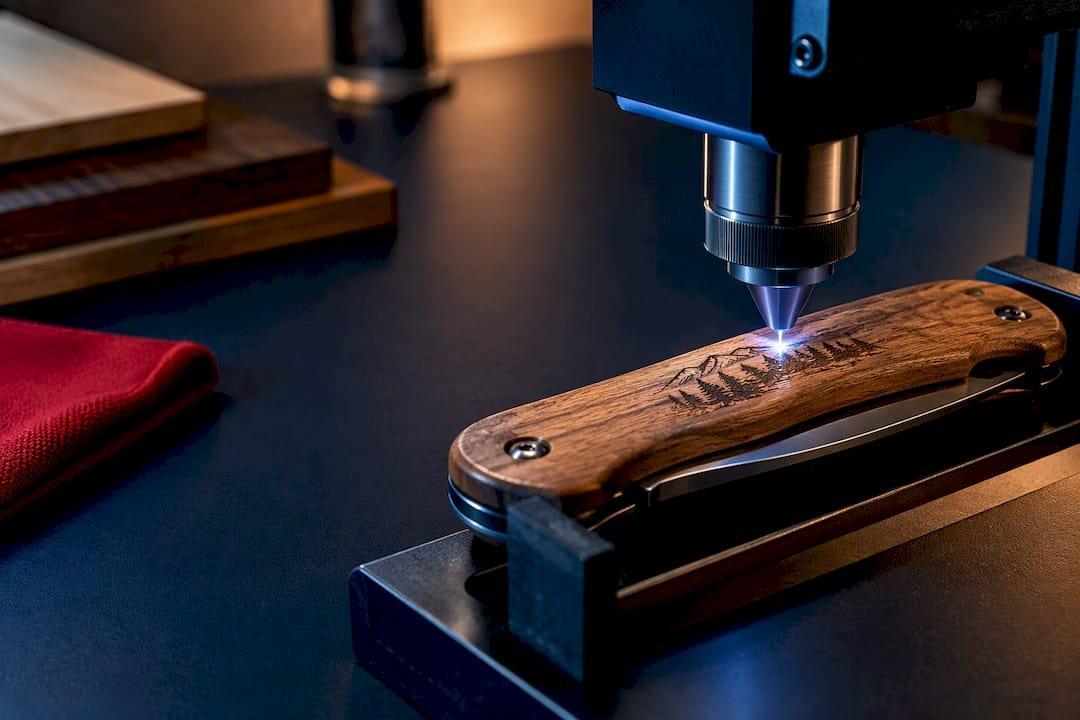
Laser engraving wins on precision. A laser burns a design into wood with no physical contact, which means crisp letters, repeatable results across a batch, and none of the slip risk that comes with a rotary tool or hand chisel near a folded blade. The trade off is heat. Lasers can char wood grain or, on thinner handle stock, cause slight warping if the operator pushes too much power in a single pass.
Hand tools like a Dremel or hand-ground chisel give a woodworker tactile control and lower ambient heat, but they demand real skill, take far longer per piece, and are harder to make consistent across multiple knives. For a one-off gift, that inconsistency is exactly what you don’t want.
The fix for laser-side heat problems is well established. Engravers who use air assist during the burn report dramatically less charring and cleaner line edges, because the airflow clears smoke and ash before it can scorch the surrounding wood. Multiple passes at lower power, rather than one aggressive pass, accomplish the same goal while keeping engraving depth in the safe range professionals recommend, generally 0.5 to 2 millimeters so the handle stays structurally sound. Grain direction matters too. A design running with the grain tends to burn evenly, while one that cuts across it can pick up uneven shading.
- Ask any vendor whether they use air assist and multiple passes on wood handles.
- Ask what machine they’re running, since CO2 lasers and diode lasers behave differently on wood density.
- Request a test pass on scrap wood before they touch your actual knife.
- Ask for a digital proof before production starts, not after.
Pro Tip: If a vendor hesitates to answer basic questions about machine type or air assist, that’s a signal to keep shopping. A shop that engraves wood regularly will have these answers ready without checking.
How Do You Prepare Artwork for a Knife Engraving Order?
Getting your file right the first time saves you a round of back-and-forth emails and, often, an extra fee.
- Choose the right file type. Vector formats like SVG work best for text, initials, and simple logos because they scale cleanly without losing edge quality. For photo-style or highly detailed art, a high-resolution raster file (PNG or JPG) at 300 to 600 DPI gives the laser enough data to render fine detail, particularly on portrait-style engravings where higher DPI produces noticeably sharper results.
- Size it to the handle, not the screen. Measure the flat engraving area on the actual knife handle, then keep a safe margin from the bolster and pins. Small handles typically hold three to five words comfortably before text becomes cramped or illegible.
- Request a proof before production. A responsible vendor sends a digital mockup showing exact placement and font, and will confirm whether your chosen font is available or needs a close substitute.
How Do You Keep a Laser-Engraved Handle Looking Sharp?
Sealing the engraved area isn’t an optional extra. Without it, exposed wood fibers absorb oils and moisture unevenly, and that shows up as a blotchy, inconsistent surface within weeks of regular carry.
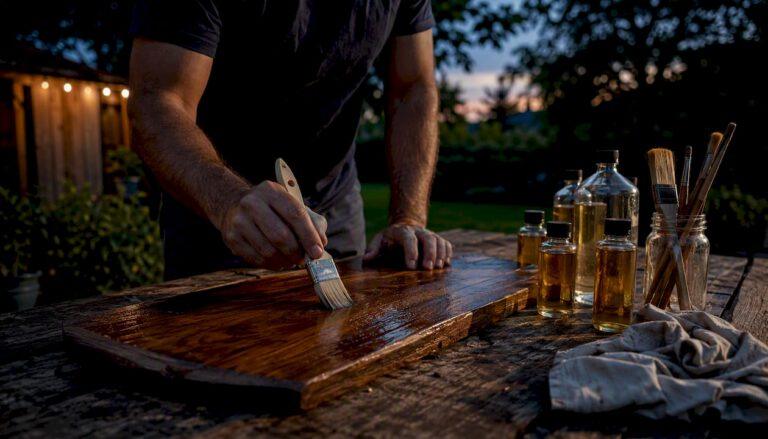
Professionals commonly reach for thin coats of specialized oil finishes such as Tru-Oil, or a wipe-on polyurethane, because these penetrate the wood grain and protect it without building up a thick film that would dull the engraved detail. A thin coat of shellac shows up occasionally too, particularly on handles headed for display rather than daily pocket carry.
- Apply finish oil sparingly, in thin coats, letting each one dry before adding another.
- Skip harsh solvents when cleaning the handle. A soft, slightly damp cloth is enough.
- Reapply oil every few months if the knife sees regular pocket use, since skin oils and moisture wear the seal down over time.
- Avoid soaking the handle. Wood and water are not friends, engraved or not.
Pro Tip: A groomsman gift that gets carried daily needs a slightly heavier reapplication schedule than one going straight into a display case. Ask your engraver which finish they used so you know what to reapply.
What Determines the Cost and Turnaround for Engraving?
A handful of factors drive the price on any custom knife engraving: how much text you want, whether you’re adding a logo, how many passes the design needs, whether you’re engraving one side or both, and how many knives you’re ordering at once. Complex artwork with fine detail generally costs more to set up than a simple name and date.
- Text-only engravings tend to sit at the lower end of typical pricing.
- Logos or custom artwork usually carry a setup fee on top of the base engraving cost.
- Rush production, when a vendor offers it, adds a surcharge for moving your order ahead in the queue.
Turnaround typically breaks into two stages: proof time and production time. Vendors commonly build in a proofing step before production begins, which can add several days to the overall timeline, so factor that in if you’re engraving a knife for a wedding date or a specific gift occasion.
What Safety and Legal Details Should You Know Before Ordering?
Reputable engravers take a few standard precautions before the laser ever touches the handle. That includes covering or removing the blade during the burn, securing the handle so it doesn’t shift mid-pass, and running proper ventilation to clear dust and fumes. Anyone operating the laser directly should be wearing ANSI-rated eye protection.
Before finalizing your design, a good vendor will test the placement on a piece of scrap wood or a spare handle blank, confirming both the burn settings and the final look before committing to your actual knife.
- Ask how the vendor protects the blade finish and edge during the engraving process.
- Confirm they test on scrap before running your final piece.
- Check your own local rules on blade length and carry before gifting a knife, since regulations vary by state and city and this article isn’t legal advice.
Why Trust Signature Laser Designs With Your Bison River Order?
Signature Laser Designs works directly with natural wood handles like the ones on the Bison River BR1252, and the shop’s custom laser engraving services page walks through the materials and methods used on personalized gifts. A closer look at the shop’s own hands-on project engraving Bison River knives shows the kind of results a natural wood handle can produce.
Every order runs through the same checks: confirming handle material, proofing the design before production, and sealing the finished engraving so it holds up to daily carry. When you order a personalized BR1252, expect a proof to review, a confirmed placement, and a finished piece that’s been sealed, not just burned and shipped.
Does Engraving Look Different on Polished vs. Raw Wood Handles?
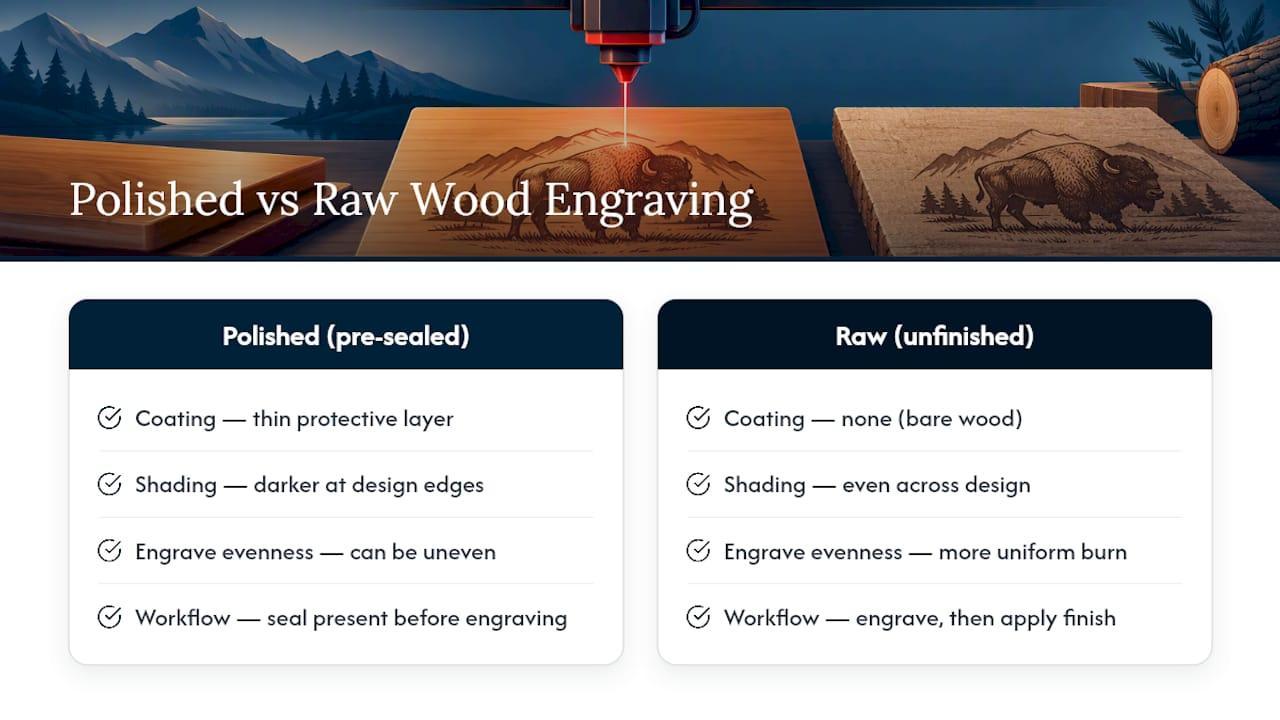
It does, and the difference is worth knowing before you pick a finish preference. Polished or pre-sealed wood handles already have a thin protective coating on the surface, which means the laser has to burn through that layer before it reaches bare wood. That can produce slightly different shading right at the edges of the design compared to raw, unfinished wood.
Raw or lightly finished wood takes the burn more evenly across the whole design, since there’s no existing coating to interfere with how deep or dark each pass lands. This is one reason many engravers prefer to work on a handle before any heavy sealing goes on, then apply the protective oil or poly finish afterward, sealing the engraving itself along with the rest of the handle in one step.
Grain pattern plays a role too. Bison River handles vary somewhat piece to piece since they’re made from natural wood, and a tighter, more uniform grain generally engraves more evenly than a handle with heavy figuring or knots running through the design area. It’s not a dealbreaker, but it’s why a responsible vendor will look at your actual handle, not just a stock photo, before finalizing burn settings.
If you’re choosing between a polished display piece and an everyday carry knife, that intended use should shape your finish choice as much as your engraving design does. A display knife can handle a glossier topcoat since it won’t see daily wear, while an everyday carry piece benefits from a thinner, more frequently reapplied oil finish that won’t crack or peel with regular handling.
How Do You Pick the Right Vendor for a Bison River Engraving?
Not every laser shop has actually worked with Bison River handles specifically, and that experience matters more than generic engraving skill. A vendor who’s engraved dozens of these knives already knows the handle’s typical wood density, where the safe margins around the bolster sit, and how the grain tends to behave under a laser pass.
Ask to see actual photos of Bison River knives the vendor has completed before, not stock catalog images. Real project photos tell you whether their engraving stays crisp on this specific handle shape, and whether their finish work holds up in close-up detail shots.
A vendor who offers a digital proof before production is worth prioritizing over one who doesn’t. That proof step catches font substitutions, sizing issues, and placement problems before they become permanent. Similarly, ask directly whether they test settings on scrap wood before touching your actual knife. Vendors confident in their process are usually happy to explain it.
Turnaround transparency matters just as much as skill. A vendor who gives you a clear proof time plus production time estimate upfront, rather than a vague “a few weeks,” is generally more organized about their queue and more likely to hit a gift deadline. For readers weighing several personalization options at once, this comparison of custom engraved pocket knife providers is a solid starting point for narrowing the field.
Does Engraving Affect a Bison River Knife’s Warranty?
This is worth asking directly before you order, since warranty terms vary by seller and aren’t standardized across every Bison River retailer. Generally speaking, cosmetic customization like engraving on the wood handle doesn’t affect the blade’s mechanical warranty, since the engraving process targets the handle scale, not the locking mechanism, pivot, or blade steel.
That said, engraving is permanent. Once a design is burned into the wood, it can’t be fully removed, and a light re-engraving to darken a design that came out too faint is really the only correction available. If you’re unsure a design will look right, request that proof and confirm placement before production, not after the knife arrives.
There’s also a practical limitation worth knowing: engraving depth. Professionals generally keep engraving within a 0.5 to 2 millimeter range specifically because cutting deeper than that risks weakening the handle scale itself, which isn’t a cosmetic problem anymore, it’s a structural one. A vendor who understands this limit is protecting your knife’s integrity, not just its looks.
If your engraved design comes out lighter than expected, it’s usually fixable with a careful re-pass rather than a full refund situation, and this guide on fixing a laser engraving that’s too light walks through how that correction typically works.
What Do Finished Bison River Engravings Actually Look Like?
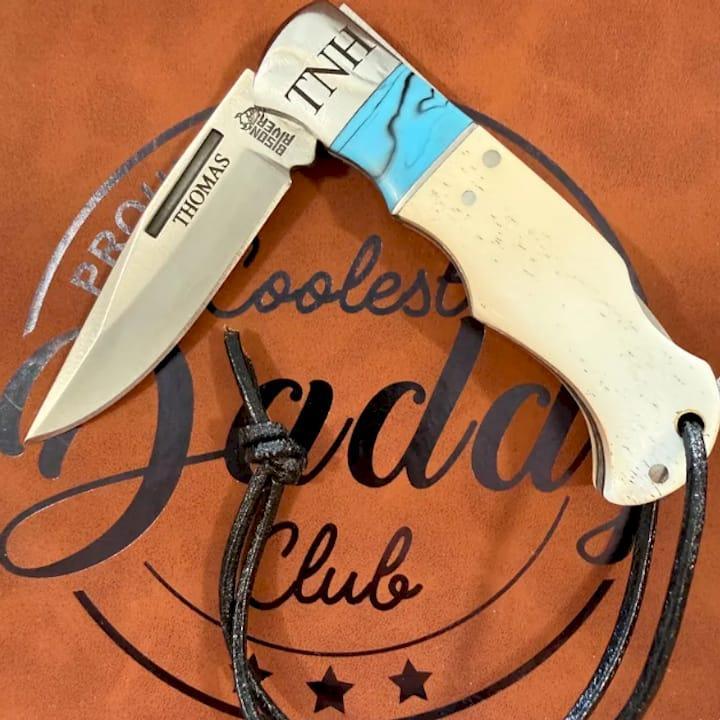
Engraved Bison River knives tend to fall into a handful of common categories once you see enough finished examples. Groomsmen gifts frequently carry a first name or initials paired with a wedding date, kept small and centered on one handle face. Anniversary gifts often add a short phrase or coordinates alongside initials. New-parent and relocation gifts lean toward simple monograms or a state outline, since Bison River’s wood grain gives even basic shapes a warm, natural look that stands out from a plain metal handle.
 (on Etsy)
What separates a great result from a mediocre one usually comes down to two things: how crisp the initial burn came out, and how well the finish was applied afterward. A well-sealed engraving on a tight-grain handle reads clearly even in low light, while a rushed job on a knotty section of wood can look muddy no matter how good the original artwork was.
Photos matter more than descriptions here. Before committing to a vendor, look at actual completed pieces on knives in this style, since a portfolio of real finished Bison River handles tells you far more than a written promise about “premium engraving.”
What Font and Logo Options Work Best on a Bison River Handle?
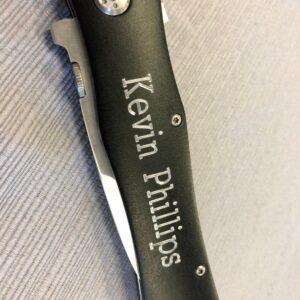
Font choice matters more on a knife handle than it does on most engraved gifts, simply because the surface area is small and the wood grain adds its own visual texture underneath the letters. Clean, moderately bold sans-serif and simple script fonts tend to read clearly at small sizes, while thin, highly decorative fonts can lose legibility once burned into wood grain.
Most vendors offer a library of standard fonts along with the option to upload a custom design, though font substitution policies vary. If you have a specific font in mind, confirm before ordering whether the vendor can use it directly or will need to substitute something visually close.
Logo placement follows the same safe-margin logic as text: centered on one flat handle face, kept clear of the bolster and pivot hardware. Simple, bold-line logos hold detail far better than logos with fine gradients or tiny embedded text, since the laser has a harder time rendering extremely fine detail cleanly on wood grain compared to metal or acrylic.
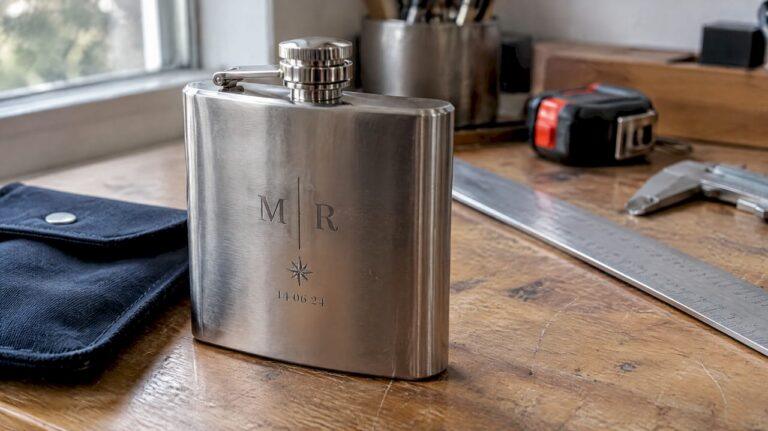
Beyond the knife itself, this same font and logo approach carries over to other engraved gifts in a set, like matching groomsmen flasks or keepsake boxes, and pairing pieces from unfinished wood blanks and personalized gifts can round out a themed gift without needing to hunt down separate vendors for each item. For readers curious how engraving stacks up against other surface techniques, this breakdown of etching versus engraving explains why engraving tends to be the better fit for wood specifically.
The Real Question Isn’t Whether It Can Be Engraved
Every buyer researching this topic already suspects the answer is yes, and it is. The more useful question, and the one most guides skip, is whether the vendor engraving your knife actually understands wood the way they’d need to for a result that still looks good in five years.
Conventional advice online treats knife engraving like it’s interchangeable with engraving a flask or a cutting board. It isn’t. A knife handle is smaller, closer to metal hardware that can’t take heat damage, and gets handled daily in ways a decorative item never does. That combination punishes sloppy settings faster than almost any other engraved wood gift.
If there’s one thing worth prioritizing above font choice or design complexity, it’s asking a vendor directly about their finish process. A gorgeous engraving with no proper seal will look tired within a season of pocket carry. A modest design with a careful oil finish will still look sharp years later. Readers chasing the flashiest design over the most durable finish are optimizing for the wrong thing.
— Gary
Ready to Personalize Your Own Bison River BR1252?
There are vendors that offer finished, personalized Bison River BR1252 knives, not middlemen guessing at wood settings for the first time. A careful process centers on natural wood handles specifically, with proof before production, engraving settings suited to the wood grain, and a sealed finish intended to hold up to daily pocket carry.
Ordering is simple:
- Choose the Bison River Knife BR1252 as your base knife.
- Upload your artwork, whether that’s a name, initials, a date, or a simple logo.
- Request a digital proof and confirm placement, font, and sizing before production starts.
- Complete checkout and let the engraving and finishing process run its course.
For a broader look at what’s possible beyond knives, the Custom Gift Creation page covers the full range of personalized engraving work available for weddings, anniversaries, and everyday keepsakes.
Sources
- Mastering laser engraving for unique wood projects
- Engraved Bison River Everyday Carry Knives w/Ball Bearing
FAQ
Is Bison River a Good Knife Brand?
Bison River knives are well regarded for their value, pairing natural wood handles with functional everyday-carry designs at an accessible price point. That natural wood construction is exactly what makes models like the BR1252 a strong candidate for laser engraving compared to knives with synthetic or composite handles.
How Much Does It Cost to Engrave a Pocket Knife?
Cost depends on text length, logo complexity, number of passes, and whether you’re engraving one or both sides of the handle, so there’s no single flat rate across the industry. Signature Laser Designs’ pricing for Custom Gift Creation is available directly on the site, since it’s tied to each specific design and knife.
Is It Illegal to Carry a Pocket Knife Over 3 Inches?
Knife laws vary significantly by state and city, and there’s no single national rule on blade length. Check your local and state regulations before carrying or gifting an engraved knife, since this varies by jurisdiction and isn’t something a general guide can answer for your specific location.
What Makes Bark River Knives Special?
Bark River is a different knife brand known for its own handle materials and blade steel choices, separate from Bison River. This article focuses specifically on Bison River wooden handles, including the BR1252, and the laser engraving considerations that apply to that natural wood construction.
Recommended