Custom Goat Wood Cutouts for Nurseries: Keep Them Off the Crib Wall
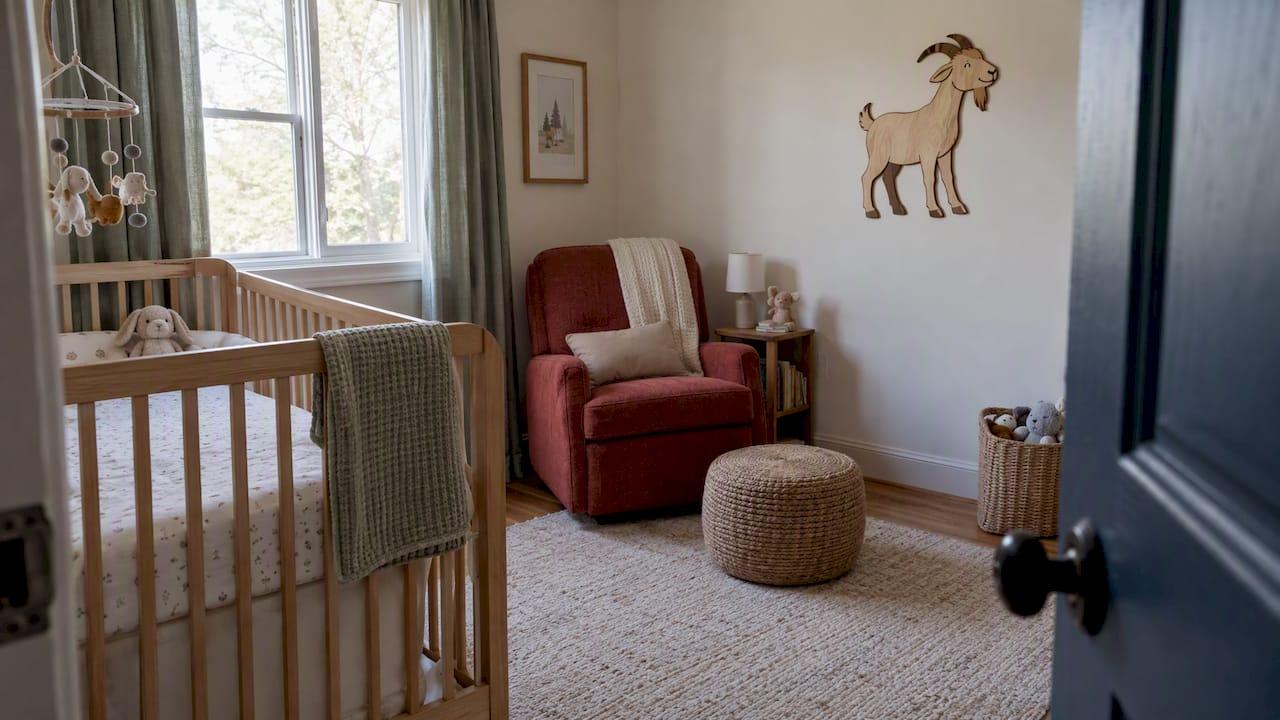
For goat wood cutout nursery wall decor, we recommend our laser-cut plywood cutouts and unfinished blanks, finished with low-VOC paint and hung on any wall except the one above the crib. Cutouts are available in a range of sizes. Skip dangling ribbons or cords, and check the hardware every month.
✦ Featured From Our Shop ✦
Handcrafted & laser engraved in Georgia, just for you
TL;DR:
- MDF paints evenly and costs less, while HDF is denser and smoother; ask sellers to confirm TSCA Title VI compliance for composite wood.
- Choose thicker cutouts for larger designs or pieces a child may touch; thin ones can warp or snap, and unfinished blanks arrive without hooks.
- Sand and prime unfinished blanks, apply thin coats of low VOC paint, seal pieces children may touch, and let them air out before installation.
- Hang decor outside the crib footprint and at least 3 feet from heat sources; remove ribbons and loops, test hardware, and inspect it monthly.
Table of Contents
- 1. Which goat cutouts and blanks work best for a nursery?
- 2. What should you look for when you buy a goat cutout?
- 3. How do you finish and personalize a cutout so it is baby-safe?
- 4. Where should you hang cutouts, and what is the safety checklist?
- 5. How do you care for wood cutouts in a nursery?
- 6. Which design styles suit a goat cutout in a farm nursery?
- 7. Why does a custom laser-cut goat make such a meaningful gift?
- 8. Where can you order a custom or unfinished goat cutout from us?
- FAQ
- Sources
1. Which goat cutouts and blanks work best for a nursery?
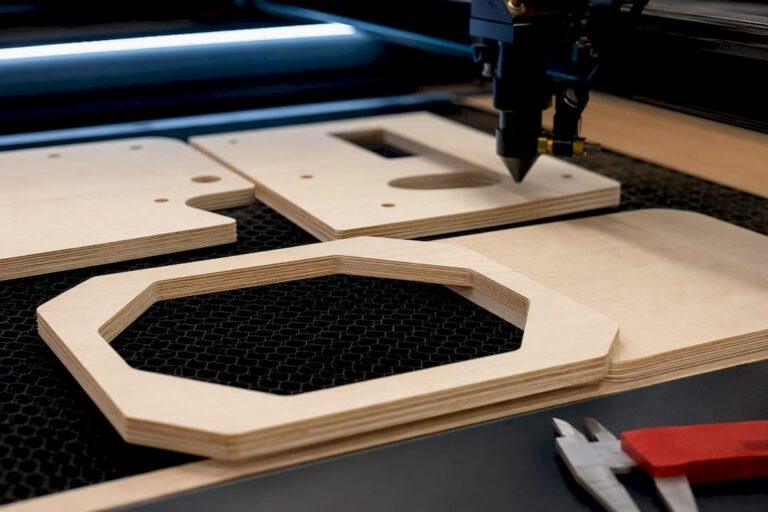
We create custom items in our Georgia shop, and a goat is a shape our crafters can easily match to the same clean production approach as our existing cutouts. Here is how the options stack up for a farm-themed baby room.
- Howling Wolf Wood Cutout: This is one style to consider. It can work as a wall accent. It can serve as an example for a goat piece. You can see it on Etsy, where we list it, and we also show sizes and finishes in our laser-cut wood cutouts collection.
- Wooden Guitar Cutout Sign, precision laser-cut shapes: The guitar cutout (on Etsy) is one example of a cutout shape. A goat’s horns, ears, and legs can make for thin, detailed shapes.
- Paintable MDF blanks: Smooth and affordable, they are ideal if you want to match an exact paint color. The tradeoff is that MDF is a composite wood, so choose a compliant supplier (more on that below), and seal it well.
- Pre-finished wooden wall art: Retail shops sell finished baby-goat pieces in natural pine and similar woods. They hang right away, but you give up control over size, shape, and personalization.
- Large statement cutouts: A big goat on a feature wall makes a bold focal point. It needs sturdier hardware, such as a shallow French cleat, and a clear stretch of wall away from the crib.
A few practical cues help you choose. Ready-to-hang pieces usually arrive with a sawtooth hanger or picture-hanging hardware attached, while unfinished blanks come bare, so plan to buy hooks separately. Check whether a piece comes primed. If you order custom engraving, allow extra lead time before you need it on the wall, especially for a baby shower or due date.
Shopping for several matching pieces, like a goat plus a barn and a sheep? Our guide to unfinished wood cutouts in bulk shows how to keep the set consistent.
2. What should you look for when you buy a goat cutout?
Start with the material. MDF paints evenly and costs less, but it is a composite, so indoor-use compliance matters. Birch plywood is often chosen for names and dates. HDF is denser and smoother than MDF, though it is heavier and harder to cut intricate shapes from.
Thickness changes everything about how a piece hangs and lasts:
- Thinner pieces: Light and easy to mount with adhesive strips, but they can warp or snap if handled roughly.
- Thicker pieces: Rigid and durable, a better pick for larger sizes or pieces that kids might eventually touch.
Standard sizes are available in a range. As a rule of thumb, a smaller cutout works as an accent or part of a grouping. A medium-sized piece suits an empty wall beside a dresser or changing table. A larger goat can become the statement of the room. Hold a paper template up to the wall first so you can judge the scale against the crib and furniture. Our sizing guide on choosing the right wood cutout size walks through measuring.
Finally, ask about emissions. Composite wood such as MDF and plywood sold in the U.S. falls under formaldehyde emission limits set by TSCA Title VI, and the rule also covers fabricators who use regulated composite wood, who must buy compliant material and follow labeling requirements.
Buying tip: Ask any seller whether their composite wood is TSCA Title VI compliant before it goes in a baby’s room.
3. How do you finish and personalize a cutout so it is baby-safe?
Unfinished blanks give you total control. Work through these steps in order:
- Sand lightly with fine-grit paper, focusing on the edges and any rough spots, then wipe away all dust with a damp cloth.
- Apply a primer made for MDF or plywood, and let it dry fully.
- Paint with low-VOC, water-based paint, using thin coats instead of one thick one.
- Add a compatible clear sealer for durability. Sealing is optional for a purely decorative piece hung well out of reach, but worth it for anything a toddler could touch.
- Personalize with a name or birth date, ideally laser-engraved so nothing can peel off. If you add fabric or soft accents, sew or glue them securely, and skip small loose parts that could detach.
- Choose hardware to match the thickness: adhesive picture strips for very light pieces, and small picture hooks, sawtooth hangers, or a shallow French cleat for thicker pieces.
Pro Tip: Paint and seal in a well-ventilated space and let the piece air out before it goes into the nursery.
If you are adding a custom fabric patch to a matching blanket or onesie, our partner has a quick guide on applying patches to baby clothes that pairs nicely with a handmade goat accent. For the wall itself, attaching wooden pieces without damage is covered in our mounting how-to.
4. Where should you hang cutouts, and what is the safety checklist?
The simple rule: keep wall art off the wall directly over the crib whenever another wall is available. Nursery placement guidance advises keeping mounted decor outside the crib footprint, using proper wall fixings, seating hanging loops fully on hooks, and keeping decor at least 3 feet from heat sources.
Cords deserve special attention. Federal regulators have flagged accessible long cords and loops as strangulation hazards in the context of window coverings, and the same logic applies to any ribbon, string, or loop on nursery decor. Remove anything that could dangle within reach. Government crib-safety guidance also notes that decorative cutouts can create entrapment risks, so inspect any piece for secure fixation and no dangerous openings.
Use this checklist after you install:
- Give the piece a firm tug test to confirm the hardware holds.
- Measure the height against the crib mattress as it is raised or lowered over time.
- Keep the piece at least 3 feet from radiators, heaters, and vents.
- Recheck the hooks or cleat every month.
- Leave every ribbon and loop off the finished piece.
Safety rule: Nursery guidance asks you to keep decor at least 3 feet from heat sources.
Moving into a new home with a baby on the way? Our partner’s newborn moving checklist suggests packing the nursery last, which also helps you hang decor in the right spot the first time.
5. How do you care for wood cutouts in a nursery?
Wood is forgiving, but a baby’s room has its own challenges: humidity from a humidifier, sticky hands as your child grows, and lots of dust. A little routine care keeps a goat looking fresh for years.
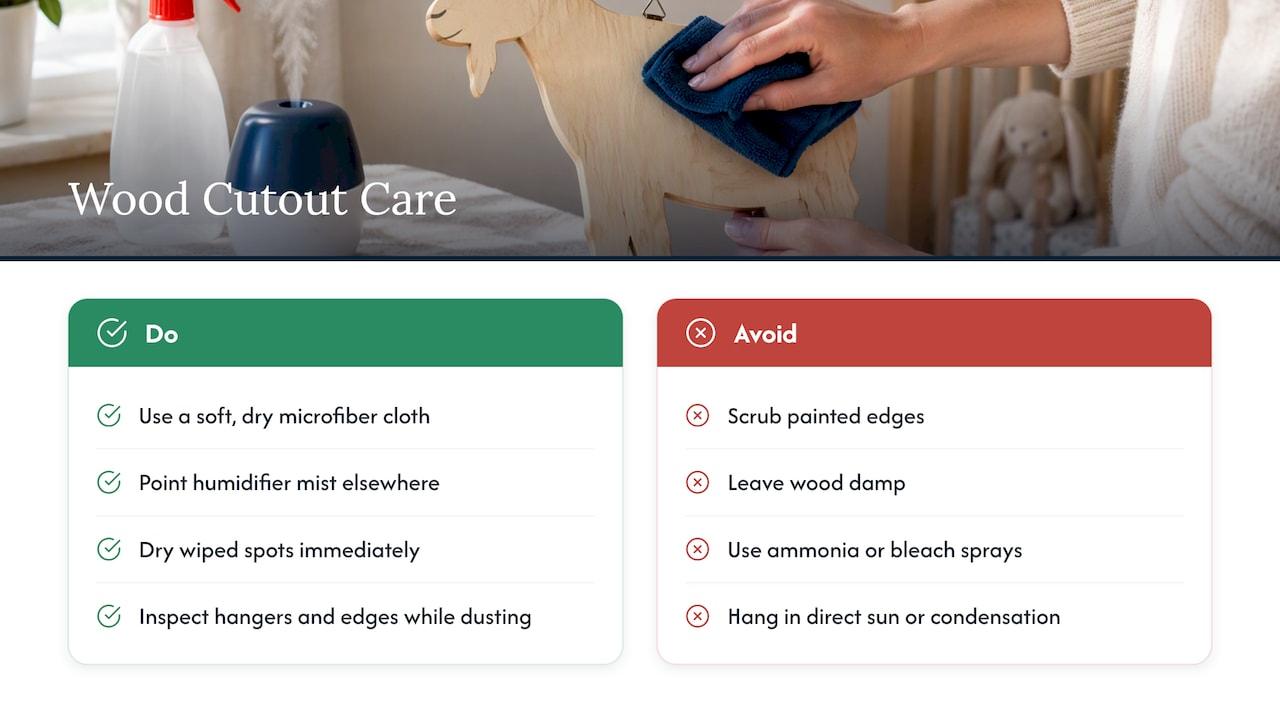
Dust gently. Use a soft, dry microfiber cloth every week or two. Work along the grain and avoid scrubbing painted edges. For horns, ears, and other fine details, a clean, soft paintbrush reaches the crevices without chipping.
Keep moisture away. Wood swells and warps when it stays damp. If a humidifier runs near the wall, move the piece farther away or keep the mist pointed elsewhere. Avoid hanging cutouts in a bathroom or beside a window that collects condensation. If you must wipe a spot, use a barely damp cloth and dry the surface immediately.
Skip harsh cleaners. Sprays with ammonia or bleach can dull paint and sealer, and you don’t want strong fumes in a baby’s room anyway. Plain water or a drop of mild soap on a cloth is plenty.
Limit direct sun. Strong afternoon light fades paint and can dry out thin 1/8 inch pieces until they curl. A wall that gets indirect light is a better home.
Inspect as you go. When you dust, glance at the hanger, the hooks, and any edges. A loose hanger or a lifting patch of paint is easy to fix now and a nuisance later. Touch up scuffs with a dab of the original low-VOC paint, then reseal that spot.
Handled this way, a laser-cut goat can remain part of the room as a child grows.
6. Which design styles suit a goat cutout in a farm nursery?
A goat is a surprisingly flexible shape. Several styles can work well, and each one changes how you paint and hang it.
Whimsical. Think pastel pinks, soft blues, and sage greens, with a floral crown or tiny painted spots. Pair one larger goat with a few small stars or clouds so the wall feels playful but not busy. This style loves a name engraved beneath the animal, which turns the goat into a custom plaque.
Rustic. Leave the plywood grain visible with a clear coat or a light stain. The natural birch look pairs well with woven baskets, linen curtains, and warm neutrals. It suits parents who want texture instead of color, and the 1/4 inch thickness gives the piece a solid, handmade feel.
Farmhouse. Crisp white or cream paint, black accents, and a touch of barn red give a classic look. A goat paired with a barn, a sheep, and a rooster makes a small gallery that tells a story. Matching the finishes across the set matters more than matching the shapes.
Whatever you choose, keep the palette to a few colors so the cutout reads as part of the room. Place the goat where light hits it from the side, which shows off the laser-cut edges. A small grouping usually looks more natural than an even pairing. If you cannot decide, paint one test piece first and live with it for a day.
7. Why does a custom laser-cut goat make such a meaningful gift?
I have cut and engraved a lot of nursery pieces, and the ones people remember are always the personal ones. A wooden goat with a baby’s name or birth date becomes a keepsake, not just decor. We craft each item in our Georgia shop, and you personalize it right on the product page. Picture a small goat as a name plaque above the changing table, which is a gift that grows with the child.
— Gary
8. Where can you order a custom or unfinished goat cutout from us?
If you want a piece made for your nursery, we make it simple to start. Our shop is the main place to buy finished keepsakes, and our blanks page lists unfinished wood options for crafters who like to paint their own. If you have a specific idea in mind, our custom gift creation service is the next step.
- Check the product page for available options and personalization details.
- Allow a little extra time for custom engraving, then plan your hanging spot.
- Prefer to browse unfinished animals? Our unfinished cutouts page shows how we prepare blanks for finishing.
Browse the shop to explore personalized gifts and unfinished blanks.
FAQ
Is it safe to hang a wooden goat above a crib?
It is better to hang it on a different wall. Nursery guidance recommends keeping mounted decor outside the crib footprint, so choose the wall beside or opposite the crib and use secure hardware.
What thickness is best for a nursery goat cutout?
A thicker piece is more rigid and durable, while a thinner piece is lighter and easy to mount with adhesive strips. For a larger goat or anything a child might touch later, we suggest a thicker piece.
Are MDF and plywood cutouts safe for a baby’s room?
Composite wood sold in the U.S. is covered by EPA formaldehyde emission standards under TSCA Title VI. Ask any seller whether their material is compliant, and seal and air out a painted piece before it goes in the room.
How should I clean a wooden nursery cutout?
Dust it weekly with a dry microfiber cloth and wipe spots with a barely damp cloth, drying right away. Keep it away from humidifiers and direct sun so the wood does not warp or fade.
Sources
- Formaldehyde Emission Standards for Composite Wood Products Final Rule Questions and Answers – Regulated Stakeholders
- 72873
- Crib Wall Decor Safety: Nursery Placement Rules – HOUSELAND