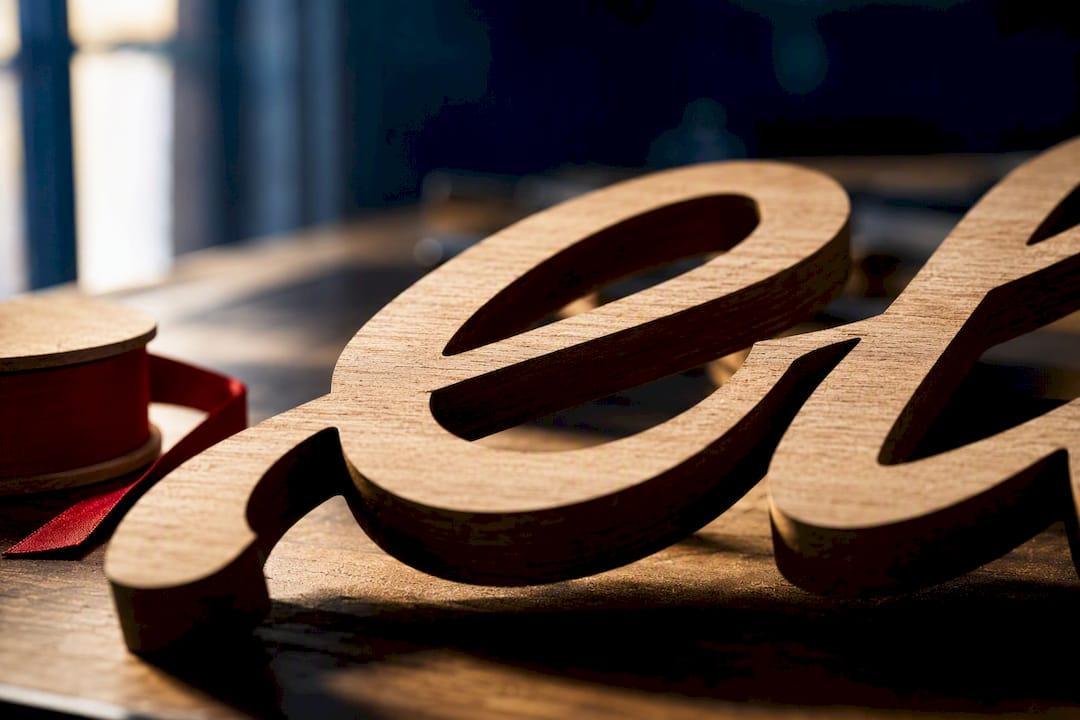
Get Laser Cut Wood Script Name Signs Gift Ready in 1–2 Weeks
Buy your custom laser cut script name wood sign from a specialty engraver who builds it made-to-order, rather than a mass print shop. That single choice determines whether your sign survives shipping and looks right on the wall. Before you check out, confirm three things: material and minimum thickness, the total width the design will require, and whether the font holds together as one connected cut. A specialty engraver experienced with script name signs can handle all three and often sends a proof before your order goes into production.
✦ Featured From Our Shop ✦
Handcrafted & laser engraved in Georgia, just for you
TL;DR:
- Thicker materials like 1/4 inch and 1/2 inch work best for most script names or freestanding signs, with thicker options risking cracks on delicate scripts.
- Connected script signs are limited in width depending on font style and letter length, with wider names requiring reinforcement or separate letters to prevent breakage.
- Standard turnaround time is one to two weeks, but delays are common during peak seasons, so plan well in advance for time-sensitive gifts or events.
- Custom signs typically cost based on size, material, and finish, with larger, multi-color, or hardwood pieces at the high end and small painted nursery signs at the low end.
- Always review proofs promptly and request thicker bridges for delicate scripts to minimize the risk of breakage during shipping.
Table of Contents
- What Wood and Thickness Work Best for Script Name Signs?
- How Big Can a Connected Script Name Be Cut?
- What Ordering Options Affect Price and Turnaround?
- What Does a Custom Script Name Sign Cost?
- How to Prep Your Text So the Laser Cuts It Right the First Time
- How Do You Finish and Care for a Wood Name Sign?
- Why Buyers Trust Signature Laser Designs for Script Name Orders
- What’s the Full Cost Breakdown for a Custom Script Sign?
- How Long Does It Take From Order to Delivery?
- How Do You Pick the Right Laser Cutting Provider?
- A Maker’s Take: Get the Proof Right, Skip the Reorder
- Ready to Order Your Custom Script Name Sign
- Quick Links Before You Order
- Sources
- FAQ
What Wood and Thickness Work Best for Script Name Signs?
Material choice decides how your sign looks, how long it lasts, and what it costs to ship. Birch plywood is the workhorse of this category: affordable, stable, and smooth enough for paint or stain. Cabinet-grade plywood costs more but resists warping better over years on a nursery wall. MDF cuts cleanly and takes paint beautifully, but it doesn’t love humidity, so keep it away from bathrooms and kitchens. Solid hardwood looks the most premium and costs the most, and it adds real weight to shipping.
Thickness should match the job, not just the budget:
- 1/8 inch for small decorative pieces meant to sit on a shelf or in a shadow box
- 1/4 inch for most script names, including nursery signs and wall hangings, which is the size range where tiered thickness pricing shows up most on product listings
- 1/2 inch for freestanding pieces, large last-name signs, or anything headed outdoors
Pro Tip: Thicker isn’t always better. A 1/2 inch cut on a delicate script with thin connecting strokes can actually crack faster than a well-supported 1/4 inch piece, because the extra weight puts more stress on narrow bridges between letters.
Ask your seller what species they stock, since handmade wood sign shops typically let you pick from a short list of woods and thicknesses rather than a single default.
How Big Can a Connected Script Name Be Cut?
Overall width and height depend entirely on letter count and font style. A short name like “Ava” in a wide script might only run 10 inches across, while “Alexander” in the same font could stretch past 30 inches and need a wider board or a price bump for size tier. Height usually tracks with how tall the ascenders and descenders swing in your chosen font, not just the point size.
You have two structural choices:
- Connected single-cut script, where every letter joins the next in one continuous laser path. This looks the most elegant and mimics real handwriting, but it needs careful engineering at the joints.
- Separate letters, mounted individually on a wall or shelf. This costs more per letter but eliminates the risk of a snapped connection during shipping.
Avoid fonts with extremely thin single-pixel strokes or long unsupported swashes trailing off a letter, since those spots are exactly where wood cutouts fail. A safer script has moderate stroke weight and short, thickened tails. Designers commonly reinforce the bridges between letters or shorten trailing tails to keep the whole name structurally sound. If you need a custom layout, tell the seller explicitly which letters must stay connected and which tails matter most to you.
What Ordering Options Affect Price and Turnaround?
Most shops offer a similar menu of choices at checkout, and each one nudges price or lead time in a predictable direction.
- Finish level. Unfinished (raw wood) ships fastest and costs least. Sanded and sealed adds a small step. Fully painted or layered, multi-tone pieces take the longest and cost the most because painting is done by hand, one piece at a time.
- Mounting hardware. Sawtooth hangers, keyhole slots, or freestanding stands each change how the sign attaches to a wall, shelf, or crib panel, and heavier hardware can add slightly to shipping weight.
- Backing options. Some script names get a solid backer board for extra rigidity, especially useful for larger connected scripts.
- Text details. Capitalization, spacing between names, and any special characters or accent marks should be spelled out clearly in your order notes, not assumed from the product title field.
Always request a digital proof before production starts, especially if your name includes an unusual letter combination. It’s the fastest way to catch a spacing mistake before it’s cut into wood.
What Does a Custom Script Name Sign Cost?
Price scales with size, material, and finish, not a flat per-letter rate. A small painted nursery name under a foot wide typically sits at the low end of the market, while a large connected last-name sign in thicker hardwood with multiple finish colors sits at the high end. Marketplace listings for personalized wood name cutouts (on Etsy) show this same pattern: price climbs step by step with each size tier, not gradually.
Statistic Callout: Product data across script name sellers shows pricing organized into discrete size and thickness tiers, from 1/8 inch decorative pieces up through 1/2 inch structural cuts, according to listings that break out pricing by width and thickness.
Standard turnaround for made-to-order script names usually runs one to two weeks before shipping, though that window stretches around Christmas, Mother’s Day, and wedding season, when custom shops see order volume spike. Build in extra buffer if your gift date is fixed.
Return policies on custom pieces work differently than off-the-shelf products. Expect a no-returns policy on personalized items once production starts, since nobody else can use a sign with someone else’s name on it. What you should ask for instead is a clear remake or correction policy if the seller made an error against the approved proof. Custom listings commonly draw this exact line: no returns for buyer’s remorse, but a fix if the seller’s mistake caused the problem.
How to Prep Your Text So the Laser Cuts It Right the First Time
Getting your file right the first time is the single biggest lever you have over delays.
- Send a vector file if you have one. SVG or PDF outline files preserve every curve and connection point exactly as designed, which matters most on scripts with tight letter joins.
- Plain text orders are fine too. Most shops can type your name into their own layout tool if you don’t have design software. Just confirm the exact font name or style you want.
- Make sure fonts are outlined, not live text, if you’re sending your own file. A live font can shift or substitute on someone else’s computer; an outlined path cannot.
- Spell out capitalization and spacing in your order notes. Write “Ava & Mateo” instead of assuming the seller will guess your preferred ampersand style or spacing between names.
- Flag special characters early, including accent marks like ñ or é, since some fonts don’t include every diacritic by default.
Pro Tip: When your proof arrives, hold your phone at arm’s length and squint at it. If a connection point or tail disappears at a glance, it’s too thin to survive the actual laser cut. Ask for a thicker bridge before you approve it.
Always review the proof for exact width, letter spacing, and where each tail lands relative to the letter it connects to.
How Do You Finish and Care for a Wood Name Sign?
Finish choice depends on how much time and skill you want to put in yourself.
- Raw/unfinished is the fastest and cheapest option, ideal if you plan to paint it yourself as a project.
- Hand-sanded and sealed keeps the natural wood grain visible while protecting against everyday handling.
- Spray-painted gives a clean, solid-color finish in almost any shade.
- Stained plus sealant deepens the wood tone for a warmer, more traditional look.
Pick unfinished only if you genuinely have the time and a steady hand. Otherwise let the shop paint it, since a professional spray finish avoids drips and uneven coverage.
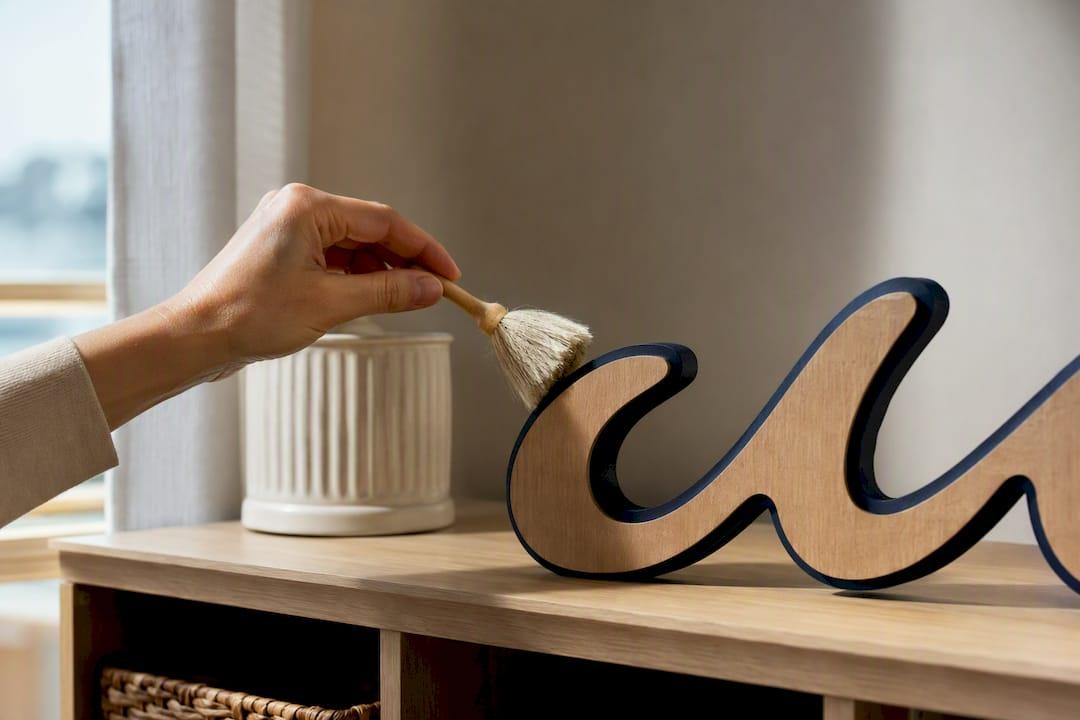
Pro Tip: Keep your sign away from direct sunlight and bathroom humidity. Basic care guidance for laser-engraved wood recommends dusting gently and doing occasional touch-ups rather than deep cleaning, which protects both the paint and the wood grain underneath.
Why Buyers Trust Signature Laser Designs for Script Name Orders
Signature Laser Designs builds personalized, laser-engraved wood and metal gifts for the moments that actually call for something one-of-a-kind: weddings, new babies, anniversaries, and holidays. Every piece is made to order through the shop’s custom gift creation service, sold both through the main site and the Etsy storefront.
What that means for you as a script name buyer:
- Order options often include unfinished wood blanks for DIY painting or fully finished keepsakes for those who prefer ready-to-display items.
- Product categories typically span from decorative cutouts to finished gift items, allowing buyers to find complementary pieces from the same shop.
- Orders are usually built around the customer’s specific text rather than from pre-cut inventory, making proof review important before production.
Experienced designers know that a quick proof review can save significant time by preventing reorders, which influences how many shops handle script name requests.
What’s the Full Cost Breakdown for a Custom Script Sign?
Three line items make up your total: design, material, and shipping. Most shops fold design work into the listed price for standard requests, since typing a name into an existing script template takes little extra time. A genuinely custom layout, like preserving a specific tail flourish or blending two names into one continuous script, sometimes carries a small design fee on top of the base price, especially at shops that quote custom work separately.
Material cost is the biggest swing factor. A small 1/8 inch birch cutout costs far less than a large 1/2 inch hardwood sign, simply because you’re paying for more raw material and more machine time to cut it. Finish adds another layer: unfinished wood is the cheapest baseline, while hand-painted or multi-color pieces add labor cost since each one is painted individually rather than sprayed in bulk.
Shipping scales with size and weight more than most buyers expect. A small nursery name in thin plywood ships in a flat, lightweight envelope or small box. A large connected last-name sign in thicker hardwood needs sturdier packaging and sometimes a bigger box, both of which raise the shipping line. If you’re ordering for a specific event, ask whether faster shipping is available and what it adds to the total, since expedited shipping is almost always priced separately from production speed.
Add these three together, design, material, and shipping, and you get a realistic total rather than a surprise at checkout. Whenever a quoted price looks too good against these three factors, ask what’s being cut, literally or figuratively, to hit that number.
How Long Does It Take From Order to Delivery?
A typical custom script name order moves through four stages: order placement, design or text confirmation, production, and shipping. Most made-to-order shops ask you to confirm your exact text, font, and size within a day or two of ordering, since production can’t start until that’s locked in.
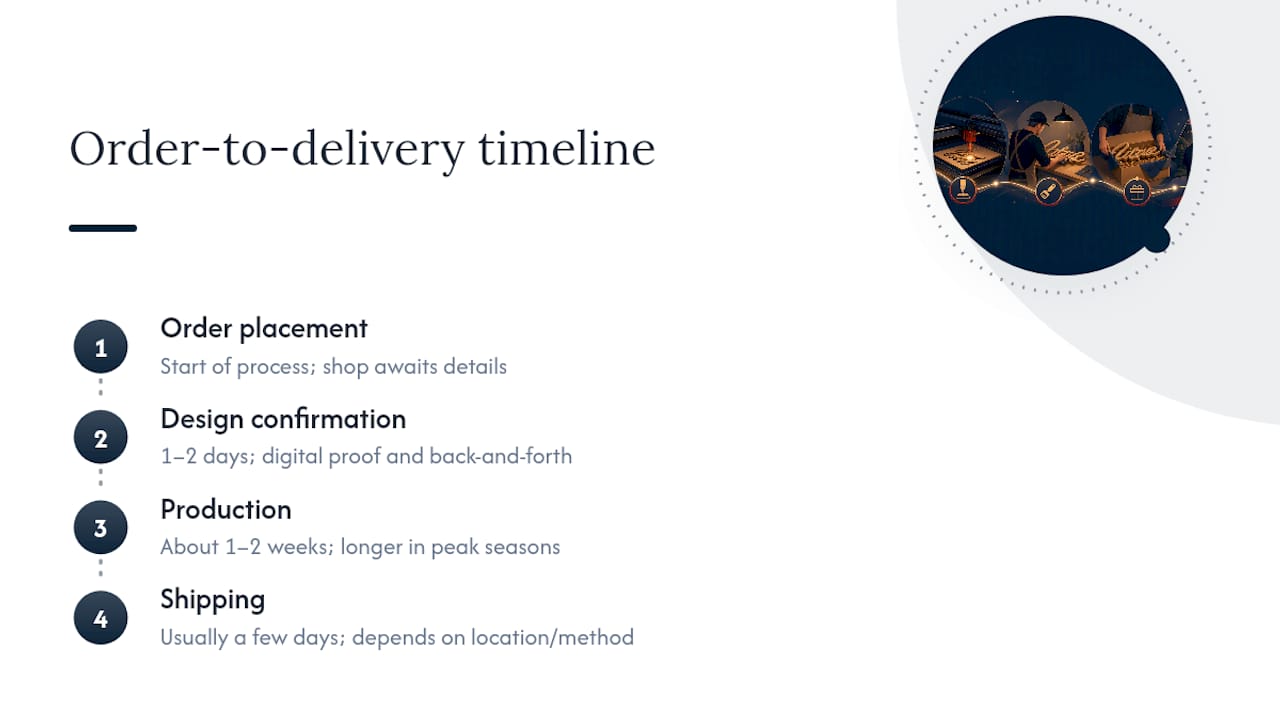
Once confirmed, many shops send a digital proof showing the final layout before cutting begins. This step is worth the small delay it adds. Catching a spacing issue on a screen takes minutes; catching it after the wood is cut means starting over. Build in a day or two for this back-and-forth, especially if your name has unusual letter combinations that need a custom kerning pass.
Production itself typically runs about one to two weeks for a standard script name order, though that window depends heavily on the season. Expect longer waits heading into December, around Mother’s Day, and during peak wedding months in late spring and summer, when custom shops see order volume climb well above normal.
Shipping adds the final stretch, usually a few more days depending on your location and the shipping method chosen. If you’re working against a fixed date, a birthday, baby shower, or wedding, count backward from that date and add a buffer week beyond the shop’s stated production time. Rushing a proof approval to save a day is rarely worth the risk of missing a detail on a piece that can’t be returned once it’s made.
How Do You Pick the Right Laser Cutting Provider?
Not every shop that lists “custom wood signs” actually specializes in connected script names, and the difference shows up the moment your order arrives. Before you commit, ask a few direct questions.
Ask what thickness options they offer and whether they’ll recommend one based on your specific font and size, rather than defaulting you to whatever they have on hand. A shop that pushes back on a font choice because the strokes are too thin is showing you they understand structural risk, not being difficult.
Ask whether you’ll see a proof before production starts, and how many revision rounds are included. A shop that skips this step is betting you’ll be happy with whatever comes out, which is a bad bet on a piece with your child’s name on it.
Look for clear photos of finished script pieces in their gallery, not just render mockups. Real photos show you how connections actually hold up once cut and how paint finishes actually look under normal light, not studio lighting.
Watch for red flags: no stated thickness options, no mention of proofs, vague shipping timelines, or a return policy that doesn’t distinguish between buyer’s remorse and a genuine production error. A shop confident in its work will spell out its correction policy clearly instead of burying it.
Finally, check whether they specialize in gift-focused personalization or treat every order like a bulk print job. The first kind of shop tends to ask more questions about your name, your event, and your preferences, exactly the kind of back-and-forth a one-of-a-kind script name deserves.
A Maker’s Take: Get the Proof Right, Skip the Reorder
If you take one shortcut from this guide, size up slightly on delicate connected scripts. A little extra width around thin letter joins adds almost nothing to the price but meaningfully cuts the odds of a snapped tail in transit. If a seller tells you your chosen font needs a kerning pass to keep letters from touching or drifting apart, take that seriously. It’s not upselling; it’s someone who’s cut enough wood to know where scripts actually fail.
The buyers who get a perfect sign on the first try are almost always the ones who answer proof questions within a day instead of a week. Speed on your end buys you speed on the production end.
— Gary
Ready to Order Your Custom Script Name Sign
Signature Laser Designs turns a name and a font preference into a finished piece without the back-and-forth of hunting down a general print shop and hoping they understand wood. Ordering is straightforward: pick your product type, choose your material and size, request a proof, then approve and check out once everything looks right.
Start with the custom gift creation service if you want a name sign built to your exact specs, or browse the laser-cut wood cutout collection for existing size and style options to customize. Looking for a matching gift to pair with your sign? The custom engraved pie server makes a fitting companion piece for a wedding or new-home gift.
Shipping timelines and support questions are handled directly through the shop, so if you’re working against a date, mention it when you place your order. A quick note upfront saves everyone a rushed week later.
Quick Links Before You Order
Check the care guide for laser-engraved wood for maintenance basics, browse unfinished wood blanks if you plan to paint your own piece, and review a sample script name listing for real thickness and pricing tiers before you finalize your size.
Sources
FAQ
What Thickness Should I Choose for a Wood Script Name?
Use 1/8 inch for small decorative pieces, 1/4 inch for most standard script names, and 1/2 inch for large or freestanding signs. Your seller can recommend the right tier based on your font and overall size.
Can Connected Script Letters Break During Shipping?
Thin connection points between letters are the most common failure spot, especially with delicate fonts. Reinforcing bridges or shortening tails at the design stage, along with choosing adequate thickness, significantly reduces that risk.
How Much Does a Custom Wood Name Sign Cost?
Price depends on size, material, and finish, with small unfinished pieces at the lower end and large, multi-color finished signs at the higher end. Signature Laser Designs’ current pricing for custom gift creation is listed on the shop’s site.
Can I Return a Custom Script Name Sign?
Personalized items are typically final sale once production starts, since they carry your specific name and can’t be resold. Most shops will still correct or remake a piece if the error was theirs against an approved proof.
Do I Need a Design File to Order a Script Name?
No. A vector file like SVG or PDF gives the most precise result, but plain text orders work fine too, since most shops, including Signature Laser Designs, can build your layout using their own tools once you confirm the font and text.
Recommended