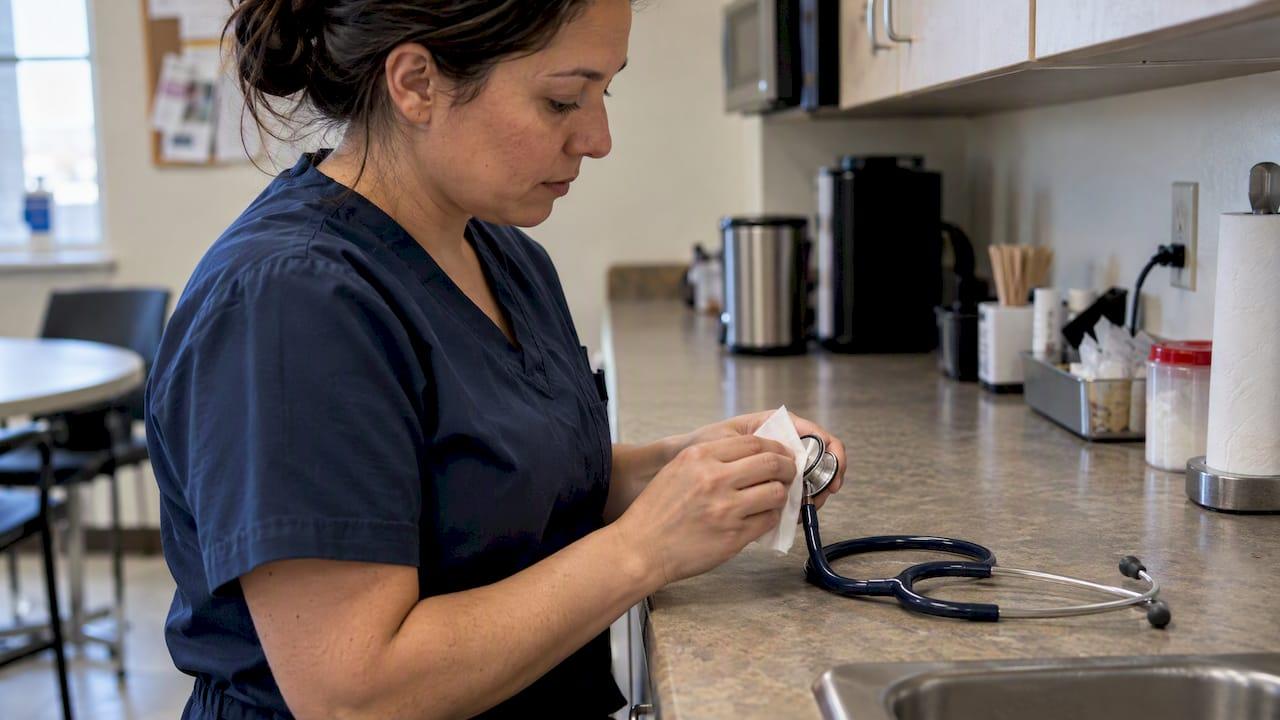
Keep Engraving Clear: Clean a Stainless Steel Stethoscope in 6 Steps
Clean it between patients in clinical use and after any exposure at home, always after washing your hands. This follows CDC guidance and manufacturer manuals.
✦ Featured From Our Shop ✦
Handcrafted & laser engraved in Georgia, just for you
TL;DR:
- Remove visible grime with mild soapy water before disinfecting; disinfectant works best on a clean surface, and leftover soil can reduce its effectiveness.
- Manufacturers commonly recommend 70% isopropyl alcohol wipes for stainless steel, but your model’s manual and the disinfectant label determine the safe method.
- Use a cotton swab or soft brush with light pressure along engraved lines, and avoid bleach, abrasives, metal polish, soaking, and excess liquid.
- For patients with MRSA, dedicated equipment is preferred when possible; otherwise, clean and disinfect shared equipment before another patient uses it.
- Remove eartips for cleaning when your manual permits, then let them and any detached diaphragm dry completely before reassembling the instrument.
Table of Contents
- How do you clean an engraved stainless steel stethoscope step by step?
- Which disinfectants are safe for stainless steel stethoscopes?
- How do you care for the engraved area and keep the engraving crisp?
- How do you clean the tubing, eartips and diaphragm rim?
- When and how often should you clean your stethoscope?
- What do manufacturer manuals say about cleaning?
- How should you dry and store an engraved stethoscope?
- Why we think an engraved stethoscope gets cared for better
- FAQ
- Sources
How do you clean an engraved stainless steel stethoscope step by step?
You do not need a special kit. A few simple supplies will do the job, and the order matters more than the products.
- Wash your hands with soap and water or use an alcohol-based hand rub before you touch the instrument.
- If you can see dirt, grease or residue, wipe it off first with a cloth lightly dampened with mild soapy water. Disinfectant works best on a clean surface.
- Wipe the whole chestpiece, including the engraved area, with a fresh alcohol wipe. Cover every surface, front and back.
- Run a cotton swab or soft brush along the engraved lines to lift out anything tucked into the grooves, then go over them again with a fresh alcohol wipe.
- Wipe the tubing, the Y-junction and the metal ear tubes, then remove the eartips and clean them too.
- Set the stethoscope on a clean surface and let it air-dry completely before you hang it, fold it or put it in a pocket.
Cleaning comes first, and that order is not optional. CDC guidance on disinfection explains that thorough cleaning removes visible soil, and leftover organic material interferes with how well a disinfectant works. So if your stethoscope looks dirty, wash first and disinfect second.
For disinfection, follow your stethoscope’s manual and the disinfectant’s instructions. Let the instrument air-dry as directed.
A few quick safety reminders: never dunk the stethoscope in water or disinfectant, use as little liquid as you can, and if you need to remove the diaphragm, follow your model’s manual and make sure everything is fully dry before you put it back together.
Pro Tip: Keep a single alcohol wipe in your bag or locker just for the engraved chestpiece. Wiping it right after use helps keep grime from settling into the lettering.
Which disinfectants are safe for stainless steel stethoscopes?
Alcohol wipes are what most stethoscope manufacturers point to, they work quickly on stainless steel, and they evaporate without leaving residue in your engraving.
Your realistic options look like this:
- 70% isopropyl alcohol wipes: the go-to for the chestpiece, engraved area, tubing and eartips, and the choice named in Littmann’s user manual.
- Non-bleach alcohol wipes or soapy water: the everyday care approach in one stainless steel stethoscope’s instructions for use, handy when you want a gentler routine.
- Standard hospital disinfectants: for shared equipment in a clinical setting, CDC, SHEA and IDSA guidance recommends these when there is no outbreak, along with a clear plan for who cleans and how often.
- Mild soap and water: best as a pre-clean step when the stethoscope is greasy or visibly soiled.
Alcohol wipes are so widely recommended because they are quick, convenient and gentle on metal. Guideline summaries note that alcohol wipes are commonly used for wiping and disinfection in clinical practice, though they also remind readers to follow a manufacturer’s validated cleaning protocol when one is provided. That is why your model’s manual always gets the last word.
Here is what to keep away from your stethoscope: bleach products, abrasive cleaners and scouring pads, and anything that calls for soaking. Prolonged contact with liquid can seep into the chestpiece, and harsh or gritty products can scratch stainless steel and wear down engraved detail.
Why bother with disinfection at all? Because the instrument touches skin all day. As a PubMed-indexed review notes, stethoscopes are potential vectors for pathogen transmission, shared equipment must be cleaned and disinfected before use with another patient, and proper hand hygiene is a mandatory companion to that disinfection.
Stethoscopes are potential vectors for pathogen transmission, so routine disinfection and hand hygiene go together. Treat the stethoscope like an extension of your hands, because that is exactly how it behaves.
How do you care for the engraved area and keep the engraving crisp?
Engraving is what makes your stethoscope yours, and a little care keeps it sharp. Laser-engraved lines are shallow, so the goal is to clean them out gently rather than scrub them. We have written before about keeping laser-etched stainless steel crisp, and the same habits carry over to a chestpiece.
What works well:
- Start with a dry, soft tool. A cotton swab or soft brush lifts lint, skin oils and dust out of the grooves before any liquid goes on.
- Follow with an alcohol wipe. Alcohol is generally fine on engraved stainless steel and dries fast, so nothing lingers in the lettering.
- Wash first when it is greasy. If the engraving looks grimy or heavily soiled, use mild soap and a little water on a cloth, dry it, then disinfect.
- Use light pressure. Let the swab do the work. Pressing hard does not clean better, it just moves residue around.
- Wipe along the lines, not across them. This keeps debris from packing into the edges of the letters.
What to skip: abrasive pads, scouring powders and metal polishes. Polish can settle into the engraving and fill it in, and abrasive pads can dull the contrast between the engraved lines and the metal around them. Once the finish is scratched, it is hard to undo.
If you have a cleaner you are curious about, test it on a small, hidden spot first, such as the back edge of the chestpiece, then check it after it dries. Jot down what you used and what you saw so you remember next time.
Pro Tip: Test any new cleaner on a small, inconspicuous spot and make a quick note of the result in your phone. A quick record saves you from repeating a mistake.
If you are shopping for a gift and want to see what a well-kept piece looks like, take a look at our guide to engraved stethoscopes for nurses and medical students.
How do you clean the tubing, eartips and diaphragm rim?
The metal chestpiece gets most of the attention, but your tubing, eartips and diaphragm touch your skin and clothes just as often. Soft materials need a lighter hand than steel.
- Eartips: pull them off when you can and wash them with soap and water or wipe them with an alcohol wipe, as your manual directs. Let them dry fully before pushing them back on. Stethoscope instructions recommend removing the eartips for cleaning.
- Tubing: wipe it from end to end with mild soap and water or an alcohol wipe. Do not soak it, and keep it away from heat, which can stiffen and crack the material over time.
- Diaphragm and rim: if your model’s manual says the diaphragm can be removed, take it off carefully, clean the groove and the back of the diaphragm, and reseat it only after everything is completely dry. Trapped moisture is what leads to trouble.
- Y-junction and ear tubes: a swab or wipe gets into the crevices where skin oils collect.
Sometimes cleaning is not the answer. If eartips have gone hard, cracked or sticky, or a diaphragm is warped, torn or no longer seals properly, replace it. The same instructions for use note that replacement eartips and diaphragms are available, and swapping them is far simpler (and safer for the instrument) than trying to restore worn parts.
When and how often should you clean your stethoscope?
How often depends on how you use it.
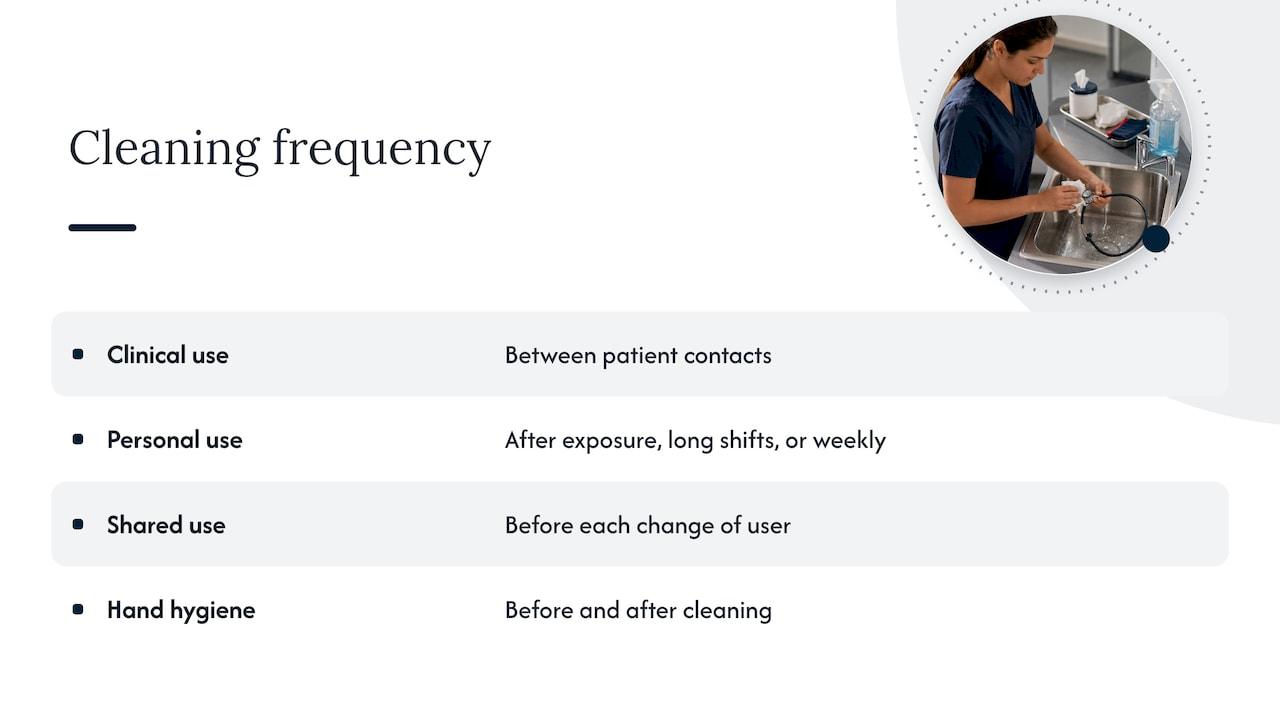
In clinical settings, clean between patient contacts and follow your facility’s policy. CDC’s guidance on preventing MRSA transmission states that shared patient equipment like stethoscopes should be cleaned and disinfected before being used with another patient, and that dedicated equipment is preferred for patients with MRSA when possible. Think of the stethoscope as an extension of your hands: if you would sanitize your hands, sanitize it too.
For personal or student use, a routine helps. Wipe it after any exposure to contaminants, after a long shift or clinical rotation day, and on a regular schedule such as weekly, even if it looks clean. Skin oil, sweat and the inside of a pocket or bag all leave a film you cannot see.
If it is shared, treat it as shared equipment. Disinfect it before another person puts the eartips in their ears, and again before it comes back to you. One of the quiet benefits of an engraved stethoscope is that it tends to stay with its owner, which means less sharing to worry about in the first place.
Whatever your routine, pair it with hand hygiene. Washing your hands before and after cleaning keeps the disinfecting step from undoing itself.
What do manufacturer manuals say about cleaning?
Your model’s user manual outranks any general advice, including ours. Different stethoscopes tolerate different things, so give yours a quick read. The common cautions look like this:
- Do not immerse the stethoscope in liquid. Littmann’s manual instructs users to clean the chestpiece and other parts with alcohol wipes rather than soaking the instrument.
- Do not autoclave it. Heat and pressure can ruin the tubing, diaphragm and seals.
- Avoid excess liquid. A damp wipe is plenty; dripping wet is too much.
- Follow diaphragm removal steps exactly if your model has a removable diaphragm, and let all parts dry fully before reassembly.
- Avoid extreme heat and cold during storage and cleaning.
Manuals tend to phrase it simply: wipe, do not soak. If your manual lists a model-specific step or a prohibition we have not mentioned, follow the manual. If you lost your copy, most manufacturers post PDFs online, and it takes a minute to find yours.
How should you dry and store an engraved stethoscope?
Cleaning only helps if you finish the job properly. After you wipe the stethoscope down, set it on a clean surface and let it air-dry. Keep it out of direct sunlight and away from heaters, car dashboards and hot windowsills, because heat can harden tubing and fade rubber parts.
For storage, hang the stethoscope or lay it flat with the tubing in a loose curve. Tight folds and kinks over weeks can crease the tubing and affect sound. Keep it away from solvents, polishing chemicals and anything harsh, whether in a bag, drawer or locker.
Every so often, give the engraving a quick look. If the lettering looks filmy, clean it again with a swab and alcohol. Check the eartips and diaphragm while you are at it, and replace anything cracked, stiff or worn. Small checks like these keep the finish clean and the engraving easy to read for years.
Why we think an engraved stethoscope gets cared for better
In our shop, we see the same thing again and again: when something carries your name, you treat it differently. An engraved stethoscope tends to stay with its owner, it is less likely to wander off or get borrowed, and that alone makes your hygiene routine easier to keep up.
Here is the shop tip we share with anyone who receives an engraved stainless steel gift: wipe it with a soft cloth or alcohol wipe soon after using it, and skip the abrasive pads and polishes. That one habit protects the lettering better than any special product.
If you have a care question about a piece you bought from us, or you are thinking about a custom order, our team is glad to help. You can also browse our custom gift creation services and our personalized wood and metal gifts.
FAQ
Can you have your stethoscope engraved?
Yes. Stainless steel chestpieces take laser engraving well, and a name, initials or a short message can be engraved to order. We create personalized engraved stethoscopes as gifts for nurses and medical students.
How can I disinfect my stethoscope?
Clean visible soil first with mild soapy water, and never immerse the stethoscope in liquid.
How do I make a stethoscope not sticky?
Stickiness usually comes from skin oils, sweat or residue on the tubing. Wipe it with mild soapy water or an alcohol wipe, dry it fully, and store it away from heat. If the tubing stays tacky after cleaning, the material may be aging and a replacement may be the better fix.
What is the average lifespan of a stethoscope?
It varies with the model and how it is used, and manufacturers do not publish one universal figure. With gentle cleaning, careful storage and timely replacement of eartips and diaphragms, a quality stethoscope can serve for many years.
Is it safe to use alcohol wipes on engraved stainless steel?
Generally yes. Alcohol evaporates quickly and does not scratch or fill in the engraving, which makes it a good match for engraved stainless steel. Check your manual for any model-specific limits.
Sources
Recommended
- Validate Marks: 4 Steps to Clean Laser Marked Instruments
- Five Steps to Keep a Laser Etched Pie Server’s Engraving Crisp