Best Wood Types for Custom Laser Cutting: A Maker’s Guide
For most custom laser cutting projects, start with basswood or good birch plywood. Both cut cleanly, stay flat and take fine detail. Alder, maple, cherry and walnut are the step up when you want richer color or a darker, higher-contrast engraving. MDF is cheap and consistent, but it is a poor fit for keepsakes. The right pick depends on what you are making, so this guide walks through each option the way we think about it in our Georgia shop.
✦ Featured From Our Shop ✦
Personalized & laser engraved in Georgia, just for you
TL;DR
- Basswood and birch plywood are the safest, most forgiving choices for cutting intricate shapes.
- Hardwoods like cherry, walnut and maple give you a warmer look and a crisper engraved mark, and they cost more.
- Resinous woods such as pine and cedar burn more readily and leave a duller edge. Plywood glue matters as much as the wood.
- MDF is budget friendly but smoky and dark at the edges, so we would not pick it for a wedding or baby gift.
- Never cut PVC or vinyl, and check that composite woods are rated for laser use.
Table of Contents
- What makes a wood good for laser cutting
- The woods compared at a glance
- Basswood: the easy starter
- Baltic birch and other birch plywood: the workhorse
- Alder: a smooth middle ground
- Maple, cherry and walnut: when the gift deserves a hardwood
- Pine and cedar: handle with care
- MDF: cheap, consistent, and not for keepsakes
- Safety: what to check before you cut
- Our perspective: how we choose wood for gifts
- Match the wood to the gift
- Where to find wood or skip the cutting
- FAQ
- Sources
What makes a wood good for laser cutting
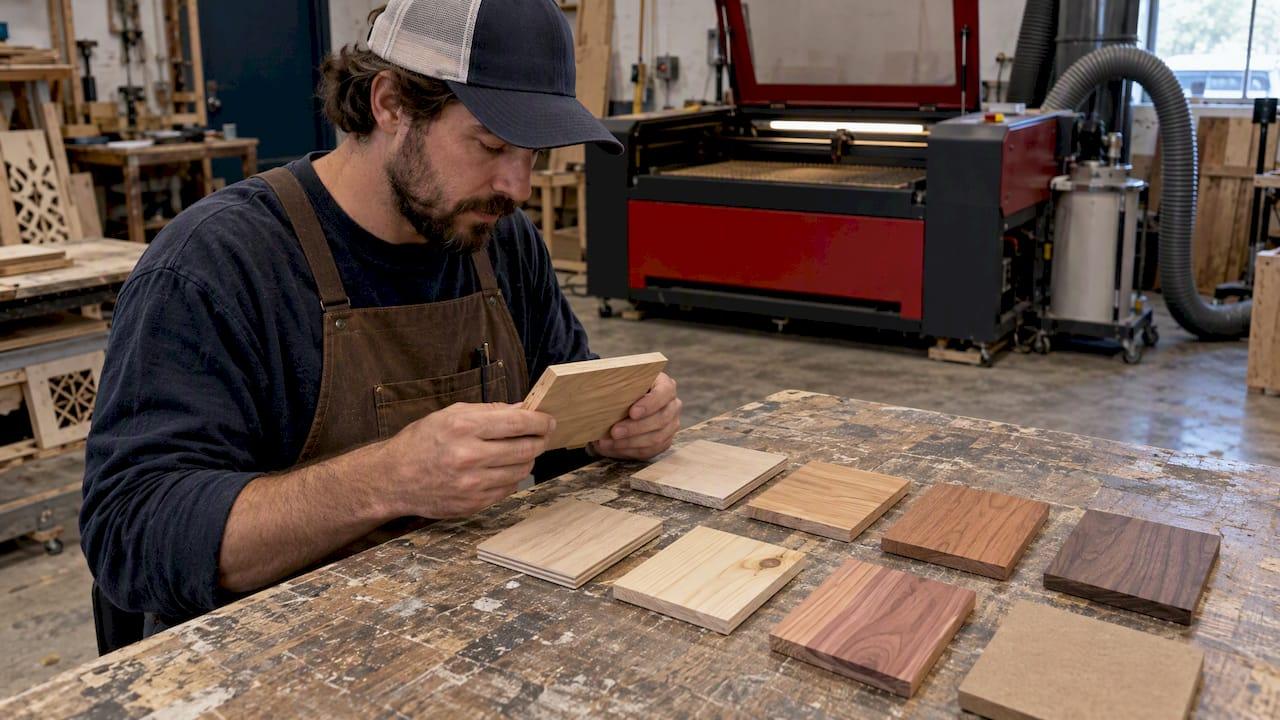
Four things decide how a wood behaves under a laser: resin content, density, grain consistency and, for plywood, the glue between the layers.
Resin is the big one. The team at Trotec explains that the drier and more resin-free the wood, the brighter the cutting edge. Resin-heavy species like pine and cedar also raise the fire risk during cutting, according to the same guide.
Density shapes the look of an engraving. Trotec notes that harder woods like oak and cherry typically give a darker, higher-contrast mark, while softer woods like balsa or poplar leave lighter, more subtle marks. Neither is wrong. A soft, pale engraving looks gentle on a baby keepsake. A deep, dark one suits a groomsman’s flask box or a golf gift.
Grain consistency decides whether your cut is predictable. Knots, voids and uneven density cause a laser to burn through one spot and struggle in the next. That is why makers lean on board grades with few surface knots for fine work.
Finally, every laser cut leaves a heat affected zone along the edge. Practitioners point out that testing your material and tuning speed and power shrinks that zone, which keeps delicate lettering sharp.
The woods compared at a glance
| Wood | Best for | Edge and engraving | Watch out for |
|---|---|---|---|
| Basswood | Detailed cutouts, ornaments, beginners | Light, pale, soft contrast | Soft, can dent easily |
| Baltic birch plywood | Layered projects, signs, sturdy blanks | Clean edge, light-to-medium contrast | Glue quality varies |
| Alder | Engraved plaques, boxes, serving pieces | Light with gentle streaking, good detail | Slightly pricier than basswood |
| Hard maple | Fine text, cutting boards, kitchen gifts | Pale, crisp, medium contrast | Dense, needs more power |
| Cherry | Heirloom keepsakes, wedding gifts | Warm tone, darker high-contrast mark | Can scorch if speed is too slow |
| Walnut | Premium gifts, striking contrast | Dark wood, subtle engraving contrast | Engraving can be hard to read on dark grain |
| Pine and cedar | Outdoor or rustic signs | Resinous, uneven, more charring | Higher fire risk, sticky residue |
| MDF | Practice runs, hidden parts | Dark, sooty edges | Heavy smoke, binder residue |
Basswood: the easy starter
Basswood and poplar are lightweight softwoods that, according to one comparison of wood species, cut easily at lower power settings. That makes basswood a great first choice for ornaments, tags, small shapes and anything with tight curves.
The tradeoff is softness. A basswood piece can ding in a drawer or a shipping box, and the engraved mark stays light. For a keepsake that will sit on a shelf, that is fine. For something handled daily, we would reach for a harder wood.
Baltic birch and other birch plywood: the workhorse
Birch plywood is widely considered the top all-round choice for strength and versatility because of its consistent grain and clean cuts, per the same wood species comparison. Layered wood cutouts, wall art, name signs and craft blanks all do well in it.
The catch is the glue. Dark, high-resin adhesives can keep the beam from cutting through cleanly and leave heavy charring. If you source your own sheets, look for plywood sold as laser-grade or white-glued. Ask the supplier what glue is inside, since the label on the sheet rarely says.
Thickness matters too. Thicker sheets are stiffer and feel more substantial as gifts, but a hobby laser has limits. Our guides on 1/4 inch plywood craft blanks and precision laser cutting of plywood cover what to expect. If you want production-ready birch for your own projects, see our page on Baltic birch blanks.
Alder: a smooth middle ground
Alder is light in color, with light streaking, and it engraves nicely. It sits between basswood and the premium hardwoods: more durable than basswood, easier to cut than maple. For engraved plaques, small boxes and cheese boards, it is a very good pick.
Maple, cherry and walnut: when the gift deserves a hardwood
Woodworkers who want intricate designs and fine detail often recommend harder woods like cherry, maple and walnut, because they hold crisp edges. They are the right call for wedding keepsakes, anniversary gifts and anything meant to be passed down.
A few practical notes from our own point of view as engravers:
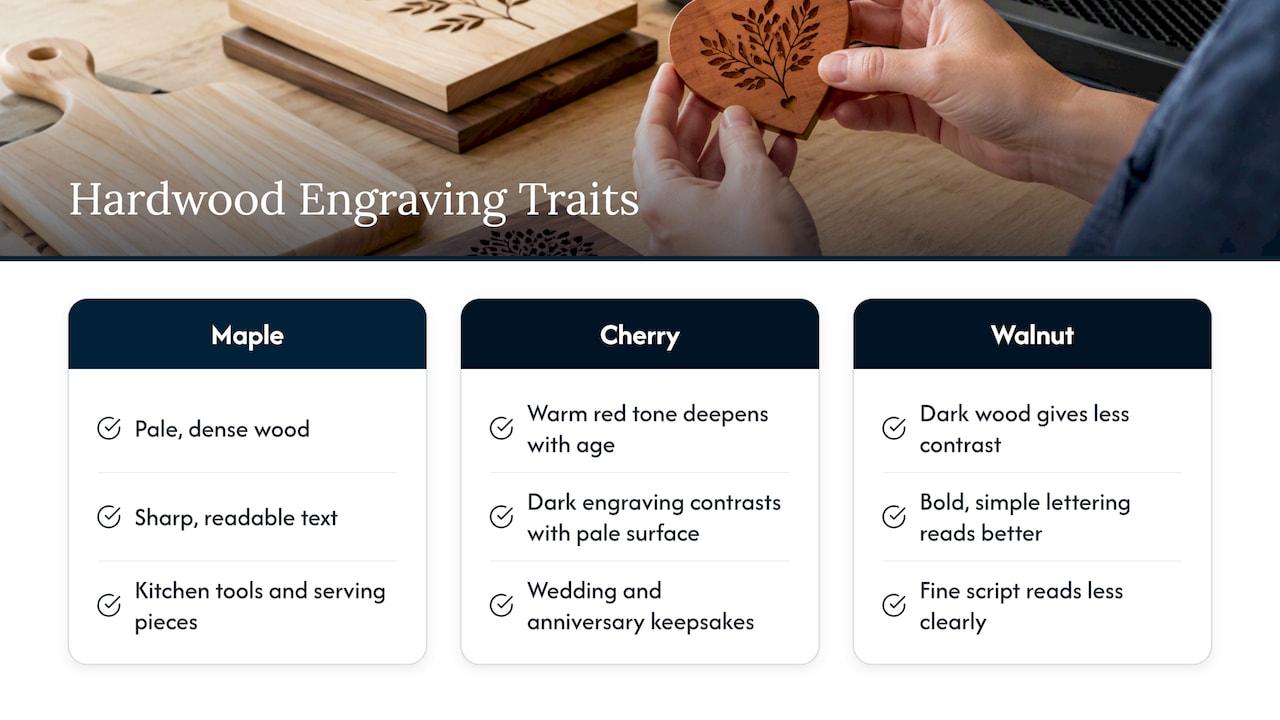
Maple is pale and dense. Text comes out sharp and readable, which makes it a favorite for kitchen tools and serving pieces.
Cherry has a warm, reddish tone that deepens with age. Because denser woods like cherry give a darker engraving, the contrast is lovely against the pale surface.
Walnut is gorgeous, but a dark wood engraved with a laser gives less contrast, since the burn mark is dark on a dark ground. Bold, simple lettering reads better than fine script.
If your engraving looks lighter than you hoped on any of these, our guide to fixing a laser engraving that is too light on wood walks through the usual fixes.
Pine and cedar: handle with care
The top Google results mention cedar as a good outdoor wood, and that is true for weather resistance. For lasering, though, it is trickier. Woods with higher resin content like pine or cedar are more susceptible to burning, and the edge comes out darker and less crisp.
If you want a rustic look, they can work. For delicate engraved gifts, choose something drier and cleaner.
MDF: cheap, consistent, and not for keepsakes
MDF has no grain, no plies and no voids, so it cuts predictably. The cost is smoke and a sticky residue from the binder, which means cleaning your lenses and mirrors more often.
The look is the other issue. The edge darkening is unavoidable, and MDF lacks the natural beauty of solid wood or good veneer plywood, so it suits rustic or utilitarian projects better than fine gifts. It is a smart choice for test cuts and hidden parts. For a wedding gift, we would use real wood.
Safety: what to check before you cut
Wood is not automatically harmless in a laser. Safety guidance from university labs lists soot, benzene, formaldehyde and other compounds among the fumes from cutting wood, MDF and plywood, so run proper ventilation.
Engineered woods are often bonded with formaldehyde-based resins. The School of the Art Institute of Chicago’s lab advises you verify with your supplier that composite wood is formaldehyde-free or rated for laser use.
Some materials should never go in the machine. PVC, vinyl and unidentified plastics can release hazardous gases and damage your equipment, as the University of Florida’s laser materials sheet makes clear. We have a longer list in our guide to craft materials that cannot be laser engraved.
Our perspective: how we choose wood for gifts
We engrave to order in our Georgia shop, and gifts are personal. Someone is trusting us with an anniversary date, a baby’s name or a dog’s portrait, so we think about the wood the same way we think about the gift.
Our rule of thumb is simple. If the piece needs fine cut detail, go with a clean, consistent wood. If it needs a rich, dark engraving, choose a denser hardwood. If it is a craft project that will be painted, plywood is wonderful, and we have a guide to the best paint for laser cut plywood.
We also say no to shortcuts. A sooty edge or an uneven burn is easy to avoid with the right material, and it is the difference between a gift that looks mass-made and one that feels one of a kind. Finishing and care matter too, so we wrote up how to care for laser engraved wood.
— Gary
Match the wood to the gift
Here is how we would pair common occasions with materials.
Weddings and anniversaries: cherry, maple or walnut, with bold, clean lettering. These are keepsakes, so go for durability and a warm look.
New baby gifts: a light, soft look. Alder or basswood gives gentle contrast that suits a nursery.
Groomsmen and golf gifts: denser woods for a darker mark that reads well, since these gifts get handled and shown off.
Pet lovers and home-state pride: birch plywood works well for layered shapes and outlines, and the pale surface shows detail nicely.
Crafters: birch plywood cutouts and blanks are easy to paint, stain and layer.
Where to find wood or skip the cutting
If you own a laser, buy sheets sold specifically for lasers and ask about the glue. Hardware store lumber can work for solid wood, but check for resin, knots and warping first.
If you would rather skip the learning curve, we can do the work. Our custom gift creation service turns your idea into a laser-engraved wood or metal piece, and you can browse our finished gifts and blanks for pieces made to order. Our main store is at signaturelaserdesigns.com/shop, where personalization is entered right on each product page.
Crafters who want unfinished shapes can find them too, like our howling wolf wood cutout (on Etsy) in 1/4 inch plywood. For a wider look at what we cut, see our page on laser-cut wood cutouts. Spanish readers can also see our guide qué madera elegir para grabado láser.
FAQ
Can a laser engraver cut wood?
Yes, with enough power. Hobby lasers cut thin sheets of wood and plywood well, while thicker or denser boards may need several passes or a stronger machine. Always test on a scrap first and keep ventilation running.
What is the best wood for a beginner?
Basswood or good birch plywood. Both are consistent, cut at modest power and forgive small setting mistakes. Once you are comfortable, try alder or maple for a different look.
What material can’t be laser cut?
PVC, vinyl and unidentified plastics are the main ones, because they can release hazardous gases such as chlorine or hydrogen cyanide and harm both you and your machine. University safety sheets, such as the University of Florida’s, list them as off limits. When you do not know what a material is, do not cut it.
What kind of wood is best for engraving?
For dark, high-contrast engraving, choose denser hardwoods like cherry or oak. For a softer, subtler mark, basswood or poplar fits. Match the contrast to the mood of the gift.
Sources
- Laser engraving and laser cutting of wood tips, Trotec
- Wood species compared, Snijlab
- Cutting and engraving wood, plywood and MDF, BRM Lasers Support
- Laser Cutter Materials, University of Florida EHS
- Laser Cutter Materials, SAIC Advanced Output Center
- EHS Guideline: Laser Cutter Safety, Carnegie Mellon University
Recommended