Oil Every 2–3 Months to Keep Engraved Wooden Pocket Knife Gifts Sharp
The single best habit for protecting a laser engraved wooden handle pocket knife is simple: wipe the blade and handle dry after every use, then oil the wood and pivot sparingly every few months. Never soak the knife or run it through a dishwasher, since heat and standing water swell and crack wood. Skip household solvents near the handle, and always test any sealer on a hidden spot before treating the whole surface.
✦ Featured From Our Shop ✦
Handcrafted & laser engraved in Georgia, just for you
TL;DR:
- Avoid soaking or submerging the wooden handle in water, as prolonged moisture causes swelling, cracking, and loosening of the lock and handle components.
- Use food-safe mineral oil every two to three months to prevent the wood from drying and darkening, testing on a hidden spot to avoid altering engraving contrast.
- Clean the blade and metal parts with warm water and mild soap, dry everything thoroughly immediately, and avoid household solvents that can dull or discolor the wood.
- Protect engraved areas with a thin layer of food-safe sealer or wax, applying carefully to prevent clouding or dulling the design, and consider stain touch-ups for faded engravings.
- For damaged handles or faded engravings, it is often more efficient to replace with a professionally finished, engraved piece than to attempt DIY restoration.
Table of Contents
- Daily and weekly checklist for engraved wooden handles
- How to clean the blade, handle, and pivot without damage
- Choosing and applying oil to protect the wood
- Sealers, waxes, and keeping the engraving visible
- Keeping the lock, pivot, and blade in good working order
- Fixing swollen handles, loose locks, and faded engraving
- What we’ve learned about keeping engraved gifts looking new
- A professionally finished option when you’d rather not DIY
- FAQ
- Sources
Daily and weekly checklist for engraved wooden handles
A few minutes of attention keeps the wood stable and the engraving sharp. Build these habits into your routine and they stop feeling like chores.
- Each day: wipe the blade and handle dry with a soft cloth, check for grit around the pivot, and store the knife closed and completely dry.
- Each week: brush lint from the lock mechanism, add a small dab of pivot lubricant, and inspect the handle and engraved area for dryness or dirt buildup.
- Avoid soaking the knife in water or placing it in a dishwasher, since prolonged moisture and heat warp wooden handles and loosen locking rings, according to Opinel’s own care guidance.
- Keep household solvents away from the wood entirely, since they strip natural oils and can dull or discolor an engraved design.
This routine takes less time than washing a coffee mug, and it does more to protect sentimental value than any once-a-year deep clean.
How to clean the blade, handle, and pivot without damage
Cleaning a wooden handle knife is less about scrubbing and more about restraint. Open the blade fully and set the knife on a stable surface before you start.
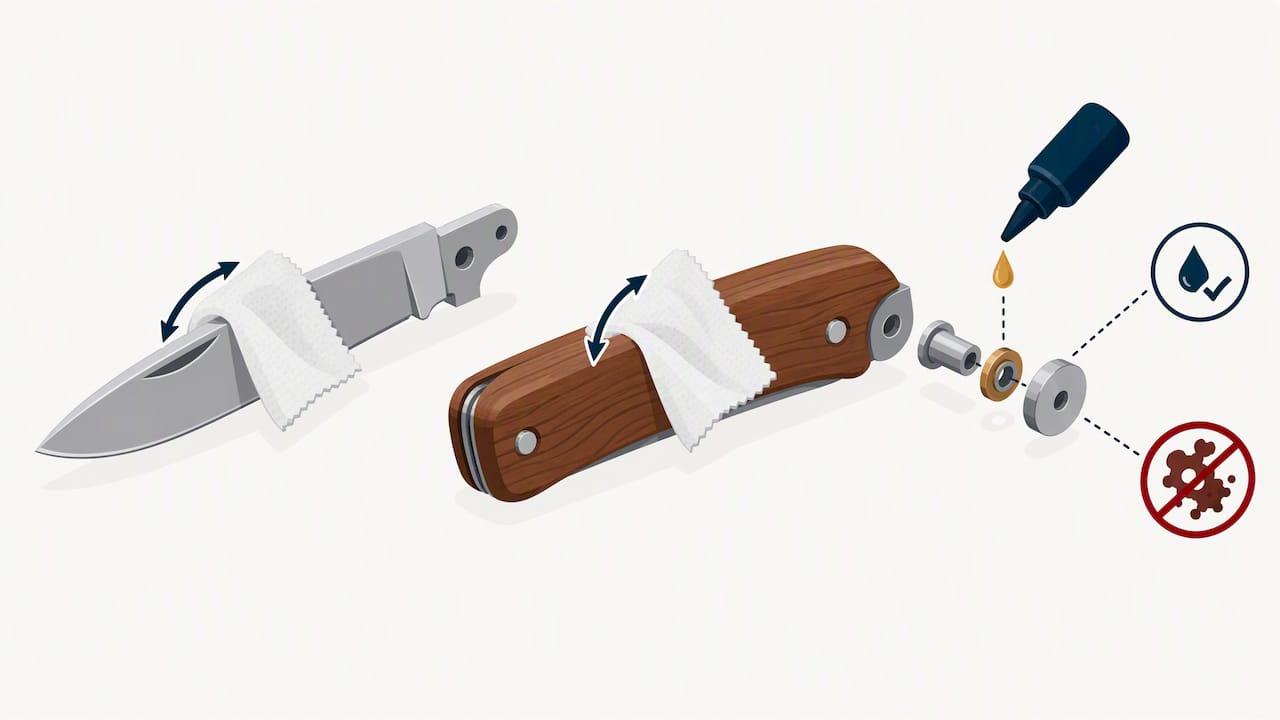
- Remove loose debris first, using a toothpick or a soft-bristled brush to clear dirt from the pivot and liners.
- Use warm water with a small amount of mild soap only when the blade and metal parts actually need it, and keep contact brief.
- Keep the wooden handle away from standing water and never submerge it, since wood absorbs moisture far faster than metal sheds it.
- Dry everything completely with a lint-free cloth immediately after cleaning.
OutdoorGearLab’s testing on pocket knife care recommends warm water and mild detergent for the blade and handle, with lint and grime lifted out using a toothpick or soft brush before drying. A hair dryer on its lowest, coolest setting helps reach tight pockets around the pivot, or you can simply leave the knife open in a dry room for an hour.
Pro Tip: Dry the pivot area last and check it twice. Trapped moisture there causes rust long before it shows on the blade surface.
Choosing and applying oil to protect the wood
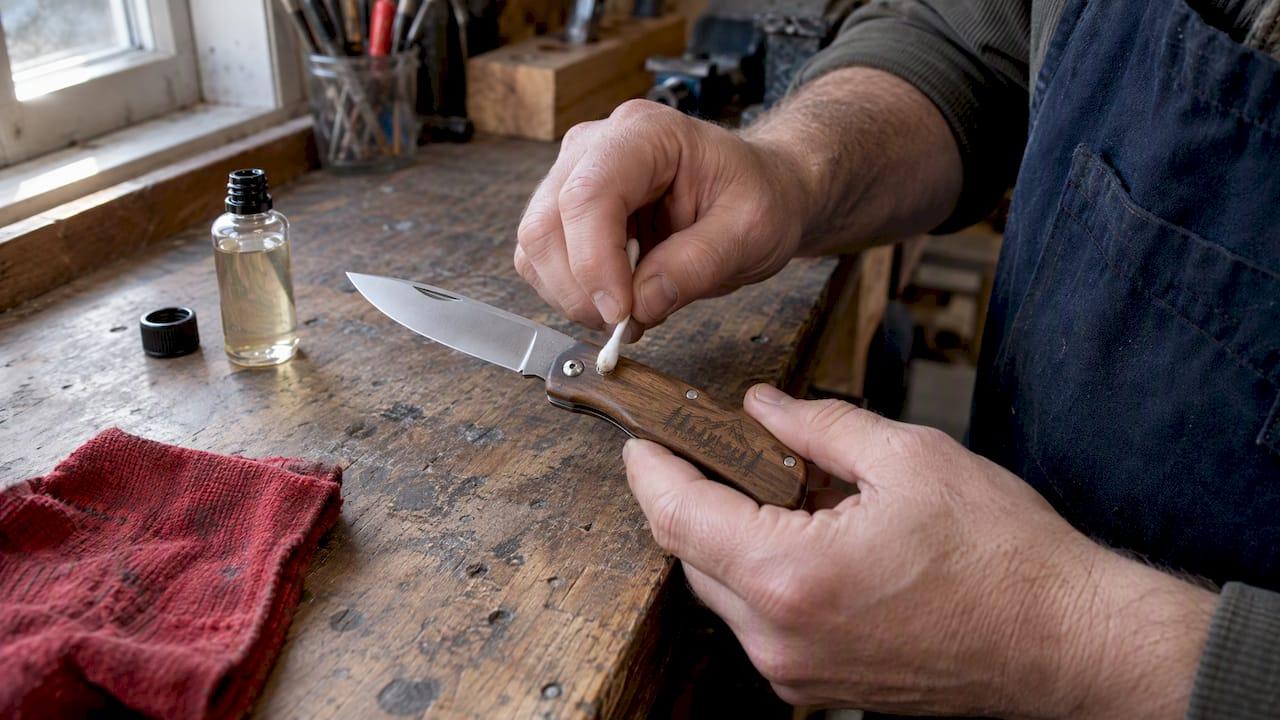
Food-safe mineral oil is the safest default for a wooden handle that might touch food or hands often, since it won’t turn rancid and it’s gentle on finishes. Boiled linseed oil is a common alternative, but it builds a harder film over time and darkens wood more than mineral oil does.
- Apply a small amount of oil to a soft cloth and rub it into the grain, not against it.
- Let the oil soak in for ten to fifteen minutes before wiping away any excess.
- Reapply every two to three months, or sooner if the wood looks dry or pale.
- Test any new oil or finish on an inconspicuous part of the handle first, since oils darken wood and can change how sharply the engraving reads against the surface.
OutdoorGearLab notes that mineral oil is widely recommended for wooden handles precisely because it prevents drying without the buildup some finishes cause. A little goes further than you’d expect.
Sealers, waxes, and keeping the engraving visible
A thin, clear food-safe sealer protects an engraved area from daily handling, while paste wax offers a softer, more removable layer that’s easier to touch up later. Sealer tends to lock in contrast longer; wax is gentler if you plan to refresh the engraving down the road.
- Apply sealer only to the engraved section with a small brush, keeping it out of the surrounding grain where it isn’t needed.
- Test on a hidden corner of the handle first to confirm the sealer doesn’t cloud the wood or dull the lettering.
- For engraving that has faded, a careful dab of wood stain worked into the grooves with a fine brush can restore contrast without sanding, a method we outline in our full guide to caring for laser engraved wood.
Pro Tip: Wipe excess stain away immediately with a dry cloth so it settles only in the engraved lines, not across the flat wood.
Keeping the lock, pivot, and blade in good working order
A dedicated pivot lubricant keeps the folding action smooth without harming nearby wood, and it’s worth avoiding all-purpose sprays as a long-term fix. Knife Depot’s maintenance guide points out that solvent sprays like WD-40 leave sticky residue that attracts lint and grit, while a purpose-made pivot lube or food-safe mineral oil stays cleaner over time.
- Add one small drop of pivot lubricant to each side of the hinge, then open and close the blade several times to work it in.
- Remove light surface rust with a mild abrasive polish and a soft cloth, keeping any cleaning product away from the wood itself.
- Tighten loose screws with the correct Torx bit size for your knife model, since the wrong bit strips the screw head.
- Use a small amount of blue threadlocker only if a screw keeps loosening on its own, and apply it sparingly to avoid overflow onto the handle.
Kershaw’s product care guidance confirms that light oiling before storage, gentle rust removal, and correct tool sizing are standard across quality folding knives, not just premium brands.
Fixing swollen handles, loose locks, and faded engraving
Most minor problems have simple home fixes. A swollen handle usually means trapped moisture, so let the knife air dry fully for a day or two before deciding whether light sanding is needed.
- Dry a swollen handle slowly at room temperature, then use fine sandpaper only if the wood still feels tight against the liners afterward.
- Clean dirt and lint from the collar and lock ring with a soft brush, then check that the lock engages fully before using the knife again.
- If engraving has faded past a simple stain touch-up, or if the handle has cracked, contact the original engraver for a professional refresh rather than risking further damage at home.
Our guide on grit progression for unfinished wood covers safe sanding steps if you ever need to smooth a rough spot without erasing surrounding detail.
What we’ve learned about keeping engraved gifts looking new
We think about maintenance differently when a knife carries someone’s name or a wedding date: dryness, light oiling, and gentle cleaning matter more than any aggressive fix. A small care kit, a lint-free cloth, a bottle of food-safe mineral oil, and a dedicated pivot lubricant, handles nearly everything that comes up. We’ve seen how much a well-kept engraving means to the person who received it, which is exactly why we build every custom piece with long-term care in mind from the start.
— Gary
A professionally finished option when you’d rather not DIY
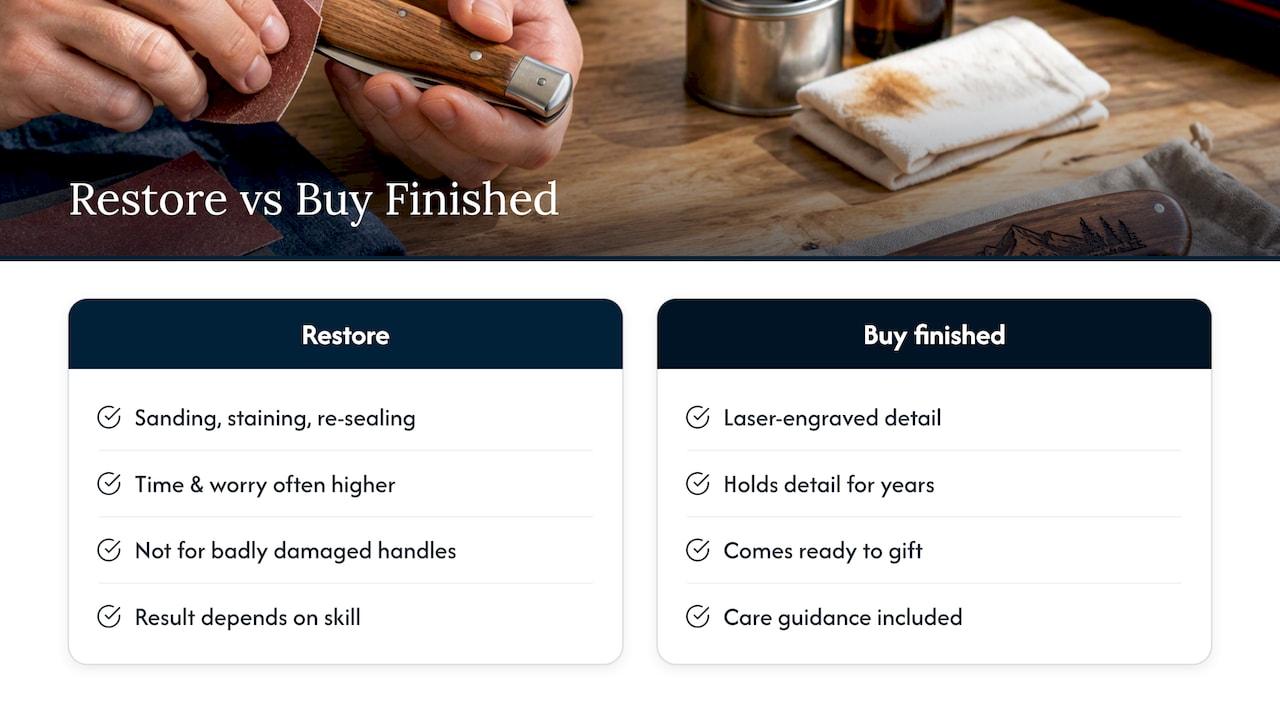
If a handle is too far gone to refresh at home, or you’re starting fresh with a gift instead of fixing an old one, finished, laser engraved pieces built to hold detail for years are available. Our Personalized Can Opener with a wooden handle and our Bison River Knife BR1252 both come engraved and ready to give, with the same care guidance we share here built into every order.
When restoration starts to feel like more trouble than it’s worth, ordering new often costs less time and worry than sanding, staining, and re-sealing an old handle yourself. Browse our custom gift creation services or explore our wood and metal blanks and finished pieces to start a new keepsake built to last.
FAQ
How to treat laser-engraved wood?
Treat laser engraved wood with a thin layer of food-safe mineral oil rubbed into the grain, letting it soak before wiping away excess. This keeps the wood from drying out while preserving the contrast of the engraved lines.
How to seal laser-engraved wood?
Apply a clear food-safe sealer directly to the engraved area with a small brush, testing it on a hidden spot first to make sure it doesn’t cloud the wood. A thin coat protects the detail from daily handling without filling in the fine lines.
Can you laser engrave wood that has been oiled?
Oiled or finished wood can affect how cleanly a laser cuts, since existing oils and coatings sometimes interfere with contrast and depth. For the sharpest results, engraving works best on raw or lightly prepared wood, with oil or sealer applied afterward.
How long does laser engraving last on metal?
Laser engraving on metal is a permanent mark into the surface itself, so it won’t fade or wear off under normal handling. Manufacturers note that surface coatings or finishes around an engraving may wear over time, but the engraved mark itself remains.
Sources
For readers who want the original manufacturer and expert guidance behind these tips, a few sources cover the details especially well. Opinel’s care page explains wood sensitivity and dishwasher risks in detail, while Kershaw’s product care guide walks through rust removal and screw maintenance. OutdoorGearLab’s cleaning guide and Knife Depot’s pivot lube guide round out the practical side of lubrication and cleaning technique. For engraved keepsakes beyond knives, GeoKeeps Journal’s map jewelry care guide offers helpful parallels for preserving fine detail on small engraved items.
- Care & Maintenance | Everything you need to know about your Opinel knife
- How to Clean A Pocket Knife – GearLab
- Knife pivot lube and maintenance product guide
- How to Care for Your Kershaw Pocketknife | Kershaw Knives
Recommended
- Engraved Pocket Knife | Personalized Groomsmen Knife
- Top 4 Custom Engraved Pocket Knife Providers 2026
- Order 4–6 Weeks Early: Engraver Rules for Personalized Groomsmen Knives