Laser Cut Wooden Numbers for Wedding Table Settings
For wedding and event table settings, laser cut wooden numbers in 3–5 mm birch plywood or solid hardwood give the cleanest, most customizable look available at a reasonable price. Order a matched set, request a digital proof before production starts, and confirm your mounting style before you pay.
✦ Featured From Our Etsy Shop ✦
Handcrafted & Laser Engraved Just For You
Here is what most couples and event planners need to know upfront:
- Best material for most weddings: 3–5 mm laser-grade birch plywood or MDF for budget-friendly sets; solid acacia or cherry for a premium heirloom feel
- Typical sizes: 3–6 inches tall (roughly 75–150 mm), scaled to your centerpiece height
- Price ballpark: Simple unfinished sets often start around $2–$5 per number for plywood; painted, stained, or engraved pieces with custom fonts run higher depending on quantity and complexity
- Turnaround: Most US custom shops produce in 3–7 business days, with shipping adding 2–5 days; rush orders are available but cost more
- First step: Contact a maker like Signaturelaserdesigns, share your quantity, font preference, finish, and event date, and ask for a digital proof before production begins
Key Takeaways
Laser cut wooden numbers for table settings work best when material, font, thickness, and mounting style are confirmed before production starts, and a digital proof is approved before a single piece is cut.
| Point | Details |
|---|---|
| Best material for most events | 3–5 mm laser-grade birch plywood balances clean edge finish, font detail, and cost for wedding sets. |
| Always request a digital proof | Review font weight, number size, and engraving text before approving production to avoid costly remakes. |
| Budget realistically | Unfinished plywood sets start around $20–$40 for 1–10 pieces; painted or engraved sets run $50–$150 depending on complexity. |
| Confirm mounting before ordering | Specify base style, stake length, or slot dimensions upfront so numbers arrive ready to display. |
| Signaturelaserdesigns | Offers custom laser-cut wooden table numbers with transparent quotes, digital proofs, and choice of material and finish. |
Table of Contents
- What styles of laser cut wooden numbers work best for table settings?
- Which wood, thickness, and size should you specify?
- How is pricing calculated, and what should your budget look like?
- What does the ordering process look like from start to finish?
- How do you display wooden table numbers so they look great?
- Can you make your own laser cut table numbers at home?
- How do you find a reliable US vendor for custom wooden numbers?
- What should you expect for shipping, handling, and returns?
- What we focus on at Signaturelaserdesigns
- Signaturelaserdesigns makes custom table numbers easy to order
- Sources
What styles of laser cut wooden numbers work best for table settings?
The style you choose shapes how the numbers read in photos and how easily guests spot their table. There are five main formats you will encounter, and each suits a different table layout.
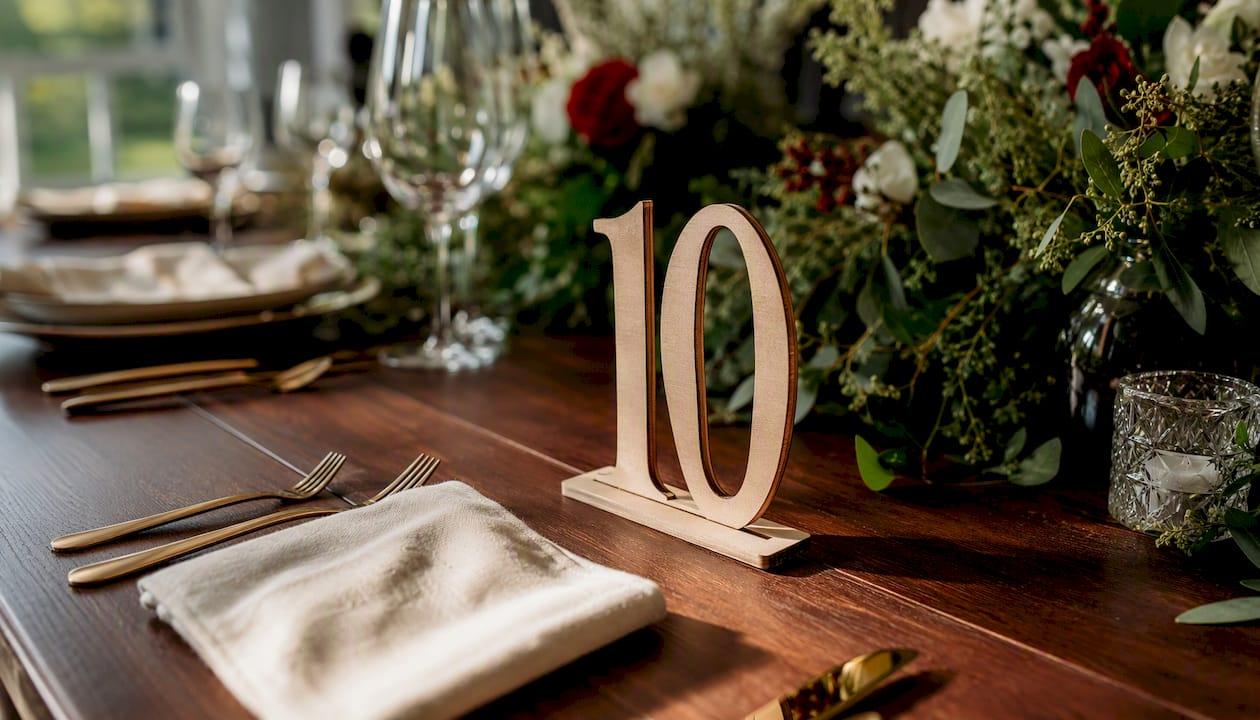
Freestanding upright numbers are the most popular choice. They stand on their own with a slotted base or a small wooden foot, which means no extra hardware. They photograph well from across the room and work on any table width.
Slot-in base numbers arrive as a flat cutout that drops into a pre-cut groove in a separate wooden base. The base can be stained or painted to match your linen colors, and the number itself can be swapped out if you reuse the bases for a different event.
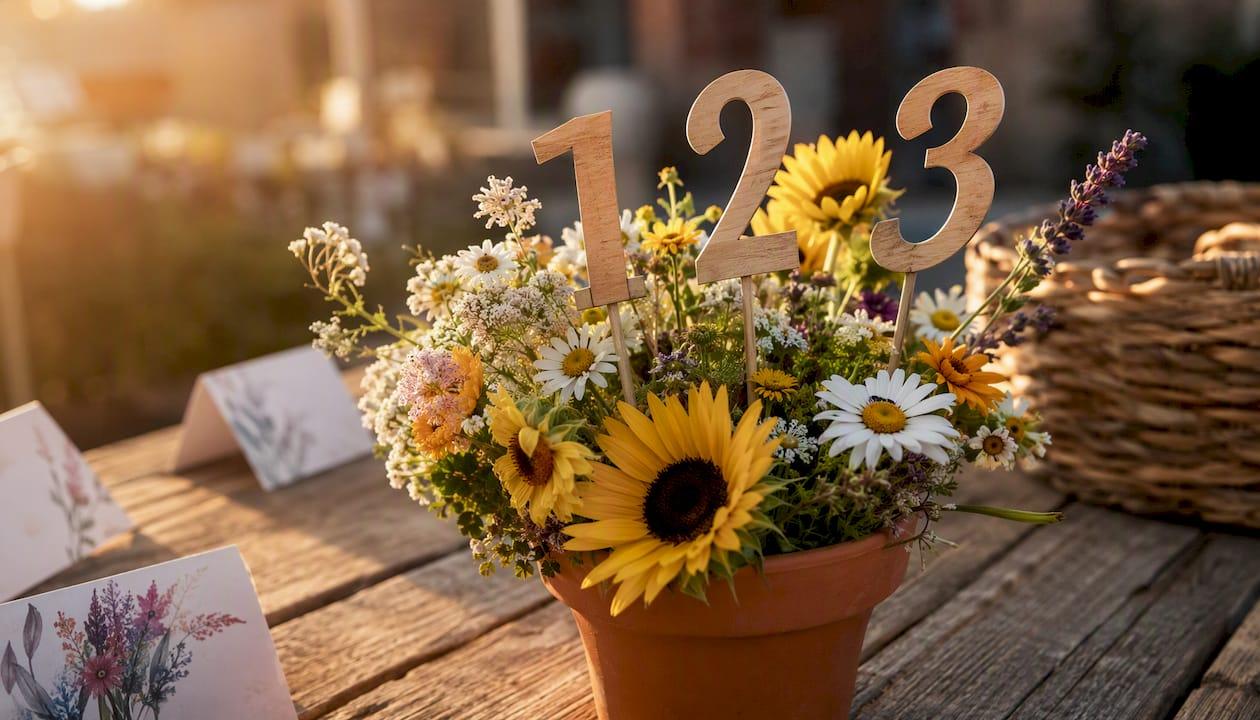
Stick-in-vase numbers use a thin wooden stake (commonly around 20 cm long) attached to the back of the number. You push the stake into a bud vase, a floral arrangement, or a jar of sand. Wooden table number signs in this format are a popular choice for informal or floral-forward tables because the height is adjustable by changing the vase filler. Sets typically come in ranges of 1–10, 1–15, 1–20, or 1–25.
Flat cutouts are the simplest form: a number with no base, meant to lean against a vase, frame, or menu card. They are the most affordable option and work well as part of a layered centerpiece.
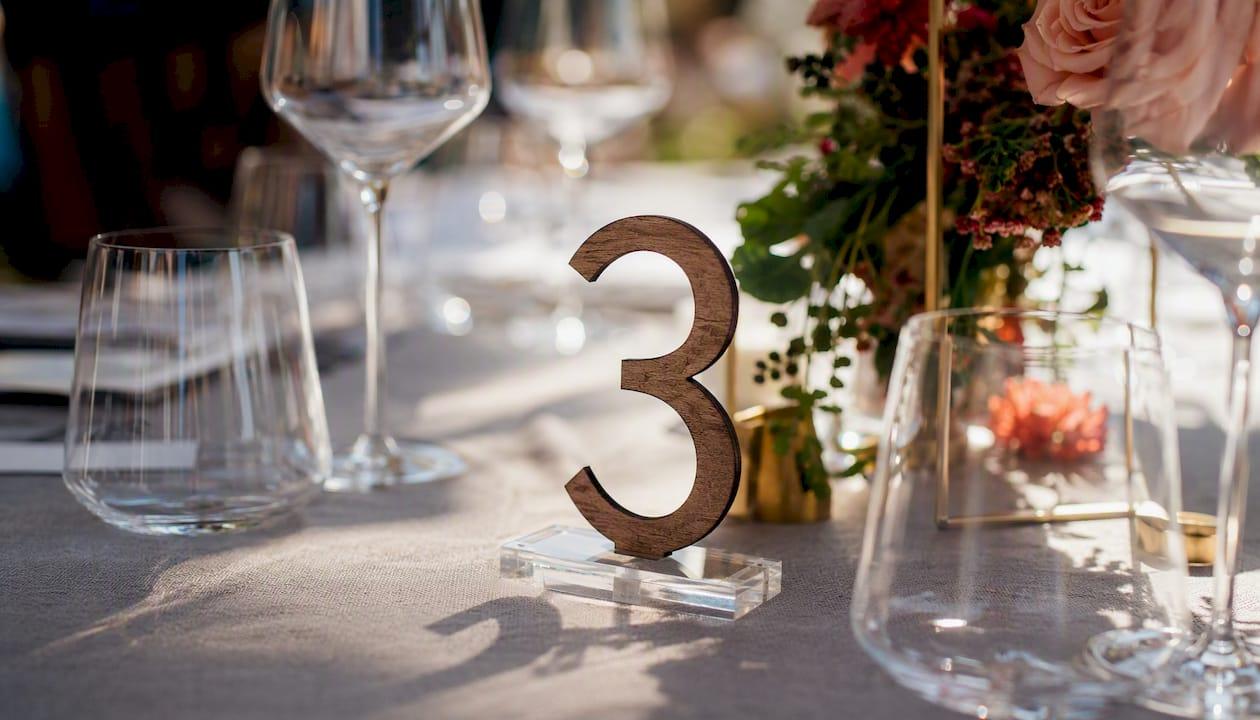
Mounted numbers sit on acrylic, brass, or metal bases for a modern or industrial look. The contrast between warm wood grain and a polished metal base photographs beautifully.
Finish options span natural (unsealed wood grain), lightly oiled, stained in walnut or ebony, whitewashed, painted in any color, and gilt-edged with gold or copper leaf accents. Engraved details, like a floral motif or a couple’s initials, can be added to the face of the number for a personalized touch.
When choosing a style, think about your centerpiece height first. A tall floral arrangement needs a number that rises above it or sits beside it at a different height. A low, sprawling greenery table works better with a freestanding number that stands 5–6 inches tall.
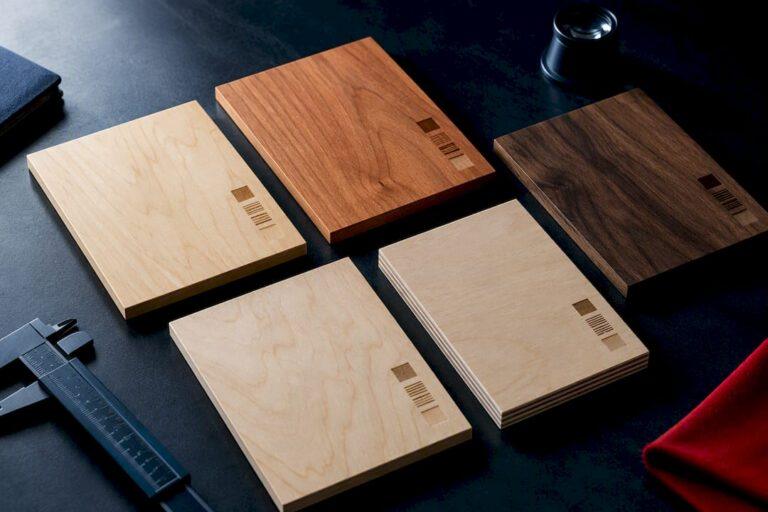
Always ask your vendor for photos of finished pieces and, if possible, a material swatch. Seeing the actual wood grain and stain color in person prevents surprises on delivery day.
Pro Tip: Match the font weight to the material thickness. A bold, wide numeral in 3 mm plywood is stable and photographs crisply. A thin, hairline script in the same thickness can snap at the narrow strokes during handling. If you love a delicate script font, ask your maker to cut it in 5 mm stock instead.
Which wood, thickness, and size should you specify?
Getting the specs right before you order saves you from a second round of production costs. Here is what each material brings to the table.
Birch plywood (laser-grade) is the go-to for most custom shops. It cuts cleanly, holds fine detail, and takes stain or paint evenly. The edge shows a light wood grain that looks natural and warm. It is the most cost-effective option for large sets.
MDF gives an ultra-smooth face and edge, which is ideal for painted finishes where you want zero grain texture. It is heavier than plywood and slightly more moisture-sensitive, so avoid it for outdoor events in humid conditions.
Solid hardwoods (acacia, cherry, walnut) cost more and require longer cutting times, but the finished piece feels substantial and photographs with a richness that plywood cannot fully replicate. Solid acacia table number sets are commonly sold in sets of 1–10 with finished dimensions around 55 × 35 × 35 mm, which gives you a sense of the compact footprint these pieces occupy on a table.
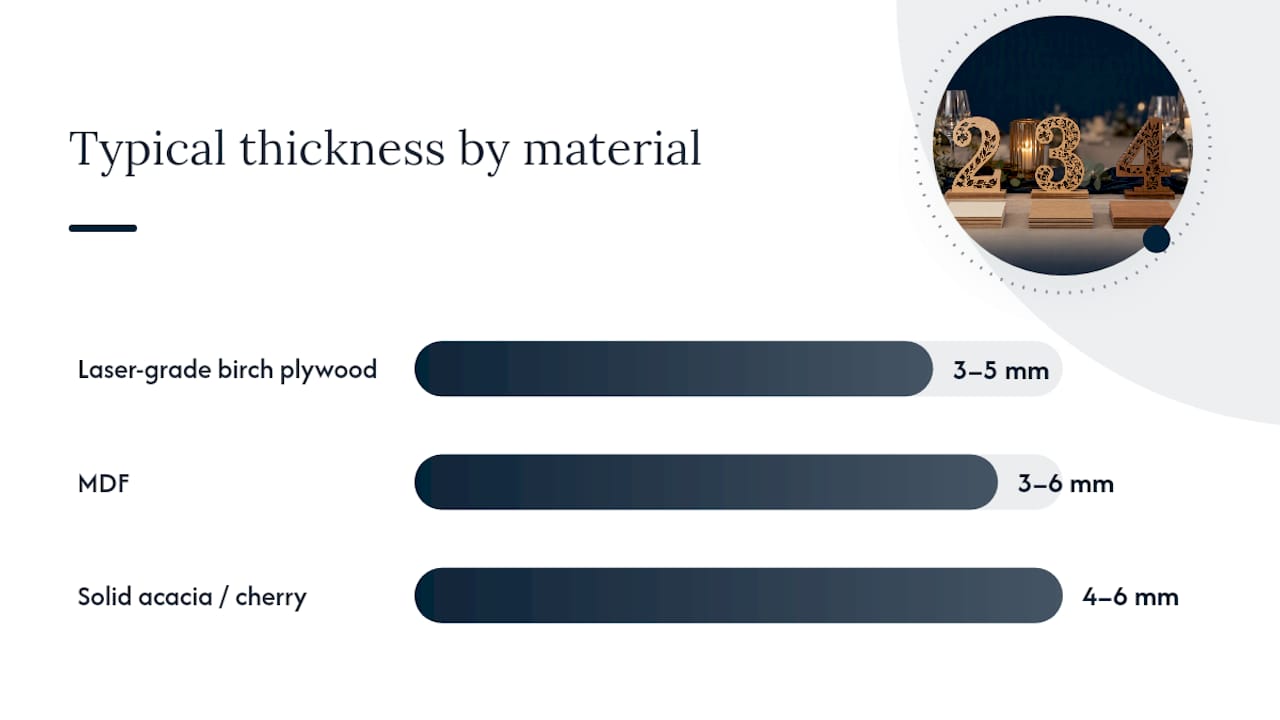
For thickness, the 3–5 mm range covers nearly every table-number application. Three millimeters suits numbers up to about 150 mm (6 inches) tall and keeps the piece lightweight. Five millimeters adds visual weight and structural stability for larger numbers or thinner fonts.
| Material | Typical thickness | Visual effect | Durability tradeoff |
|---|---|---|---|
| Laser-grade birch plywood | 3–5 mm | Warm grain, natural edge | Great for most events; avoid prolonged moisture |
| MDF | 3–6 mm | Smooth, paintable face | Heavier; moisture-sensitive outdoors |
| Solid acacia / cherry | 4–6 mm | Rich grain, premium feel | Most durable; higher cost per piece |
For size, most table numbers read well at 4–6 inches (100–150 mm) tall. Smaller numbers (3 inches / 75 mm) work for intimate tables with low centerpieces. Larger statement numbers (6+ inches) suit long banquet tables where guests need to spot their seat from a distance.
When you contact a vendor, give them the number height you want, the font style, and whether the piece will be freestanding or stake-mounted. That combination determines the right thickness automatically.
How is pricing calculated, and what should your budget look like?
Pricing for custom laser cut numbers is not a flat rate. Several factors stack together, and understanding them helps you get an accurate quote on the first ask.
The main cost drivers are:
- Material type: Birch plywood costs less than solid hardwood; MDF sits in between
- Size: Larger numbers use more material and take longer to cut
- Font complexity: Open, bold fonts cut faster and waste less material than intricate scripts with thin counters
- Finish: Unfinished natural wood is the least expensive; painted, stained, or engraved pieces add labor
- Quantity: Per-unit cost drops as quantity rises; setup time is amortized across the set
- Personalization: Adding engraved text (a couple’s name, a date) adds design and machine time
- Packaging and shipping: Fragile wooden pieces need rigid packaging; expedited shipping adds cost
| Set type | Approximate price range | Notes |
|---|---|---|
| Unfinished plywood, simple font, 1–10 set | $20–$40 per set | Base-level; no finish or engraving |
| Stained or painted, medium font, 1–15 set | $50–$100 per set | Finish adds labor; font complexity matters |
| Solid hardwood, custom font, engraved detail | $100–$150 per set | Premium material and personalization |
| Rush production (under 3 business days) | Add 20–40% to base price | Varies by shop; confirm before ordering |
These ranges reflect typical small-batch custom production in the US. Signaturelaserdesigns provides transparent pricing based on material, design intricacy, and personalization, so you can get an accurate quote rather than guessing from a price list.
Pro Tip: Order a single sample number before committing to a full set. Most custom shops accommodate single-piece orders. A sample lets you check the stain color, font legibility, and finish quality in your actual venue lighting before you spend on 20 pieces.
What does the ordering process look like from start to finish?
A smooth order follows a clear sequence. Knowing what to prepare at each step prevents delays.
- Send an inquiry. Share your event date, quantity needed, number range (e.g., 1–20), preferred material, finish, font style, and any engraving text. The more detail you give upfront, the faster the quote.
- Receive a quote. The vendor will confirm material, size, finish, and total cost. Ask about turnaround time and whether rush production is available.
- Submit your artwork or font choice. If you have a specific font, provide it as an outlined SVG, DXF, EPS, or PDF file. If you are choosing from the vendor’s library, confirm the font name. Acceptable file formats are SVG, DXF, EPS, and high-resolution PNG (300 dpi minimum). Always outline your fonts before sending so the file does not depend on a font the vendor may not have installed.
- Review the digital proof. Reputable vendors provide a free digital proof, often within 24 hours. Study it carefully: check number size relative to the base, stroke width, and any engraved text for spelling. Ask for a close-up of the edge finish if the proof only shows a top-down view.
- Approve and pay. Most custom shops require payment or a deposit before production starts. Confirm your delivery address and any special packaging requests at this stage.
- Production. Laser cutting, finishing, and assembly typically take 3–7 business days for standard orders.
- Shipping. Add 2–5 business days for standard US shipping. Confirm tracking is included.
- Receive and inspect. Open carefully, count pieces, and photograph any damage before discarding packaging.
Confirm mounts, bases, or stakes are included in the order before you approve the proof. A number without its stand is not useful on event day.
How do you display wooden table numbers so they look great?
The way you present the numbers matters as much as the numbers themselves. A beautiful piece placed at the wrong height or angle disappears in the centerpiece.
Rustic and boho themes
Stick-in-vase numbers in natural or whitewashed wood are the natural fit here. Tuck the stake into a mason jar filled with dried lavender or pampas grass, and the number floats above the arrangement at a readable height. Pair with kraft paper menus and twine-tied napkins for a cohesive look. Macramé hoops behind the number add texture without competing with the wood grain.
Modern and minimalist themes
A flat-cut number mounted on a slim acrylic or brushed brass base reads clean and architectural. Keep the wood natural or lightly oiled so the grain shows through. Avoid heavy stains that make the piece look rustic when the table is otherwise spare and geometric.
Vintage and romantic themes
Painted numbers in cream or dusty rose with a gold-leaf edge work beautifully on velvet or linen tablecloths. Lean the number against a small frame or prop it inside a vintage book for a layered, editorial look. Dried floral rings around the base of a freestanding number add softness without blocking the numeral.
Placement rules to follow regardless of theme: the number should be visible from the table entrance, not buried behind a tall centerpiece. Keep it at least 6 inches away from open flames. If you are using candles, choose a base that keeps the wood elevated and away from the heat source.
Pro Tip: When photographing table numbers for your wedding album or social media, shoot at a slight downward angle with the number in the foreground and the centerpiece softly blurred behind it. Natural side-lighting from a window brings out the wood grain far better than direct flash.
Can you make your own laser cut table numbers at home?
Yes, and the DIY path is genuinely satisfying when you have access to the right equipment. Here is the minimum you need and the settings that give clean results.
What you need:
- A CO2 or diode laser cutter capable of cutting wood (40W or higher recommended for 3 mm plywood)
- A vector file in SVG or DXF format with your number design
- 3 mm laser-grade birch plywood or basswood sheets
- Painter’s tape or transfer tape to mask the surface and reduce scorch marks
- Light-grit sandpaper (220 grit) for edge cleanup
- A food-safe finish if the numbers will touch edible items or be handled by children
Laser settings (starting points to test and refine on scrap):
- 3 mm birch plywood: speed 15–25 mm/s, power 70–85%, depending on your machine’s wattage
- Always run a test cut on a scrap piece first and adjust until the cut is clean through without excessive charring
Font guidance: Avoid ultra-thin scripts or fonts with hairline strokes under 1.5 mm at your target size. Medium-weight or bold sans-serif fonts (think clean block numerals) and medium-weight serif fonts cut reliably and stay structurally sound. The wedding planning community on Reddit has documented many DIY table number projects, and the consistent lesson is that font choice matters more than most beginners expect.
Sign fabricators note that thin strokes in thin sheet can be fragile, and laser cutting produces a polished edge that preserves fine detail only when the font and thickness are matched correctly.
Pro Tip: Cut a full 1:1 test number on scrap before running your full sheet. Hold it at arm’s length and check legibility from 10 feet away. If you squint to read it, the font is too thin or too small.
How do you find a reliable US vendor for custom wooden numbers?
The US market has many makers, from large Etsy shops to local sign studios. Vetting them quickly saves you from a last-minute scramble.
- Confirm US-based production. Overseas production adds unpredictable shipping time. Ask directly where the pieces are cut and finished.
- Request photos of finished pieces. Any reputable shop has a portfolio. Ask for photos of pieces in the same material and finish you want, not just renderings.
- Check the proof policy. A digital proof before production is non-negotiable for custom pieces. Vendors who skip this step are a risk.
- Verify material options and thicknesses. A shop that lists only “wood” without specifying plywood grade, MDF, or hardwood cannot give you consistent results.
- Ask for a transparent pricing breakdown. You should know what you are paying for: material, cutting time, finishing, and shipping as separate line items or at least clearly explained.
- Check minimum order quantities. Some shops require a minimum of 10 or 20 pieces. If you need only 5, confirm they will accommodate that.
- Read event-specific reviews. General positive reviews matter less than reviews from wedding or event customers who received their order on time and in good condition.
- Ask for a production timeline with buffer days. Request a timeline that includes a 2–3 day buffer before your event date. Shipping delays happen, and a buffer protects you.
Red flags: no proof process, vague material descriptions, no event photos in the portfolio, and unclear return or refund terms for custom pieces.
Pro Tip: When you ask for a timeline, request the ship date, not just the production completion date. A piece that finishes production on a Friday may not ship until Monday, which changes your delivery window by three days.
What should you expect for shipping, handling, and returns?
Wooden pieces are more fragile than they look, especially thin-cut numbers with narrow strokes or delicate fonts. Good packing and realistic delivery expectations prevent event-day stress.
Standard production plus shipping for a US order typically runs 5–12 business days total.
When your order arrives, open it carefully. Laser-cut wood can chip at thin points if the packaging shifts in transit. Photograph the packaging and the pieces before you discard the box. If anything is damaged, those photos are your evidence for a claim or replacement request.
For storage before the event, keep the numbers flat in a dry location. Humidity warps thin wood, especially MDF. A silica gel packet inside the storage box helps in humid climates.
Custom pieces are almost never eligible for return or exchange once production starts, because the cutting and finishing are specific to your order. The best protection is a thorough proof review before you approve production. If a vendor offers a sample piece option, use it.
Pro Tip: Pack your table numbers for transport to the venue the same way they arrived: flat, separated by tissue or foam, inside a rigid box. A tote bag full of loose wooden numbers is a recipe for chipped corners.
What we focus on at Signaturelaserdesigns
Every table number set we produce starts with the proof. Before a single piece of wood goes under the laser, our team sends a scaled digital mockup that shows the exact font, size, and finish you approved. We have seen too many events where a beautiful design arrived with a font that was unreadable from six feet away or a finish that did not match the sample photo. The proof step eliminates both problems.
Material choice is the second thing we take seriously. For most wedding sets, 3–5 mm laser-grade birch plywood gives the best balance of clean edge finish, font detail, and cost. When a couple wants something that feels more substantial, we recommend solid hardwood with a 4–6 mm thickness and a hand-applied stain. The difference in hand feel is immediately noticeable.
Mounting is the detail most people overlook until the day before the event. We confirm base style, stake length, or slot dimensions before production, not after. A number that arrives without a compatible stand is useless on a table.
One practical note on font stability: thin, decorative scripts look stunning in a proof but can be fragile in 3 mm stock. When a customer falls in love with a hairline script, we recommend cutting it in 5 mm material or switching to a medium-weight version of the same style. The result photographs just as beautifully and survives a full event night of handling.
Signaturelaserdesigns makes custom table numbers easy to order
Signaturelaserdesigns produces custom laser-cut wooden table numbers for weddings and events with a process built around transparency: a detailed quote, a digital proof before production, and your choice of material, finish, and mounting style. You get exactly what you approved, not a close approximation.
To start your order, reach out with your event date, the number range you need (for example, 1–20), your preferred material and finish, and any engraving text. Our team will send a quote and a digital proof, typically within one business day. If you want to check finish quality before committing to a full set, ask about a single-piece sample order. For events with tight timelines, ask about our precision laser engraving services and rush production availability. Ready to get started? Request your custom quote at Signaturelaserdesigns today.
Sources
The following sources informed the specifications, styling guidance, and vendor evaluation criteria in this guide.
- Wooden Table Number Signs Nos 1-10
- # Wooden Table Number Signs
- Plastic House Numbers | Building Construction and Infrastructure | Perspex Online
- Custom Acrylic Numbers | Personalized Laser Cut
Ask any vendor you contact for material swatches and a scaled digital proof before production. Those two steps, more than any other, determine whether your table numbers arrive exactly as you pictured them.
Recommended