Best Material for Outdoor Asset Tags: Weatherproof Options
For most outdoor asset-tag applications, hard-laminated polycarbonate or polyester (PET) with a high-tack permanent industrial adhesive is the best material choice. MapTrack reports a 5+ year outdoor rating for hard-laminated polycarbonate using a 3M industrial adhesive when applied correctly, covering UV exposure, abrasion, fuel, solvents, and high-pressure washing. The two exceptions worth knowing: anodized aluminum when you need a lightweight fixed plate rated for decades, and stainless steel when the asset faces sustained extreme heat, marine salt spray, or aggressive chemical washdowns. For general field tools and mobile equipment, a laminated polymer label wins on cost, scannability, and ease of application. For pressure-wash or chemical-exposure environments, step up to a hard-laminated polyester with an aggressive adhesive or a stainless plate. For fixed infrastructure near salt water or sustained high heat, stainless steel is the right call.
✦ Featured From Our Shop ✦
Handcrafted & laser engraved in Georgia, just for you
Table of Contents
- How do the common outdoor tag materials compare?
- How do you choose and specify the right material?
- Why does adhesive choice matter as much as the face material?
- What do experienced practitioners actually recommend?
- What should you tell your supplier? Sample spec sheets
- Key Takeaways
- The case for matching material to environment, not to budget
- Custom weather-resistant tags from Signaturelaserdesigns
- Useful sources and datasheets
How do the common outdoor tag materials compare?
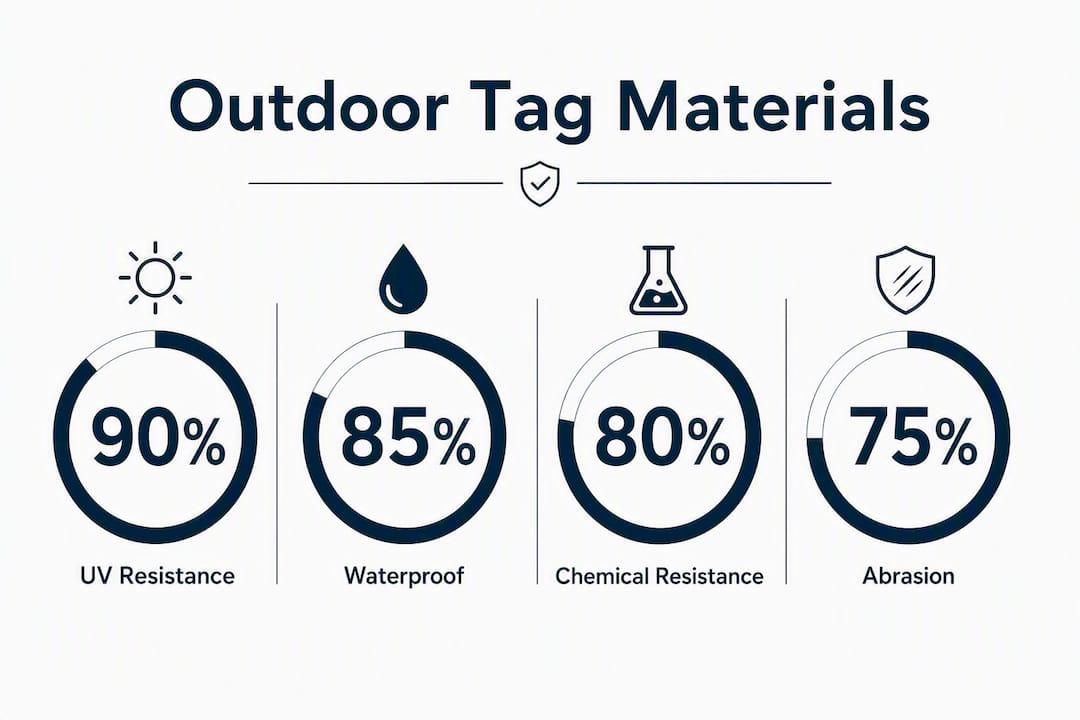
The six materials you will encounter most often each have a distinct performance profile. Understanding where each one excels, and where it fails, saves you from a costly rollout mistake.
| Material | Best for | UV/colorfastness | Water/immersion | Chemical resistance | Abrasion resistance | Temperature range | Flexibility | Attachment | Typical lifespan | Cost shape |
|---|---|---|---|---|---|---|---|---|---|---|
| Polyester (PET) is suitable for mobile tools and general field use, with good durability when laminated, moderate chemical resistance, and moderate temperature tolerance. It attaches with adhesive and is low to moderate in cost. | ||||||||||
| Polycarbonate works well for outdoor equipment and barcode/QR tags, providing excellent UV and abrasion resistance with hard lamination, good chemical resistance, and moderate temperature tolerance. It uses adhesive and has moderate cost. | ||||||||||
| Aluminum foil labels are tamper-evident and suitable for flat surfaces, with moderate UV and chemical resistance, low abrasion resistance, and moderate temperature tolerance. They attach with adhesive and have low cost. | ||||||||||
| Anodized aluminum is appropriate for fixed outdoor machinery and long-life plates, offering excellent UV, chemical, and abrasion resistance, high temperature tolerance, a rigid form factor, and attachment by adhesive or mechanical fasteners. It costs moderate to high. | ||||||||||
| Stainless steel suits marine, mining, and chemical washdown environments, with excellent resistance to UV, chemicals, and abrasion, very high temperature tolerance, rigid form factor, mechanical mounting, and high cost. | ||||||||||
| Vinyl is flexible and inexpensive, suitable for short-term outdoor use and curved surfaces but offers poor to moderate UV and chemical resistance and low abrasion resistance, with moderate temperature tolerance and adhesive attachment. |
Polyester (PET)
Polyester is a workhorse. It bonds well to most surfaces, accepts thermal-transfer printing cleanly, and holds up to moisture and mild chemical exposure. Maverick Label lists polyester and polycarbonate as strong outdoor options when overlaminated, with certain polyester variants reaching multi-year life. The key variable is laminate: unlaminated polyester fades and abrades within a season outdoors. Metalized matte silver polyester and LexSaver® Plus-style variants extend UV and abrasion life considerably, making them worth specifying for assets that live in direct sun. The practical failure mode is edge-lift on rough or low-energy surfaces when the adhesive is undersized for the job.
Polycarbonate
Polycarbonate is the go-to for barcode and QR-code tags because hard lamination protects the printed layer from UV and abrasion long after a softer label would become unreadable. It conforms reasonably well to slightly curved surfaces and tolerates fuel, solvents, and pressure washing. The 5+ year outdoor rating from MapTrack applies specifically to hard-laminated polycarbonate with a 3M industrial adhesive. Without the hard laminate, that rating drops sharply.
Aluminum foil
Aluminum foil labels are thin, lightweight, and tamper-evident. They work well on flat, smooth surfaces but crack and peel on curved or textured substrates. Abrasion resistance is low, so they are better suited to indoor or sheltered outdoor locations than to field equipment that takes regular physical contact.
Anodized aluminum
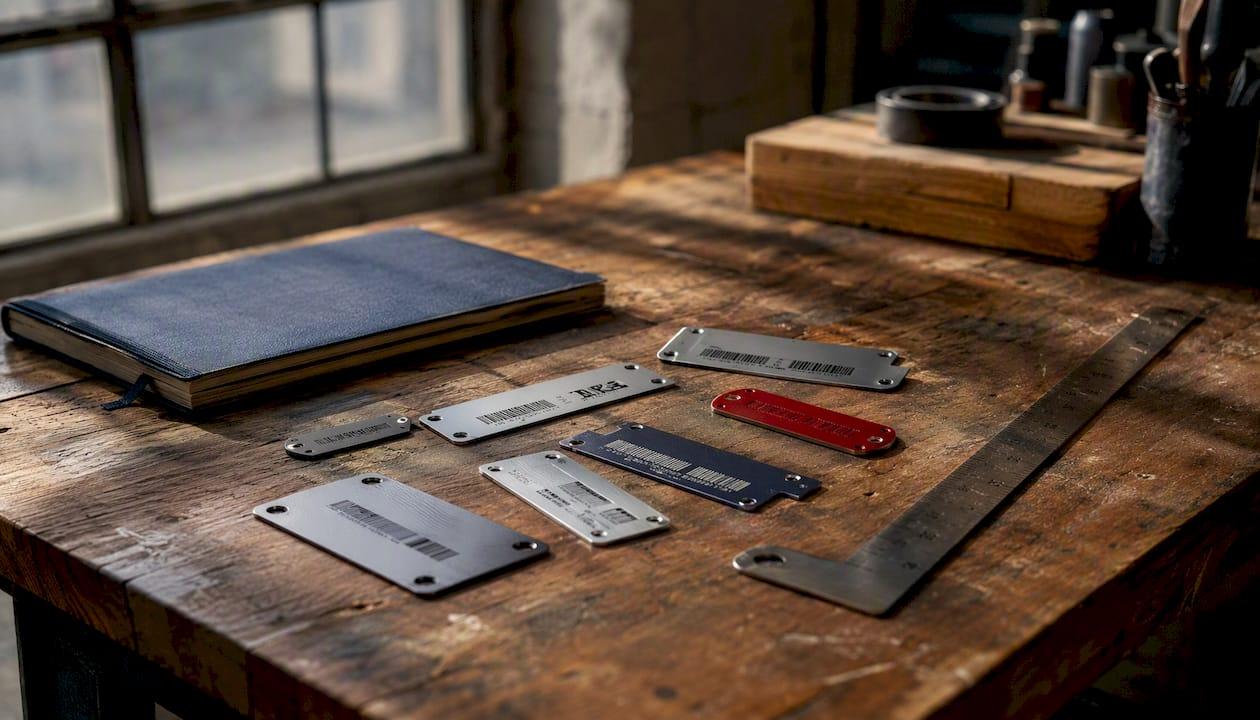
Anodized aluminum tags are treated to create a protective oxide layer that resists corrosion, abrasion, and UV degradation. Graphics embedded directly into the anodized pores, as used in dye-sublimation or laser engraving processes, resist scratching and chemical attack far better than surface-printed labels. Seton’s anodized aluminum plates are made from .005" anodized aluminum with UV-resistant inks embedded into the material itself. The limitation is rigidity: an anodized plate applied to a curved or textured surface will edge-lift because it cannot conform. Mechanical fastening solves that problem but adds cost and installation time.
Stainless steel
MapTrack’s comparison of stainless steel versus anodized aluminum recommends stainless for marine, mining, washdown, and aggressive chemical-clean environments because it offers the highest corrosion resistance of any common tag material. Stainless steel laser-engraved tags carry markings that are essentially permanent: no ink to fade, no laminate to delaminate. The trade-off is weight, cost, and the near-universal need for mechanical mounting.
Vinyl
Vinyl is flexible and cheap, which makes it tempting for curved surfaces. The problem is longevity: standard vinyl fails in UV within one to three years, and solvent resistance is poor. GoCodes’ durability comparison notes that paper and office-grade vinyl are cheap but fail in months outdoors. Use vinyl only for short-term outdoor applications or as a placeholder while you validate a permanent solution.
How do you choose and specify the right material?
Start with the worst-case stressor, not the average day. Ask: what is the single harshest thing this asset will face? UV in a desert yard, salt spray on a coastal dock, chemical washdown in a food-processing plant, or abrasion from constant handling? That one answer usually narrows the field to two materials.
The decision path looks like this:
UV and abrasion only: hard-laminated polycarbonate or metalized polyester with a high-tack adhesive.
Chemical washdown or immersion: hard-laminated polyester with an aggressive adhesive, or stainless steel for repeated industrial cleaning.
Sustained heat above 250°F or multi-decade fixed installation: anodized aluminum or stainless steel with mechanical fasteners.
Curved or textured surfaces: flexible polyester or vinyl (short-term) rather than rigid metal plates.
Once you know the material, here is what to include in your order spec:
- Base material: polyester, polycarbonate, anodized aluminum, or stainless steel (specify grade, e.g., 304 or 316 for stainless).
- Thickness: 2 mil for flexible poly labels; 5 mil for heavy-duty laminated; 0.005"–0.020" for metal plates.
- Laminate type: hard overlaminate for maximum abrasion and UV protection; soft laminate for curved surfaces.
- Adhesive family and bond rating: permanent high-tack industrial (e.g., 3M 468 or equivalent structural acrylic) for most outdoor use; specify the substrate material so the supplier can match surface energy.
- Mounting method: adhesive only, pre-drilled holes for rivets/screws, or both.
- Print/encoding method: thermal transfer for poly labels; laser engraving for metal for permanent, chemical-resistant marking.
- Color and branding limits: note if full-color is required (limits metal options) or if single-color/engraved is acceptable.
- Proof/sample request: always ask for a physical sample before full rollout.
Three quick scenario examples:
Mobile hand tools in a construction yard: hard-laminated polycarbonate, 5 mil, permanent high-tack adhesive, thermal-transfer barcode, no holes needed. Request a two-week field sample before ordering 500 units.
Outdoor trailer identification plate: anodized aluminum, 0.020", laser-engraved serial and barcode, two pre-drilled holes for rivets, no adhesive. Specify a proof for fit before production.
Washdown-rated food-processing equipment: 316 stainless steel, 0.020", laser-engraved, four corner holes for stainless screws, no adhesive. Request accelerated salt-spray test data from the supplier.
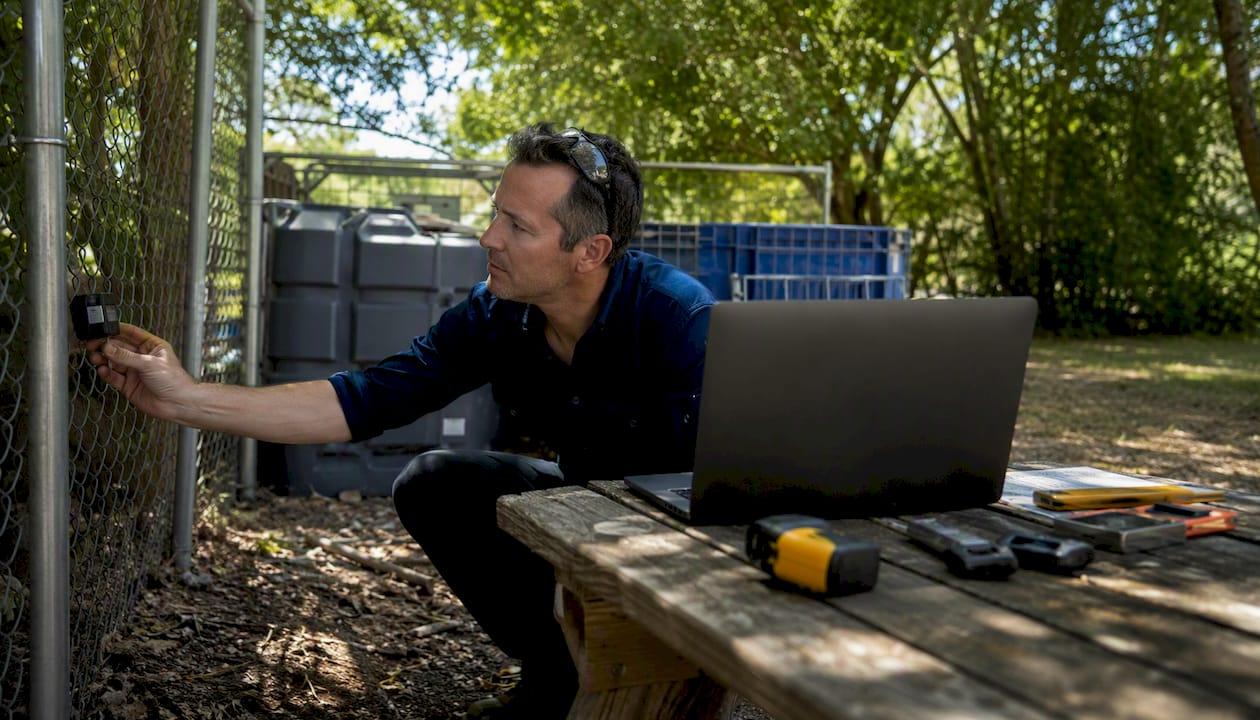
Testing a small sample on the actual asset in its intended environment for a few weeks is the only practical way to guarantee long-term performance before committing to a full order. “Weather-resistant” means different things depending on the asset’s worst-case day.
Why does adhesive choice matter as much as the face material?
Adhesive failure is the most common reason outdoor tags fail early, and it is almost always preventable. Edge-lift starts when the adhesive cannot maintain contact with the substrate through temperature swings, vibration, or chemical exposure. Once an edge lifts, moisture and contaminants get underneath, and the tag is finished regardless of how good the face material is.
Guidance from McAuley Labels emphasizes specifying permanent aggressive adhesives for outdoor use, because standard adhesives fail under temperature swings and vibration. Surface energy is the key variable: high-energy surfaces like bare steel bond easily with most industrial adhesives, but low-energy plastics (polyethylene, polypropylene) and powder-coated surfaces need a specially formulated high-tack or structural acrylic adhesive to achieve a lasting bond.
Recommended adhesive types by substrate:
- High-tack permanent acrylic (e.g., 3M 468 or equivalent): the standard choice for most outdoor metal and painted surfaces; handles temperature cycling and moderate chemical exposure well.
- Structural acrylic adhesive: for low-energy plastics and powder-coated surfaces where standard acrylics creep over time.
- Aggressive permanent adhesive with solvent resistance: for equipment subject to regular chemical washdown; confirm compatibility with the specific cleaning agent.
When adhesive alone is not enough, mechanical mounting is the right answer. Rivets and screws are appropriate for heavy vibration environments, repeated pressure-washing, and any substrate that resists bonding (oily metal, textured rubber, HDPE). Pre-drill holes during tag production rather than in the field to maintain tight tolerances.
Application checklist:
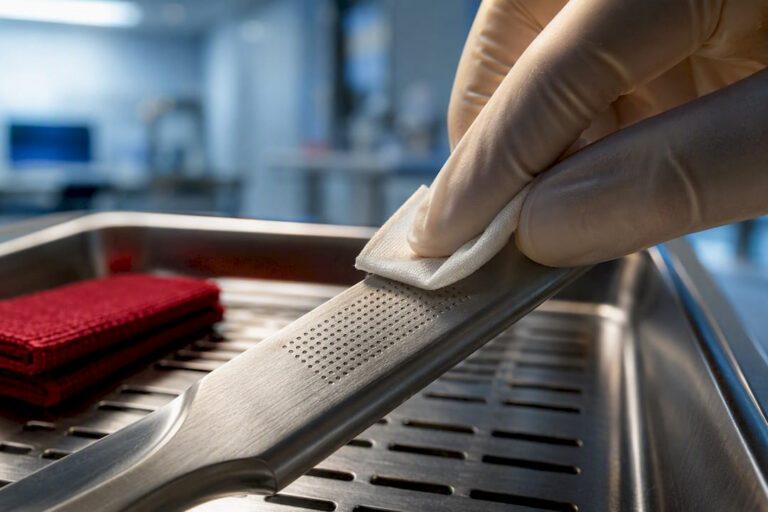
- Clean the surface with isopropyl alcohol and allow it to dry completely before applying.
- Apply within the manufacturer’s recommended temperature window (typically 50°F–100°F for most industrial adhesives).
- Press firmly across the entire tag surface for the specified dwell time.
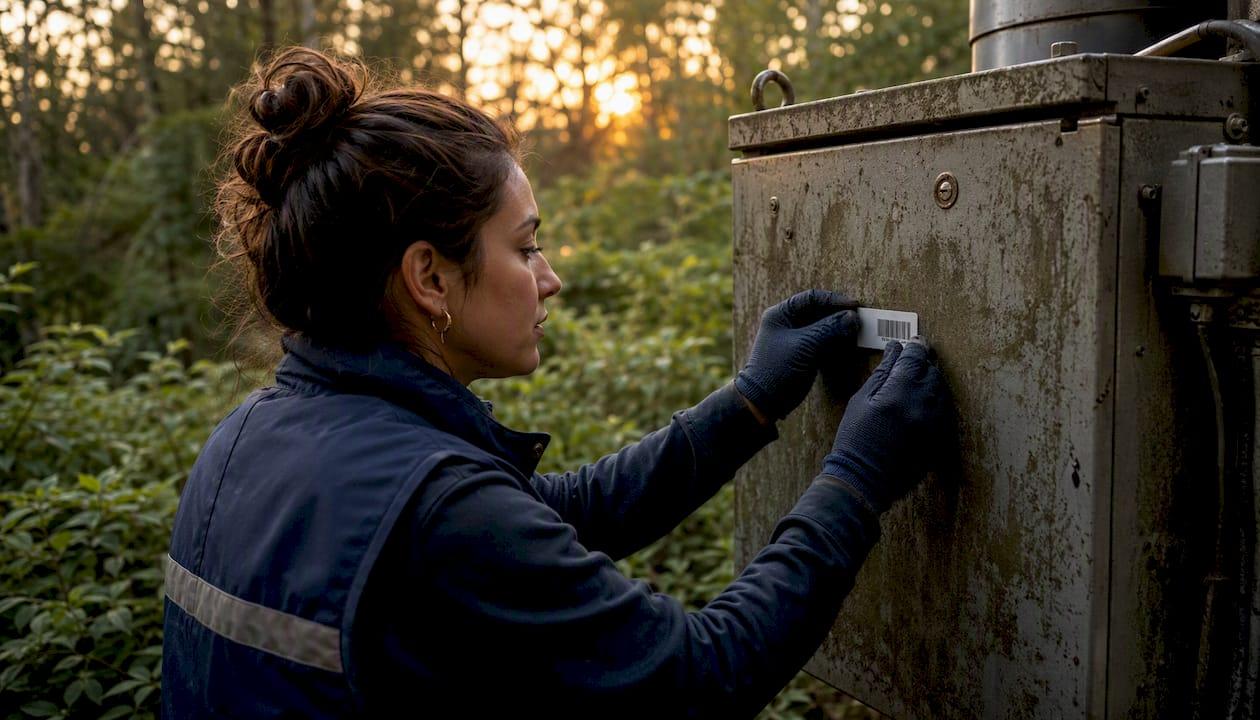
- Allow a 24-hour cure period before exposing the tag to water, chemicals, or vibration.
Pro Tip: Apply a small test tag to the actual substrate and leave it for two weeks in the real environment before ordering your full batch. Edge-lift that appears in week one tells you the adhesive or surface prep is wrong, not the face material.
What do experienced practitioners actually recommend?
The most consistent rule from practitioners is simple: choose the material based on the single worst stressor the asset faces, not the average conditions. A tag on a forklift that occasionally gets pressure-washed needs to be specified for that wash cycle, not for the typical dry warehouse day.
Hard lamination is where many buyers underinvest. A QR code or barcode printed on an unlaminated label can become unreadable from UV and abrasion long before the tag physically detaches. Hard lamination over the printed layer protects scannability and is often what determines when a tag actually fails in practice.
The field truth about over-engineering: Most field assets do not need metal tags. Reaching for anodized aluminum or stainless steel on mobile tools and general equipment increases cost and mounting complexity without improving tracking outcomes. MapTrack practitioners note that hard-laminated polycarbonate is generally more cost-effective and sufficiently durable for most mobile tools and equipment. Save the metal for assets that genuinely demand it: fixed infrastructure, extreme heat, or corrosive environments where a polymer label would fail within its first year.
On the cost side, GoCodes’ durability comparison confirms that poly and metal options cost more upfront but deliver multi-year life, while paper and office-grade vinyl fail in months. The smarter approach is to tier your assets by criticality and specify accordingly: laminated poly for most of the fleet, metal only for the assets where failure has real operational consequences.
Flexibility matters more than most buyers expect. Rigid anodized plates edge-lift and peel when applied to curved or textured surfaces because they cannot conform. If the asset has a curved housing or a rough texture, a flexible polyester label with the right adhesive will outlast a rigid metal plate every time.
What should you tell your supplier? Sample spec sheets
Give your supplier a written spec, not a verbal description. Here are three ready-to-use templates.
Spec template fields:
- Base material and grade
- Thickness (mil or inches)
- Laminate type (hard/soft/none)
- Adhesive type and bond rating
- Mounting method (adhesive only / pre-drilled holes / both)
- Print/encoding method
- Color requirements
- Expected lifespan
- Test/proof request
Scenario 1: Mobile hand tools (construction/field)
- Polycarbonate
- 5 mil
- Hard overlaminate
- High-tack permanent acrylic (3M 468 or equivalent)
- Adhesive only
- Thermal transfer, black barcode and asset number
- White background, black text
- 5+ years
- Request two physical samples for two-week field test before production run
Scenario 2: Outdoor fleet trailer plate
- Anodized aluminum
- 0.020"
- None (graphic embedded in anodized layer)
- N/A
- Two pre-drilled 3/16" holes, stainless rivets
- Laser engraving, serial number and QR code
- Silver/black
- 10+ years
- Request a proof for fit and hole placement before production
Scenario 3: Fixed infrastructure near salt water
- 316 stainless steel
- 0.020"
- None (laser-engraved)
- N/A
- Four corner holes, stainless screws
- Laser engraving, asset ID and compliance text
- Brushed silver, engraved text
- 20+ years
- Request accelerated salt-spray test data or certification from supplier
Ordering checklist:
- Confirm minimum order quantity before finalizing the spec.
- Request a physical proof or pre-production sample for approval.
- Ask for lead time in writing, especially for metal plates.
- Specify any required environmental test data (UV, salt spray, chemical resistance) upfront.
Key Takeaways
Hard-laminated polycarbonate with a high-tack industrial adhesive is the best outdoor asset tag material for most applications, with anodized aluminum or stainless steel reserved for extreme heat, corrosion, or multi-decade fixed installations.
| Point | Details |
|---|---|
| Best general-purpose material | Hard-laminated polycarbonate with 3M industrial adhesive delivers 5+ years outdoors against UV, abrasion, and solvents. |
| Metal only when specs demand it | Use anodized aluminum or stainless steel for sustained extreme heat, marine environments, or fixed assets needing 10–20+ year life. |
| Adhesive is half the battle | Specify a high-tack permanent industrial adhesive matched to the substrate; edge-lift from poor adhesive choice is the top failure mode. |
| Surface prep before everything | Clean with isopropyl alcohol, dry fully, and apply within the manufacturer’s temperature window before pressing firmly. |
| Signaturelaserdesigns for custom tags | Signaturelaserdesigns offers laser-engraved metal and polymer tags with sample proofs, tight tolerances, and industrial marking for field and fixed assets. |
The case for matching material to environment, not to budget
The most common mistake we see in industrial tagging projects is choosing a material based on what feels safe rather than what the asset actually needs. Buyers default to stainless steel because it sounds durable, then discover the tags are riveted to curved plastic housings where they cannot sit flat. Or they go cheap with vinyl on outdoor equipment and replace the entire batch within a year.
The right answer is almost always simpler than it seems. A hard-laminated polycarbonate label with a proper industrial adhesive handles the vast majority of outdoor field assets cleanly, at a fraction of the cost of metal. Metal earns its place on fixed infrastructure, marine assets, and anything that sees sustained heat or aggressive chemical cleaning. The print method matters too: laser engraving on metal produces markings that are chemically bonded to the surface, not sitting on top of it, which is why engraved stainless and anodized aluminum tags outlast any printed label in the harshest environments.
What we consistently recommend to clients: start with the worst-case stressor, write a clear spec, and test a sample before committing to a full run. That process catches adhesive mismatches, surface incompatibilities, and sizing issues before they become expensive problems.
Custom weather-resistant tags from Signaturelaserdesigns
Signaturelaserdesigns produces custom laser-engraved asset tags in anodized aluminum, stainless steel, and other materials, with tight tolerances and permanent markings that hold up in real field conditions. For buyers who need laminated polymer labels, we can advise on material and adhesive spec to match your environment.
Our team works with you on small-batch sample proofs before any full production run, so you can validate fit, adhesive bond, and readability in the actual environment. Whether you need five test plates or 500 production tags, we handle custom industrial laser engraving (on Etsy) with the same care. We also offer branded equipment engraving for businesses that want their asset tags to carry a logo or compliance text alongside the tracking data.
To get started, send us your spec (material, size, quantity, attachment method, and any environmental requirements) and we will turn around a quote and a sample proof quickly.
Useful sources and datasheets
These resources are worth bookmarking when you are validating material ratings, adhesive specs, or ordering metal tags.
- Durable Asset Tags: Materials That Last | MapTrack: practitioner guidance on polycarbonate ratings, adhesive selection, and surface prep.
- Stainless Steel vs Aluminium Asset Labels | MapTrack: direct comparison of metal options for corrosive and high-heat environments.
- Outdoor Asset Labels | MapTrack: application checklist and surface prep guidance.
- Asset Tag Materials Guide | Maverick Label: material-by-material breakdown including polyester subtypes and laminate options.
- Your Guide to the Best Material for Asset Tags | Maverick Label: practical overview of flexibility, conformability, and laminate trade-offs.
- Heavy-Duty Silver Asset Tags for Outdoor Equipment | McAuley Labels: adhesive specification guidance for outdoor and industrial use.
- How to Choose Asset Labels for Your Project | GoCodes: cost and durability comparison across material tiers.
- Weatherproof Outdoor Labels | Strong Asset Tags: UV stability, water rating, and freeze-thaw resilience specs by tier.
- Custom Outdoor Asset Tags | Seton: anodized aluminum plate specs including temperature range and embedded graphic process.
- Direct Thermal vs Thermal Transfer for Labels | SaraWest USA: technical breakdown of print method choices and their effect on outdoor label longevity.
- Commercial Equipment Identification Plates | Signaturelaserdesigns: manufacturer-level guidance on specifying metal plates and ordering proofs.