Custom Text Engraving on Manufacturing Tools: A Full Guide
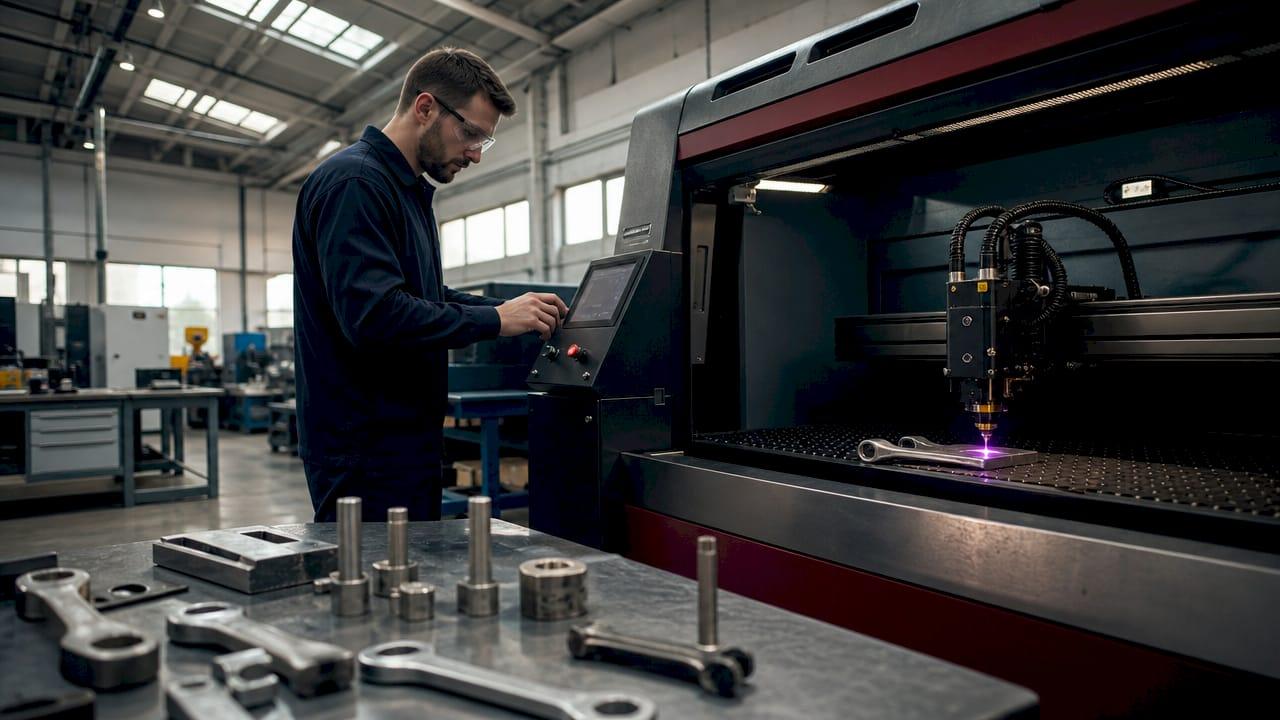
Custom text engraving on manufacturing tools is the process of permanently etching readable letters, numbers, logos, or codes onto industrial tools for identification, traceability, and branding purposes. The industry term for this practice is permanent tool marking, and it covers three primary methods: CNC text milling, mechanical engraving, and laser engraving. Each method serves a different purpose depending on material type, required depth, and regulatory environment. Getting the method, depth, and placement right determines whether your markings last a decade or fail within months.
✦ Featured From Our Etsy Shop ✦
Handcrafted & Laser Engraved Just For You
What are the main methods for custom text engraving on manufacturing tools?
Three methods dominate industrial tool marking: CNC engraving, mechanical engraving, and laser engraving. Each removes or alters material differently, and each suits specific tool types and environments.
CNC text milling
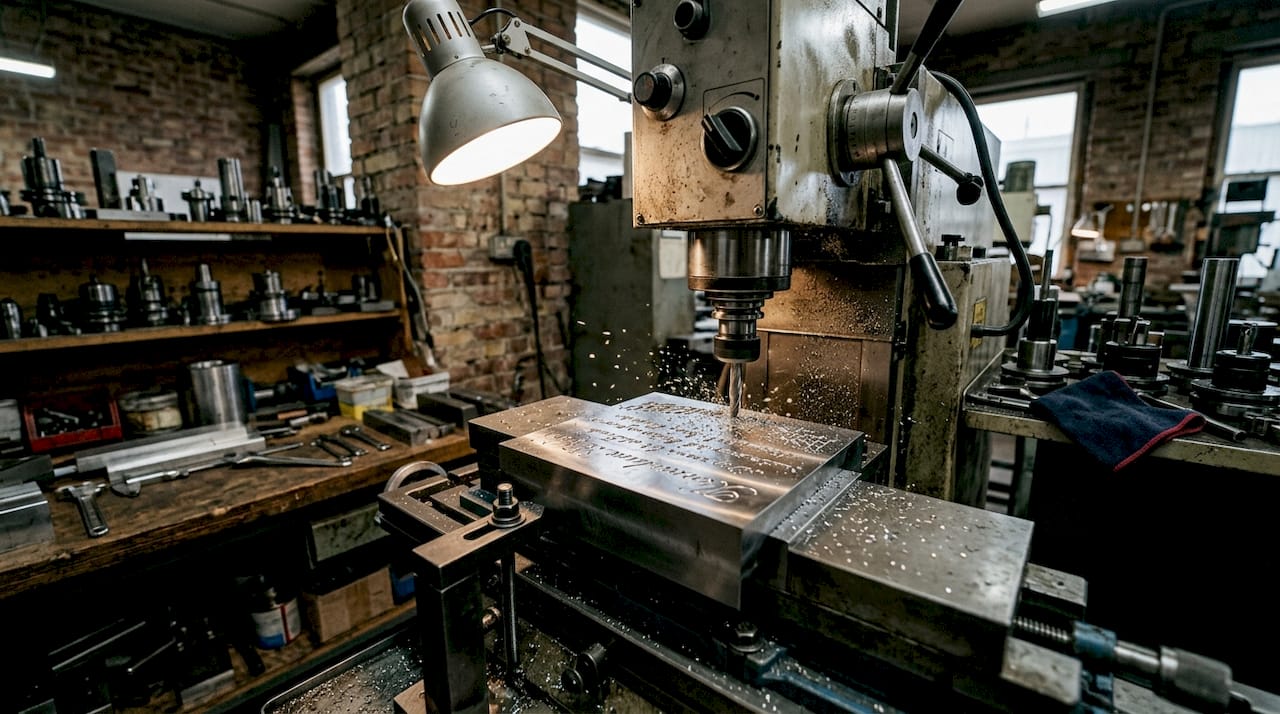
CNC engraving removes material to create deep, durable markings that hold up in harsh environments. The process uses rotating carbide bits to cut directly into metal, producing marks that resist abrasion, chemical exposure, and heavy use. CNC milling works well for steel, aluminum, and hardened alloys where depth is a priority. The limitation is speed. CNC engraving takes longer per part than laser methods, which makes it less practical for high-volume production runs.
Laser engraving
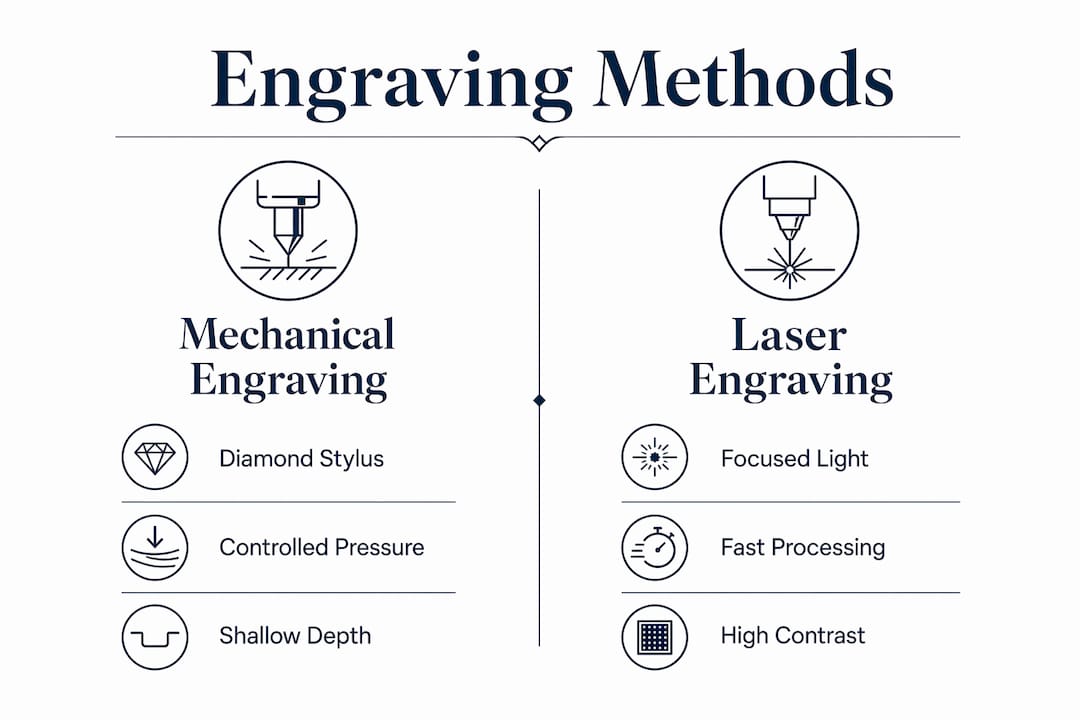
Laser engraving is the most widely used method for personalized tool engraving in manufacturing today. It uses focused light to vaporize or alter the surface of a material, creating permanent marks without physical contact. MOPA fiber lasers produce high-contrast annealing marks on stainless steel and titanium without creating surface roughness or compromising passivation. That matters enormously for medical tools and food-grade equipment, where surface integrity affects safety and compliance.
Mechanical engraving
Mechanical engraving uses a diamond-tipped or carbide stylus to scratch text into a surface under controlled pressure. It is the oldest of the three methods and still appears in low-volume, specialty applications. The marks are readable but shallower than CNC cuts, and the method struggles with very hard materials above 60 HRC.
Pro Tip: For tools that will face chemical cleaning, sterilization, or outdoor exposure, laser engraving on stainless steel or titanium outperforms mechanical engraving in long-term legibility.
| Method | Best materials | Depth capability | Speed |
|---|---|---|---|
| CNC text milling | Steel, aluminum, hardened alloys | Deep, high durability | Slow per part |
| Laser engraving | Stainless steel, titanium, plastics | Surface to moderate depth | Fast, high volume |
| Mechanical engraving | Softer metals, plaques | Shallow to moderate | Moderate |
How to ensure durability and readability of engraved text on manufacturing tools
Durability starts with depth. A standard engraving depth of 0.18mm provides legibility lasting over 10 years without weakening the tool’s structure. Shallower marks wear away faster under friction and cleaning cycles. Deeper marks beyond what the material tolerates can create stress points that lead to cracking under load.
Placement matters as much as depth
Engraving in high-stress zones on forged or impact tools significantly increases fracture risk. On a forged striking tool, the head and blade edge are high-stress zones. The tang, handle collar, or flat side panel are low-stress zones where marking is safe. Placing text in the wrong location does not just reduce tool life. It creates a liability.
Timing the engraving process
Industrial marking performed after heat treatment preserves tool hardness and prevents distortion. Engraving before heat treatment exposes the mark to warping and fading as the metal changes structure under high temperatures. The correct sequence is: forge, heat treat to target HRC, grind, then engrave. Skipping this order is one of the most common and costly mistakes in production.
Material and corrosion resistance
For tools used in wet, chemical, or sterile environments, corrosion resistance of the engraved area is critical. Laser engraving on stainless steel preserves the passive oxide layer when done correctly with matched laser parameters. Color fills, such as paint or epoxy added to engraved recesses, require UV curing to bond properly and resist peeling under industrial cleaning agents.
Pro Tip: Always test your engraving parameters on a sample piece of the same material and heat treatment batch before running a full production order. A 15-minute test prevents hours of rework.
| Factor | Recommendation | Risk if ignored |
|---|---|---|
| Engraving depth | 0.18mm standard for industrial tools | Marks wear off or tool weakens |
| Placement zone | Low-stress areas only | Fracture risk under impact |
| Process timing | After final heat treatment | Warping, fading, hardness loss |
| Surface treatment | UV-cured color fills for wet environments | Peeling, corrosion at mark site |
How does custom text engraving support manufacturing tool branding and traceability?
Engraved logos and text on tools serve two functions at once: they identify the tool and they advertise the brand. Custom logo engraving acts as a permanent, functional advertisement unlike cheap promotional merchandise that gets discarded. A well-made tool with a clean, deep logo engraving stays in a customer’s hands for years. Every time they reach for it, they see your brand.
Traceability and regulatory compliance
Traceability is the second major driver of personalized tool engraving in industrial settings. Serial numbers, batch codes, and QR codes engraved directly onto tools allow manufacturers to track production history, recall specific batches, and prove compliance during audits. Laser engraving creates marks chemically bonded to device surfaces, resistant to sterilization, chemical cleaning, wear, and implantation effects. That permanence is exactly what FDA Unique Device Identification (UDI) requirements demand for reusable and implantable medical devices.
For manufacturers asking how to get a custom text engraving on medical tools that meets regulatory standards, the answer starts with laser engraving and ends with documented process validation. ISO 13485 requires that the marking process itself be validated, not just the final mark. You need records showing the machine, parameters, and operator qualifications.
The contrast with printing is stark. Printed labels and ink stamps fade, peel, and wash off. Engraved text survives autoclave sterilization, solvent cleaning, and years of daily use. For industries where tool identification is a safety requirement, printing is not a compliant option.
Industries that rely most heavily on bespoke engraving on equipment include:
- Medical device manufacturers requiring FDA UDI compliance
- Aerospace and defense contractors tracking tool calibration cycles
- Automotive manufacturers marking torque tools and gauges
- DIY and construction brands building recognition through engraved tools for branding
- Food processing facilities requiring corrosion-resistant identification
What are best practices for designing and implementing custom text engraving?
Getting the design and process right before production starts saves significant time and money. These steps apply whether you are marking 10 tools or 10,000.
Prepare vector design files. All text and logos must be converted to vector format (AI, EPS, or DXF) before submission to any engraving service. Raster images lose definition when scaled and produce uneven marks. Verify that font sizes meet minimum legibility thresholds for the engraving method you are using.
Define and document approved placement zones. Work with your engineering team to identify low-stress zones on each tool type. Document these zones in your production drawings so every operator marks the same location on every part. Consistency matters for both aesthetics and structural safety.
Sequence engraving within your production workflow. Engraving always follows final heat treatment and grinding. Build this sequence into your work order system so it cannot be skipped or reversed. Marking done post heat treatment reduces warping risk and preserves structural integrity.
Complete process validation for regulated industries. FDA compliance requires documented IQ/OQ/PQ validation covering machine installation, operational parameters, and performance qualification. This documentation proves your marking process is repeatable and controlled. Medical device and aerospace manufacturers cannot skip this step.
Establish quality control checkpoints. Inspect a sample from each production run against a master reference. Check depth, legibility, placement, and surface condition around the mark. Document results and retain records for traceability audits.
The advantages of laser engraving for industrial parts extend beyond the mark itself. A well-documented engraving process protects you during product liability claims, regulatory inspections, and customer audits.
Key takeaways
Custom text engraving on manufacturing tools requires the right method, correct depth, safe placement, and documented process validation to deliver marks that last and meet regulatory standards.
| Point | Details |
|---|---|
| Choose the right method | Laser engraving suits high-volume and regulated industries; CNC milling suits deep marks on hard alloys. |
| Target 0.18mm depth | This standard depth delivers 10-plus years of legibility without weakening tool structure. |
| Engrave after heat treatment | Marking before heat treatment causes warping and hardness loss in the finished tool. |
| Avoid high-stress zones | Placing marks in impact or flex zones increases fracture risk and reduces tool life. |
| Validate the process | FDA and ISO 13485 compliance requires documented IQ/OQ/PQ records, not just a readable mark. |
Why I think most manufacturers underestimate engraving placement
Most of the engraving mistakes I see come down to one thing: treating the mark as an afterthought. A manufacturer spends months perfecting a forged tool, then hands it to a marking vendor with no placement spec. The vendor puts the logo where it looks good visually, not where the engineering says it is safe. The tool ships, performs fine for a year, then starts showing stress fractures right at the mark site.
The fix is not complicated. It is just discipline. Define your low-stress zones before you ever send a file to a vendor. Put those zones in your production drawing, not in an email thread that gets lost. I have seen brands add real value to their tools through laser engraving on industrial equipment when the process is treated as part of engineering, not just finishing.
The other thing I would push back on is the idea that laser engraving is only for high-tech or medical applications. A construction brand that puts a clean, deep logo on a well-made hand tool is building something real. That tool sits in a contractor’s bag for a decade. No sticker or printed label survives that. A laser mark does. The ROI on good engraving is not a marketing metric. It shows up every time someone reaches for that tool and sees your name.
— Gary
Professional laser engraving for your manufacturing tools
Signaturelaserdesigns works with manufacturers and industrial businesses that need precise, durable custom markings on their tools and equipment. From serial numbers and QR codes to full logo engraving, our team handles the full range of industrial marking needs with attention to material type, placement, and compliance requirements.
Whether you need FDA-compliant UDI marking for medical devices or clean brand engraving for a product line, we bring the craftsmanship and documentation support to get it right. Browse our custom industrial parts engraving options to see what is possible for your tools, or visit our full services page to discuss your project with our team.
FAQ
What is the standard engraving depth for industrial tools?
The standard engraving depth for industrial tools is 0.18mm. This depth provides legibility lasting over 10 years without compromising the structural integrity of the tool.
How do I get a custom text engraving on medical tools that meets FDA requirements?
FDA-compliant medical tool marking requires laser engraving combined with documented IQ/OQ/PQ process validation to meet ISO 13485 standards. The marks must be permanent, resistant to sterilization and chemical cleaning, and traceable to specific production records.
What is the difference between laser engraving and CNC engraving for tools?
Laser engraving uses focused light to create fast, high-contrast marks ideal for stainless steel and titanium, while CNC engraving cuts deeper into material and suits hardened alloys in harsh environments. Laser engraving is faster for high-volume runs; CNC engraving offers greater depth for extreme wear conditions.
Can engraving weaken a manufacturing tool?
Engraving in high-stress zones increases fracture risk significantly. Placing marks in pre-approved low-stress zones, such as the tang or flat side panel of a forged tool, prevents structural damage and extends tool life.
Why does engraving timing matter in the production process?
Engraving must happen after final heat treatment and grinding. Marking before heat treatment causes warping and can reduce the hardness of the finished tool, shortening its service life.


Great content! Keep up the good work!