MDF vs. Baltic Birch Plywood for Crafts: What to Know
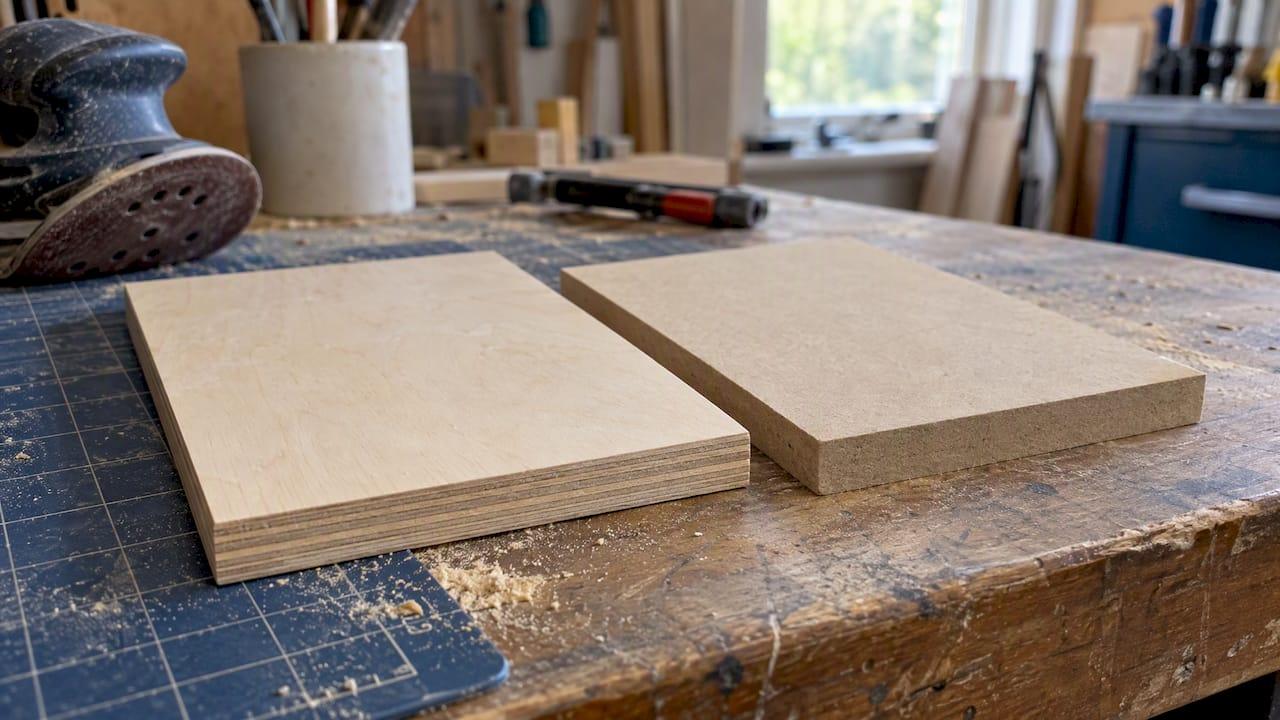
Baltic birch plywood is a stack of thin birch veneers glued together. MDF is wood fibers pressed together with resin into a smooth, uniform board. For most crafts that people keep, display or hand down, birch plywood is the stronger, better-looking choice. MDF wins when you want a flawless surface to paint over and you’re watching your budget.
✦ Featured From Our Shop ✦
Handcrafted & laser engraved in Georgia, just for you
That’s the short version. Below, we walk through how each material looks, cuts, paints, holds up and ships, so you can choose the right one before you buy a single sheet.
TL;DR
- Baltic birch plywood is strong, light and famous for its striped, layered edge. It’s the better pick for gifts, signs and anything handled often.
- MDF has a perfectly even surface with no grain, which makes it great for painted shapes. It’s heavier, weaker and swells if it gets wet.
- MDF leaves a darker, sootier laser edge and a sticky residue. Birch plywood usually cuts cleaner, but only if you buy laser-grade sheets.
- Authentic Baltic birch has been harder to find and pricier since 2022, so many makers now use domestic hardwood plywood with a similar look.
- Ventilate well with either one. Cutting wood composites releases formaldehyde and other fumes.
Table of Contents
- What Baltic birch plywood and MDF actually are
- Side-by-side comparison
- How they look on a finished craft
- Cutting and engraving with a laser
- Strength, weight and durability
- Painting and finishing each material
- Cost and availability right now
- Safety: ventilate for both
- Which one should you pick?
- Our perspective at Signature Laser Designs
- Ready-made blanks and finished gifts
- Tips for buying a first batch
- FAQ
- Sources
What Baltic birch plywood and MDF actually are
The two boards look similar from across the room, but they’re built in completely different ways.
Baltic birch plywood is a multi-ply hardwood. Every layer is a thin birch veneer, with no soft filler core in the middle. The core layers are birch rather than a softer secondary wood and form a void-free core, which is why screws and glue hold so well. You can see the plies on the edge, and plenty of crafters leave that edge bare on purpose because the striping looks good.
MDF (medium-density fiberboard) is a composite. Fine wood fibers are bonded with synthetic resin and pressed into a board. There are no plies and no grain. MDF comes in lightweight, standard and high-density grades, and the lightest grade is the weakest, with more tiny voids between the fibers.
That difference in construction drives everything else: how the edge looks, how much weight a piece can take, and how it behaves under a laser.
Side-by-side comparison
| What you care about | Baltic birch plywood | MDF |
|---|---|---|
| Surface | Real birch face with light grain | Smooth, flat, grainless |
| Edge | Layered stripes, attractive left raw | Plain brown, no pattern |
| Strength | Strong and stiff for its weight | Brittle, can snap on thin, narrow parts |
| Weight | Lighter | Noticeably heavier |
| Laser edge | Cleaner, lighter charring | Darker, char-heavy |
| Consistency | Varies sheet to sheet | Very predictable |
| Painting | Good, with a little prep | Excellent once sealed |
| Moisture | Handles humidity better | Swells when wet |
| Cost | Higher | Lower |
| Availability | Inconsistent since 2022 | Easy to find |
How they look on a finished craft
If you’re making something that sits on a shelf, hangs on a wall or becomes a keepsake, appearance matters as much as strength.
Birch plywood has a warm, pale look. It takes a clear coat or a light stain nicely, and the striped edge adds a bit of character. A seller of birch letters explains that you can see the plies on a Baltic birch edge, while MDF has no plies to see, which is the easiest way to tell the two apart in your hands.
MDF has no character of its own, and that’s the point. It’s a blank canvas. Painted solid colors look smooth and even because there’s no grain to telegraph through. If you’re making a bright, painted wall hanging or a kids’ room name sign, MDF gives a very clean base.
The flip side: you can’t leave MDF natural and have it look like wood. It looks like cardboard-colored board. And if you want a stained finish, birch is the only one of the two that will look right.
Cutting and engraving with a laser
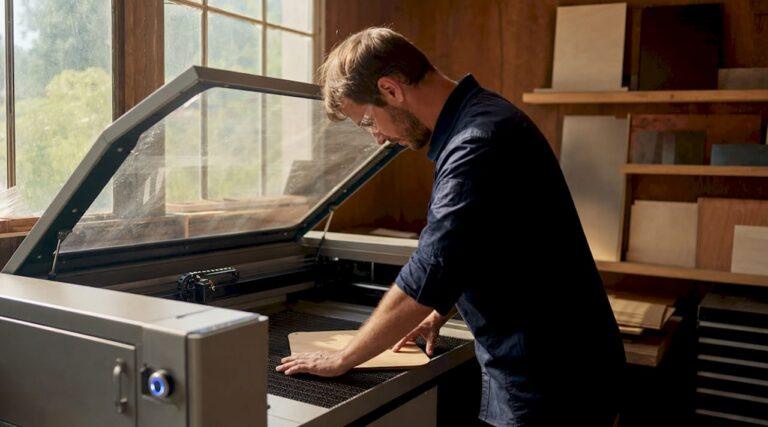
Most of our crafters and customers are interested in laser-cut shapes, so this is where the two materials really split.
Edge quality and char
Because MDF is wood fiber held together with resin, it tends to leave a darker, char-heavy edge compared with laser-grade birch plywood. That dark edge is a side effect of the binders. If you’re going to paint the piece, nobody will notice. If you want a bare, natural look, you’ll notice right away.
Birch plywood usually gives a lighter, cleaner cut edge. It does have a catch, which brings us to the next point.
Consistency: the one place MDF wins
Plywood is a natural product. Two sheets from the same supplier with the same settings can behave differently, because of internal voids and glue layers. A cheap sheet with a hidden air pocket or a dense glue line may leave a spot that doesn’t cut through.
MDF is the same all the way through, so the same settings tend to work across the whole sheet. For anyone cutting dozens of identical pieces, that predictability is a real advantage.
The fix for plywood is to buy laser-grade sheets. Laser-grade birch is made with fewer voids and better adhesives so it can handle the heat. It costs more, and it saves you from ruined pieces.
Smoke, residue and upkeep
MDF smokes heavily. The binders create a sticky, resinous residue that fouls a laser’s mirrors and lenses and loads filters faster than natural wood. If you use MDF, expect to clean optics more often. Birch plywood is gentler on the machine.
Engraving detail
For fine, detail-heavy designs, MDF’s even surface can be an advantage because there’s no grain to interrupt a thin line. Smooth, uniform MDF is a popular choice for laser cutting for exactly that reason. Birch engraves with more natural contrast and a warmer tone, which many gift buyers prefer. If your engraving comes out pale, our guide on fixing a laser engraving that’s too light on wood walks through what to adjust.
Strength, weight and durability
This is where birch plywood pulls ahead for most crafts.
The crossed layers of birch resist bending and snapping. A thin, narrow piece, like the leg of a letter, the stem of a cutout or a sunglasses frame, holds together far better in plywood. MDF is brittle in thin sections and can chip at the corners when it’s dropped.
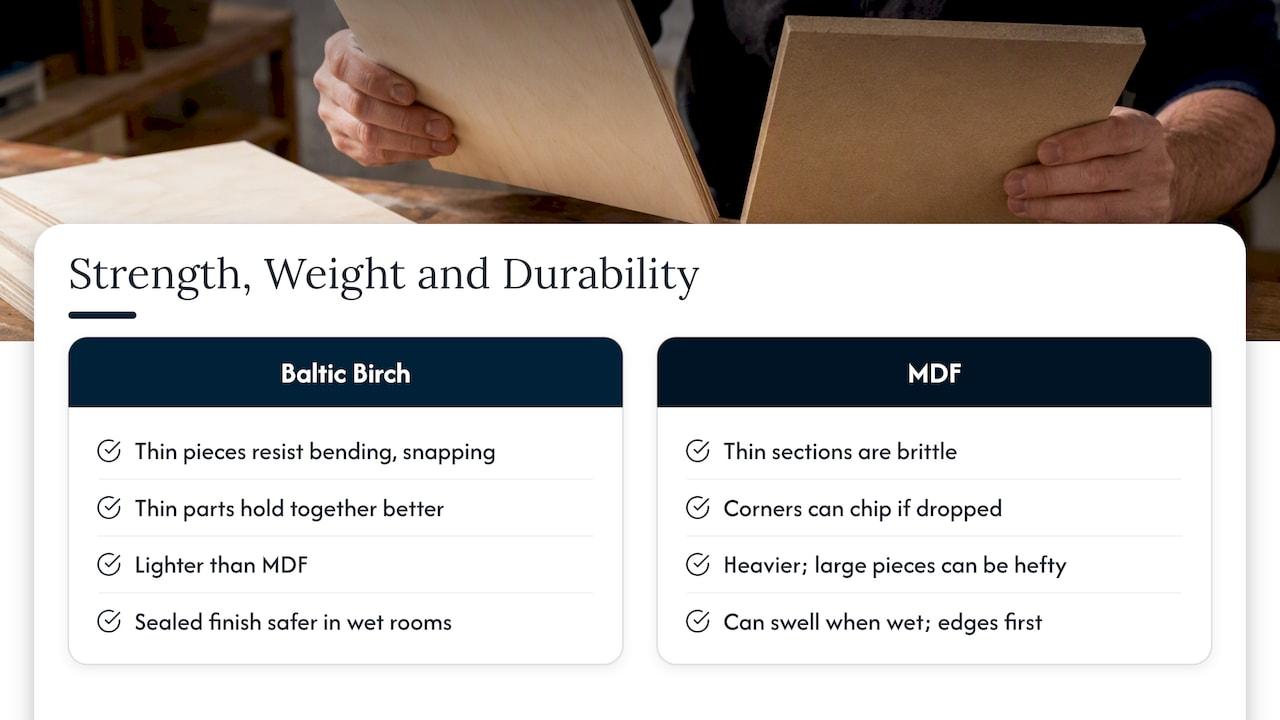
MDF is also heavier. A large wall piece cut from MDF can be surprisingly hefty, which matters for hanging hardware and for shipping.
Moisture is the other weak spot. MDF can swell when it gets wet, and the edges are the first to go. If a piece will live in a bathroom, a kitchen, a porch or a kid’s room with spills, plywood with a sealed finish is the safer bet.
If you want to understand how thickness affects what a laser can do, see our notes on 1/4 inch plywood craft blanks and laser limits. Thin sheets such as 1/8 inch are common for ornaments and small shapes, and thicker ones suit signs and display pieces.
Painting and finishing each material
Both materials can be painted well, but they need different prep.
MDF is thirsty at the edges. The cut edge soaks up paint and can look rough or fuzzy. Seal the edges with primer or a sanding sealer first, let it dry, then paint. The flat face takes paint evenly, so large solid areas look great.
Birch plywood has a real wood face, so a light sanding and a coat of primer keep the grain from showing through light colors. For stain or clear coat, a conditioner helps the color go on evenly. You can also leave the layered edge bare and paint just the face for a two-tone look.
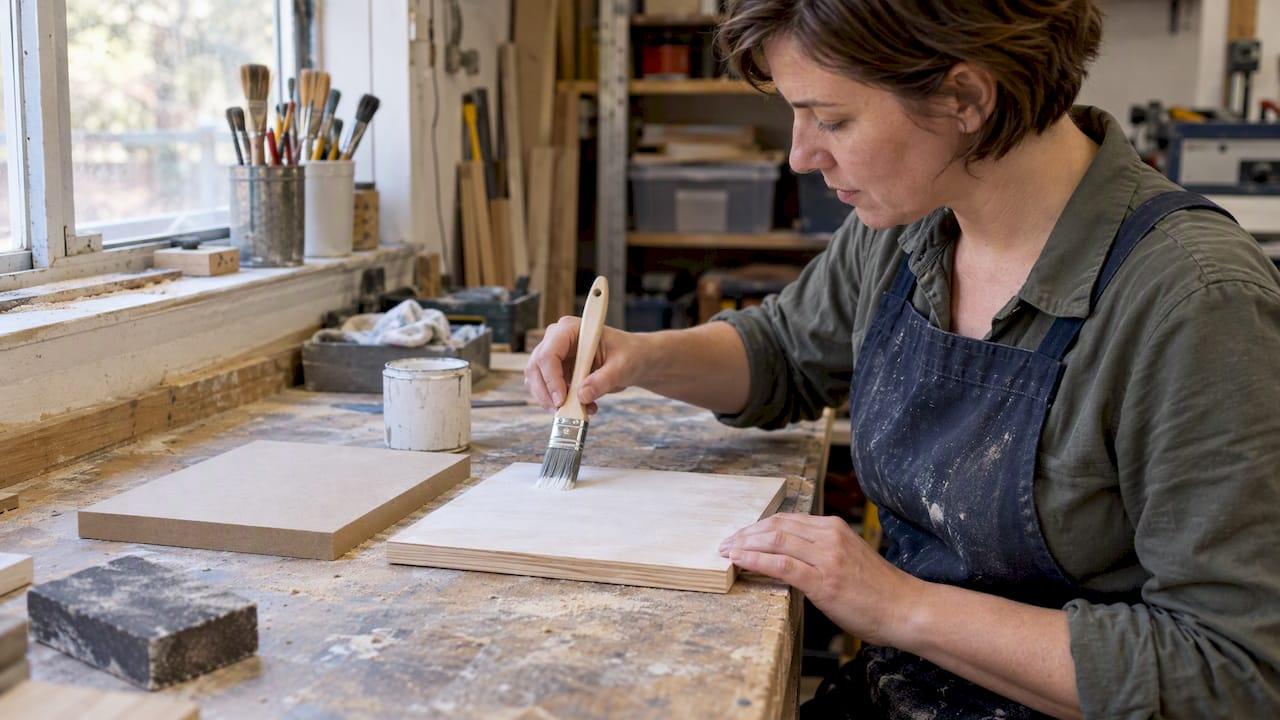
Soot from the laser can dull colors on either material, so wipe the pieces down before painting. Our guide to the best paint for laser cut plywood shapes covers paint types and what works whether you’re finishing one piece or twenty.
Cost and availability right now
MDF is cheaper and easy to find at any home center. That’s its biggest selling point.
Baltic birch has gotten harder. Supply of authentic Baltic birch tightened after sanctions on Russian timber, and prices spiked. Woodworking suppliers reported premium prices persisting for imported Baltic and Russian birch well after the first shock. A 2026 price roundup puts a 4×8 sheet anywhere from $34 to $230 depending on thickness and grade, so shop around and compare the exact grade.
What about substitutes?
Because of those shortages, North American mills now make exposed-edge hardwood plywood with a similar look. One domestic manufacturer points to maple-core plywood as a more reliably available alternative to Baltic birch. That’s a manufacturer promoting its own product, so test a small batch before you commit to a big order.
When you test any substitute, check the real thickness. Nominal thicknesses often don’t match the actual caliper, and a sheet that’s a little thicker or thinner than labeled can throw off your laser’s focus.
Safety: ventilate for both
Wood feels natural and harmless, so people underestimate this part. Laser-cutting wood-based composites, including MDF and plywood, releases air contaminants such as benzene, formaldehyde and soot. The same guideline says proper exhaust and ventilation aren’t optional.
MDF also carries a formaldehyde question for the finished product. Resins in MDF can contain formaldehyde, and a federal law sets emission limits for composite wood products, including 0.11 ppm for MDF. If you’re making things for a nursery or for small children, look for panels labeled low-formaldehyde or formaldehyde-free, and ask your supplier for the certification.
If you have asthma or another breathing condition, talk with your doctor before you start cutting wood at home, and never run a laser without exhaust venting outside.
Which one should you pick?
Here’s a simple way to decide.
Choose Baltic birch (or a similar laser-grade hardwood plywood) when:
- The piece is a gift or keepsake that people will handle and keep.
- You want the natural wood look, a stain or a clear finish.
- The design has thin, delicate parts that need to hold together.
- The piece will hang in a place with some humidity.
Choose MDF when:
- You’re painting the whole piece in solid colors.
- You need identical pieces and want the same cut every time.
- It’s a flat, indoor, low-handling project, like a classroom craft.
- Budget matters more than looks.
If you’re still on the fence, buy a small amount of each and make one test piece. Paint half, stain half. You’ll know in an afternoon.
Our perspective at Signature Laser Designs
We engrave and cut every item to order in our Georgia shop, from finished gifts like pie servers, flasks and kitchen tools to unfinished wood cutouts for crafters. So we spend our days thinking about how a material looks once it’s done and how it feels in someone’s hands.
For gifts, we lean toward real wood and plywood. A keepsake should look warm, hold up to years of handling and feel like something a person chose on purpose. That’s a hard thing to get from a painted fiberboard. When a customer sends us a gift idea, the first question we ask ourselves is where it will live and who will touch it.
We don’t think MDF is bad. It’s a good, honest material for painted projects, and crafters who love a perfectly smooth base have good reasons to use it. We just want you to pick it on purpose, not because it was the cheapest thing on the shelf.
Our advice to crafters: don’t let a sheet price decide for you. A few dollars saved on a sheet can disappear fast if half the pieces don’t cut through or edges come out scorched. Pay for laser-grade material, test a small sample, and check the real thickness before a bigger run.
— Gary
Ready-made blanks and finished gifts
If you’d rather skip the material hunt, we can help. Our unfinished wood blanks and finished personalized pieces are cut and engraved to order, so you can start painting or gifting right away. Crafters who want production-ready shapes can read about our Baltic birch craft blanks, and you can browse the wood cutouts we make. Our wood cutouts and blanks are also available on Etsy, such as the Howling Wolf Wood Cutout, 1/4 inch plywood (on Etsy).
Looking for a one-of-a-kind present instead? Visit our online store and enter your personalization right on the product page, or see how our custom gift creation works.
Tips for buying a first batch
A few habits will save you money and frustration, whichever material you pick.
- Order a sample first. One sheet or a handful of pieces tells you more than any article can.
- Check the actual thickness with calipers, not the label.
- Look at the edges. Gaps or patches in a plywood edge are a sign of voids inside.
- Seal before you paint, especially MDF edges.
- Plan your ventilation before the first cut, not after.
- Think about quantity. Our guide on buying bulk laser cut wood shapes explains how to avoid a costly 500-piece mistake.
If you’re unsure which wood suits engraving as opposed to cutting, our Spanish-language guide on choosing wood for laser engraving covers gifts and blanks, and our piece on etching, engraving and marking explains the differences in methods.
FAQ
Is Baltic birch plywood better than MDF?
For most crafts, yes. It’s lighter, stronger, handles moisture better and has an attractive layered edge. MDF is better for smooth painted surfaces and for work where you need the same result on every sheet.
What are the disadvantages of MDF?
MDF is heavy, brittle in thin sections and can swell when wet. It also produces heavy smoke and sticky residue when laser cut, and it can contain formaldehyde-based resins. Look for low-formaldehyde panels and ventilate well.
What are the disadvantages of Baltic birch plywood?
It costs more and has been harder to find since 2022. Quality also varies from sheet to sheet, since cheaper plywood can have internal voids or heavy glue layers that cause uneven cuts. Buying laser-grade sheets reduces that risk.
What is a good substitute for Baltic birch plywood?
Domestic exposed-edge hardwood plywood, such as maple-core panels, is the most common substitute. Test a small batch first and measure the real thickness, because labeled and actual thickness often differ.
Sources
- Xometry: How to laser engrave and cut MDF
- BRM Lasers Support: Cutting and engraving wood, plywood and MDF
- FLUX Help Center: Wood
- Wood Floor Business: A year of uncertainties with Baltic birch plywood
- Woodshop News: Premium prices persist for preferred panels
- Woodworking Advisor: Baltic birch plywood cost in 2026
- Columbia Forest Products: DesignEdge
- Carnegie Mellon EHS: Laser cutter safety guideline
- Oklahoma State University Extension: Formaldehyde emission from wood composite panels
Recommended
- Plywood Craft Blanks: 1/4 Inch Thick, Laser Limits, and TSCA Safety
- Precision Laser Cutting 14 Inch Plywood: Hobbyist Guide